Views: 0 Author: Site Editor Publish Time: 2026-07-30 Origin: Site


Upgrading your outdoor living space requires a significant capital investment. You want materials to look beautiful while enduring years of harsh weather. Buyers frequently feel torn between the lower upfront cost of traditional materials and the premium pricing of capped alternatives. A successful choice requires balancing initial budget constraints against long-term performance realities. You need to carefully evaluate fade resistance, moisture defense, and actual maintenance requirements over a typical 15- to 25-year lifecycle. Making the wrong choice often leads to frustrating repairs and early deck replacement. This guide breaks down the structural realities of both options. We filter out confusing marketing jargon to provide clear, actionable insights. Read on to discover how to finalize your decking material shortlist based on your local environmental exposure and personal ownership goals.
Structural Difference: Traditional composite exposes wood fibers to the elements, while capped composite features a protective polymer shell (co-extrusion) that seals the core.
Performance Gap: Capped composite decking drastically reduces the risk of UV fading, mold growth, and permanent staining compared to uncapped alternatives.
Total Cost of Ownership: While traditional boards cost less upfront, capped boards typically offer a higher ROI over a 10+ year period due to near-zero maintenance and extended warranties.
Use-Case Alignment: Traditional WPC decking is suitable for low-exposure, budget-strict projects; capped is highly recommended for full-sun, high-traffic, or moisture-prone environments.
To make an informed decision, you must understand how manufacturers build these boards. The core structural differences dictate how your deck performs outside. Knowing the manufacturing process helps you predict long-term durability.
First-generation boards revolutionized the outdoor building industry. However, their structural design remains relatively basic.
Composition: Manufacturers blend organic wood fibers and recycled plastics. They mix these materials thoroughly to create a homogenous core. This combination forms standard Wood-Plastic Composite boards.
Vulnerability: The extrusion process leaves organic wood fibers exposed at the surface level. Therefore, the material remains porous to a microscopic degree. Moisture, dirt, and organic debris can easily penetrate these tiny openings.
Engineers developed capped technology to solve the inherent flaws of earlier generations. They added a crucial layer of armor.
Composition: These boards use the same reliable inner core. However, manufacturers use an advanced co-extrusion process. They simultaneously bond a rigid, non-porous polymer shield around three or four sides of the board.
The Advantage: This cap acts as a permanent, impenetrable sealant. It completely separates the organic materials inside the core from environmental threats. The plastic shell takes the brunt of the weather.
If you want to secure high-performance Composite Decking for your yard, understanding this fundamental structural difference is mandatory. The cap dictates nearly every aspect of the board's daily performance.
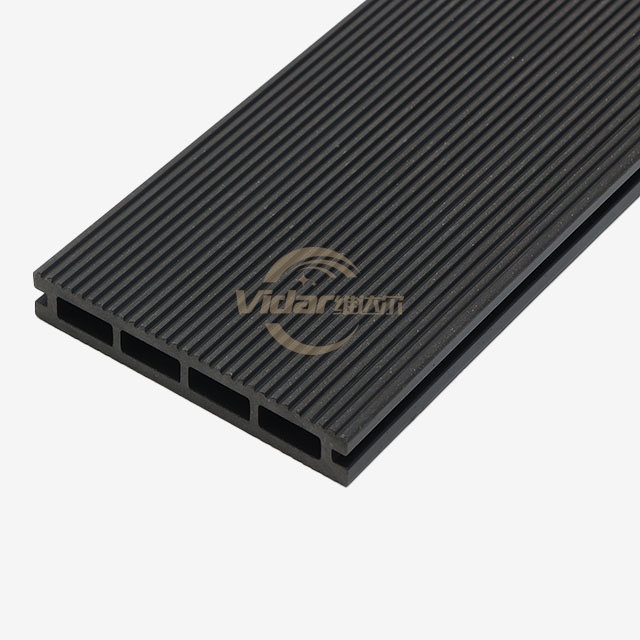
How do structural differences translate to real-world performance? Let us evaluate them across three critical dimensions. These factors heavily influence your daily experience.
Traditional boards naturally absorb moisture over time. They remain highly susceptible in shaded or damp environments. Trapped moisture often leads to physical swelling. You might also notice mold growth embedded deep within the surface fibers. Once mold penetrates the wood fibers, removing it becomes incredibly difficult.
Capped boards feature an impermeable polymer shell. This shell aggressively blocks water absorption. Therefore, capped materials resist rot, warping, and freeze-thaw damage exceptionally well. You can confidently install them near pools, lakes, or humid coastal areas.
Best Practice: Always ensure proper ground drainage under your deck substructure. Even premium capped boards require adequate airflow beneath them to prevent trapped moisture.
Sunlight breaks down pigments in traditional boards. You will likely see noticeable color fading within the first 12 to 16 weeks of sun exposure. The board eventually settles into a lighter, weathered tone. Furthermore, uncapped boards remain vulnerable to grease, wine, or organic stains. You must clean spills immediately to prevent permanent marks.
Manufacturers engineer capped boards using advanced UV inhibitors. The protective shell locks in color pigments. You will experience minimal fading over decades of use. The non-porous surface also allows you to wipe away harsh spills quickly. Red wine and barbecue grease wipe off without leaving permanent stains.
Traditional composite presents a softer surface. Heavy patio furniture and active pet claws scratch it more easily. However, minor scratches sometimes blend naturally into the matte, rustic finish.
The hard plastic shell on capped boards offers robust scratch resistance. It easily handles heavy foot traffic and sliding chairs. A minor drawback exists for high-gloss caps. If a heavy, sharp object breaches the cap, deep gouges appear quite prominently.
Common Mistake: Never drag heavy metal grills across any composite surface. Always lift heavy items or use protective rubber mats to prevent severe gouging.
Performance Feature | Traditional (Uncapped) | Capped Composite |
|---|---|---|
Moisture Resistance | Moderate (Porous surface) | Excellent (Impermeable shell) |
Fade Resistance | Fades 15-20% in first few months | Highly resistant to UV degradation |
Stain Resistance | Low (Requires immediate cleaning) | High (Wipes clean easily) |
Scratch Resistance | Softer surface, scratches blend in | Harder surface, resists minor scuffs |
You must look beyond the initial price tag when planning a deck. Let us compare the immediate cost savings against long-term realities. Intelligent buyers evaluate how longevity affects overall value.
Traditional boards cost less upfront. They fit nicely into strict household budgets. However, you must compare this initial saving against the expected lifespan. Uncapped boards typically last 15 to 20 years before aesthetics severely degrade. Capped boards typically offer a 25- to 50-year expected lifespan. Their extended durability significantly boosts your return on investment over time. You avoid paying for a second deck installation decades later.
Consider the time and effort required for seasonal upkeep. Maintaining uncapped boards requires intense manual labor. You may need periodic specialized cleaning solutions. Deep-seated mold or heavy organic stains require aggressive scrubbing. Conversely, capped boards demand a simple soap-and-water routine. You save countless hours of manual labor each season. Over ten years, the savings in cleaning chemicals and personal time become substantial.
Industry standards vary wildly between these two categories. Traditional boards often carry 10- to 15-year limited warranties. These basic warranties rarely cover gradual fading or minor stains. They mostly cover catastrophic structural failure. Capped composites generally offer 25-year to lifetime warranties. More importantly, premium warranties specifically cover fading and staining. Always read the fine print before purchasing your materials. A strong warranty adds massive value to your property.
Decking brands rely heavily on exciting marketing buzzwords. We must demystify these claims to protect your investment. Knowing the truth prevents unrealistic expectations.
No decking material is entirely maintenance-free. Do not believe advertisements claiming zero upkeep. Capped composites are strictly "low-maintenance." You still need to wash them seasonally. Regular sweeping prevents surface debris buildup. Wet leaves left on the deck can still cause surface discoloration over time. Pollen and dirt will accumulate on any outdoor surface. Expect to spend at least two hours twice a year washing your deck.
Not all capped boards offer equal protection. You must understand the difference between 3-sided and 4-sided caps.
3-Sided Caps: These leave the bottom exposed. This design allows the core to breathe. It works perfectly for elevated decks featuring good airflow. They cost slightly less to manufacture.
4-Sided Caps: These provide maximum moisture protection. The polymer shell completely seals the board. This design costs more but proves essential for ground-level installations where soil moisture rises.
Plastic materials expand when heated. Capped boards often retain more surface heat in direct sunlight. Darker colors absorb significant thermal energy during summer months. Installers must use precise spacing during installation. Proper gapping accommodates this natural expansion and contraction. Failing to gap boards correctly causes severe buckling. Improper installation immediately voids the manufacturer warranty.
Your final decision depends on your specific environment and budget. Review these guidelines to finalize your choice. Evaluating options like Composite Decking,WPC decking ensures you find the right match for your architectural style.
Sometimes, the older technology fits the project perfectly. You should consider traditional uncapped boards under specific conditions:
You manage budget-constrained projects.
You are executing a short-term property investment, such as house flipping.
You are building covered patios or heavily shaded decks. These areas receive minimal direct UV exposure.
You prefer a matte, rustic appearance. You do not mind a natural weathering period.
Certain environments demand modern engineering. You must invest in capped materials for the following scenarios:
You are building your "forever home." Long-term durability and aesthetic retention rank as your top priorities.
You are constructing decks around pools, hot tubs, or marine environments. Maximum moisture resistance is absolutely required.
You have high-traffic areas exposed to continuous, direct sunlight.
You frequently host outdoor dinners and worry about food or beverage spills.
To evaluate your yard's specific exposure, follow these three steps:
Sun Exposure: Calculate your daily direct sunlight hours. Decks receiving more than six hours need capped materials to prevent severe fading.
Moisture Levels: Check for ground dampness and humidity. Ground-level decks trap moisture and require fully capped boards.
Usage Intensity: Estimate your foot traffic and furniture movement. Busy family decks benefit from the scratch-resistant polymer shell.
Traditional composite materials paved the way for low-maintenance outdoor living. They completely disrupted the older timber market. However, capped technology solves the fundamental flaws of that first generation. The co-extruded polymer shell provides necessary armor against moisture, sun, and stubborn stains. While uncapped boards save money initially, capped boards deliver superior long-term value and vastly reduce weekend maintenance.
We encourage you to order physical samples of both types. Test their scratch resistance yourself using a house key. View the color options under your specific yard lighting at different times of day. Finally, contact a certified installer to compare actual quote differences for your specific square footage.
A: Yes, specialized composite sealers exist. However, applying them defeats the primary purpose of buying low-maintenance decking. Paint and sealers eventually peel or flake off. You will lock yourself into a continuous cycle of scraping and reapplying chemicals every few years. It is better to leave them unsealed.
A: Capped boards often feel warmer underfoot. The dense plastic shell retains thermal energy effectively. Darker colors absorb the most heat. However, newer premium capped lines include advanced cooling pigments. These pigments reflect infrared light, keeping the boards significantly cooler than older generations.
A: Severe gouges expose the inner core. Unlike traditional wood, you cannot simply sand down a capped composite board. Sanding destroys the protective polymer shell permanently. For minor scratches, a heat gun can sometimes blend the plastic. Severely damaged boards usually require complete replacement.
A: Both materials utilize similar hidden fastener systems. However, capped boards undergo more significant thermal expansion. They require much stricter adherence to specific end-to-end gapping guidelines. Installers must account for ambient temperatures during installation. Failing to leave proper expansion gaps will void the manufacturer warranty.