Views: 0 Author: Site Editor Publish Time: 2026-07-20 Origin: Site


Many homeowners and contractors face a tough dilemma every late autumn. You want to complete a beautiful outdoor deck build before spring arrives. However, you also worry about risking expensive material failure in freezing weather. Waiting often means losing precious summer months to messy construction. Modern deck materials are highly durable and engineered for longevity. Yet, cold weather fundamentally alters how these synthetic polymers behave during the installation process. Dropping temperatures change board dimensions, stiffness, and overall flexibility. Ignorance of these thermal shifts can quickly ruin an entire project.
You can successfully install Composite Decking in freezing temperatures without issue. Doing so simply requires strict adherence to temperature-specific expansion gaps. Proper material handling and strategic project phasing will protect your investment. Following these precise guidelines ensures you maintain your manufacturer warranty and enjoy a flawless deck for decades.
It is absolutely possible: Winter installations are viable and often benefit from faster contractor scheduling and off-season pricing.
Mind the thermal shift: Composite boards shrink in the cold and expand in the heat; winter installations require larger gap spacing to prevent summer buckling.
Acclimation is non-negotiable: Materials must rest on-site for 24–48 hours prior to cutting to adjust to local ambient temperatures.
Tooling adjustments are required: Cold boards become brittle; pre-drilling and slower cutting speeds are mandatory to prevent cracking.
Groundwork limitations: While framing and decking can happen in the cold, pouring concrete footings requires specialized winter curing processes or must be completed before the freeze.
Evaluating trade-offs between delaying a project and building now makes sense. Many people assume winter completely halts all outdoor construction. This is a common misconception. Capitalizing on winter downtime offers distinct business and personal benefits. You turn a normally dormant season into a highly productive construction phase.
Summer remains the peak season for outdoor renovations. Lead times stretch from weeks to months. In winter, this timeline drops significantly. Builders manage fewer active jobs simultaneously. Homeowners gain much stronger negotiating power during these slow months. You get a more dedicated project focus. Crews will not rush your job to get to their next appointment. They can dedicate full attention to the intricate details of your build.
Spring weather always seems to arrive quickly. Completing the build in winter ensures your outdoor space is fully operational immediately. You bypass peak-season construction disruption entirely. Your yard stays quiet and clean when you actually want to use it. You avoid the mud, noise, and chaos typical of spring construction schedules.
Supply chains loosen up dramatically during colder months. Warehouses hold more stock and face less daily demand. This ensures easier access to premium product lines. You can secure specific colorways without facing annoying backorders. Winter sourcing eliminates frustrating project delays caused by missing inventory. Delivery logistics run much smoother when freight companies have lighter schedules.
We must evaluate the material science behind modern decking. You need realistic expectations before starting a winter build. Wood-Plastic Composite behaves much differently than traditional timber. Understanding this physical shift prevents costly structural mistakes. You cannot treat synthetic polymers like organic lumber.
Traditional wood swells when it absorbs moisture. It shrinks when it dries out. Synthetic boards operate on a completely different principle. They respond directly to ambient temperature rather than moisture content. Boards contract and shrink in freezing temperatures. They expand significantly when exposed to summer heat. This thermal shift dictates your entire installation approach. Ignoring it guarantees structural failure.
Cold weather severely changes polymer structures. They become remarkably stiffer. Boards get quite brittle when temperatures drop below 40°F (4°C). Forcing fasteners into cold boards remains dangerous. Rushing your cuts creates micro-fractures around the edges. These tiny cracks grow over time under physical stress. They eventually compromise the board's integrity. Patience prevents this unnecessary damage.
Frost and ice create highly slick conditions. Because polymer boards do not absorb water, surface ice forms rapidly. A thin layer of morning frost turns a deck frame into a severe hazard. Crews must exercise extreme caution during the build. Proper footwear is essential for safety. Workers must pace themselves to avoid dangerous slips and falls on rigid surfaces.
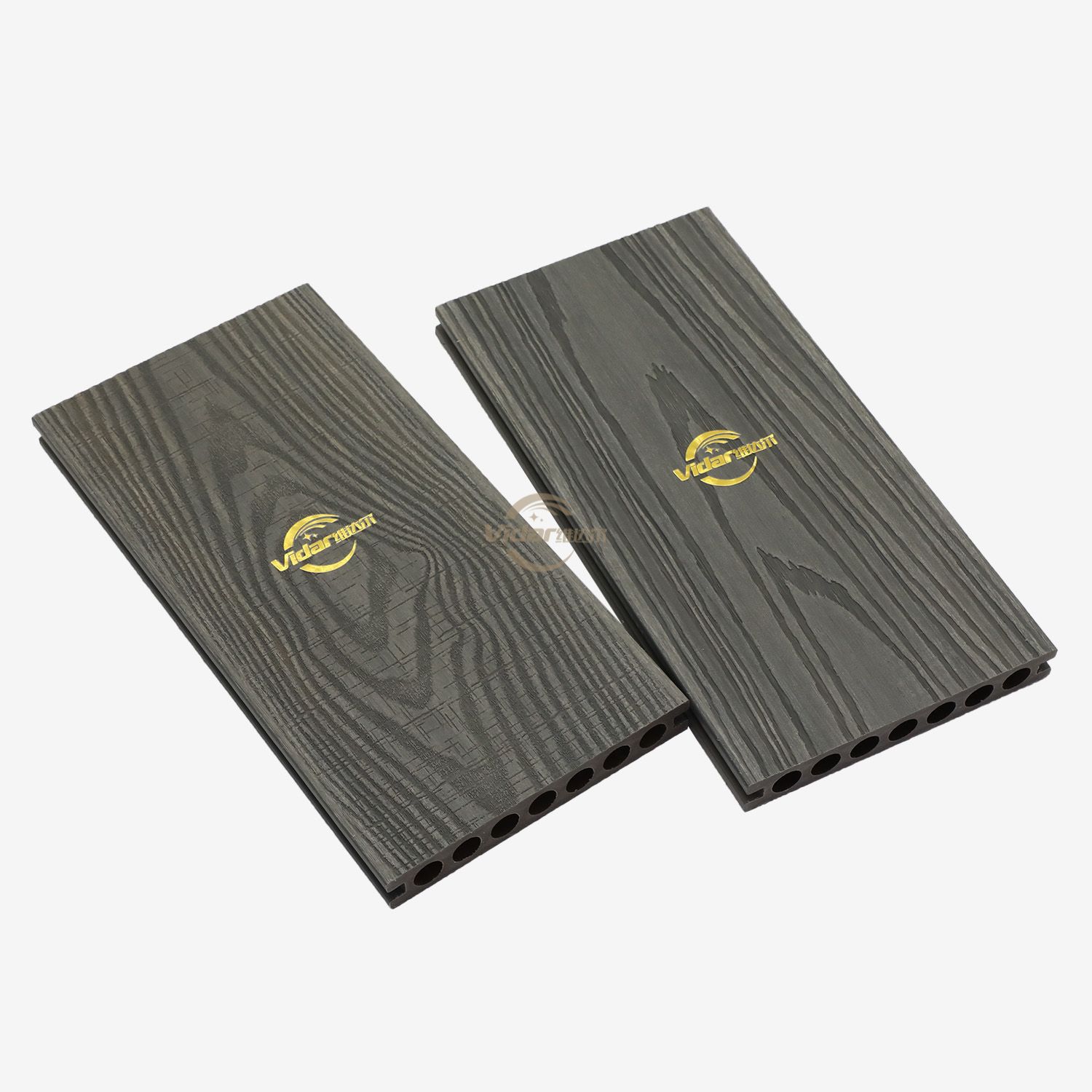
We must implement specific tactical adjustments for winter builds. These protocols prevent catastrophic post-installation failures. Standard summer methods will ruin a cold-weather project. You need specialized techniques.
Materials need adequate time to adjust. You must store boards flat on level supports. Use proper dunnage beneath the stacks. Never leave them resting on uneven ground. They must rest for at least 48 hours on-site. Keep all boards covered to protect them from snow. However, you must allow proper airflow. They need to reach the ambient temperature completely before cutting begins.
Dynamic gap spacing remains the most critical step. You must calculate expansion gaps based on current daily temperatures. Boards installed at 30°F require significantly larger end-to-end gaps than those installed at 70°F. They need ample room for inevitable summer expansion. Side-to-side spacing rules differ. Maintain standard manufacturer recommendations for proper water drainage. This usually runs between 3/16” and 1/4”.
Installation Temperature (°F) | End-to-End Gap Spacing | Abutting Solid Structures |
|---|---|---|
Below 35°F | 1/4 inch | 1/2 inch |
36°F to 60°F | 3/16 inch | 3/8 inch |
61°F to 80°F | 1/8 inch | 1/4 inch |
Above 80°F | 1/16 inch | 1/8 inch |
Always consult the manufacturer's specific temperature and gapping chart. Failing to do so is the top cause of voided warranties. It directly leads to warped decks. When boards expand without adequate gaps, they buckle upward violently. They can shear metal fasteners right in half.
Cold materials demand better tooling setups. Use sharp, carbide-tipped blades for all cuts. Fewer teeth on the blade help eject cold polymer shavings faster. You must pre-drill all surface screw holes. This single step prevents splitting the dense, cold material. Avoid using pneumatic nailers completely. The sudden impact force shatters cold polymers. Instead, rely on approved hidden fastener systems. They allow for slight lateral movement. This movement accommodates natural thermal expansion. Integrating robust materials like Composite Decking,WPC decking requires immense patience and the right techniques.
You must address the holistic build. The surface boards are only one part of the equation. The hidden substructure strictly dictates long-term stability. A flawless surface means nothing if the frame fails beneath it.
Concrete needs specific ambient temperatures to cure safely. Freezing temperatures destroy wet concrete. The water freezes, expands, and shatters the internal structure. You must carefully evaluate your footing strategy. You might need ground-heaving mitigation. Insulated concrete blankets trap curing heat effectively. However, you should consider frost-line helical piers instead. They require absolutely no concrete. They twist directly into frozen soil below the frost line. They offer a much safer winter alternative.
Joist tape prevents substructure rot. It is absolutely essential for timber frames. However, standard acrylic or butyl adhesives lose tackiness in freezing conditions. They simply will not stick to cold, damp wood. You have a simple solution. Keep tape rolls indoors until immediately needed. You can also use a heat gun safely. Warm the top joist surface slightly before pressing the tape down. Apply firm pressure to activate the adhesive bond.
Winter weather inevitably brings snow. Never use metal shovels on an in-progress deck. Avoid calcium chloride ice melts at all costs. These harsh chemicals and sharp tools will permanently scar the unfinished surface. They stain the protective capstock beyond repair. Use durable plastic shovels instead. Utilize safe, non-abrasive sweeping compounds to clear debris safely.
Choosing the right partner matters immensely. You need products engineered for extreme conditions. Use careful shortlisting logic to protect your home. Do not hire the first crew you find.
Select the right materials first. You should look for fully capped composite boards. The capstock acts as a durable shield. It resists moisture penetration exceptionally well. Prioritize high-traction grain patterns. Deep, slip-resistant textures keep you safe in icy conditions. Always verify the manufacturer’s warranty explicitly covers winter installations. You must follow their spacing matrix strictly to keep this coverage valid.
Evaluate contractor competence rigorously. Ask these specific questions before signing any contract:
"How do you adjust your end-gap spacing for winter temperatures?"
"What is your protocol for footing installation if the ground freezes?"
"How do you handle joist tape adhesion in sub-40°F weather?"
Listen closely to their answers. If a contractor claims gap spacing does not matter, disqualify them immediately. Expert contractors will have immediate, highly technical answers ready. They will explain their winter curing processes. They will discuss acclimation timelines unprompted. Demand proof of past winter-installation expertise. Ask for photos of previous winter builds. Review their thermal expansion gap plans before work begins.
Cold weather is never a barrier to building a beautiful outdoor space. It is simply a variable. This variable requires calculated adjustments and careful planning. You can easily overcome winter challenges with proper knowledge. Professional techniques ensure structural integrity regardless of the season.
Take action to keep your project moving forward:
Finalize your deck dimensions and layout today.
Select your preferred board color and slip-resistant texture.
Begin requesting detailed quotes from specialized local contractors.
Demand verifiable proof of winter-installation expertise.
Review the contractor’s specific thermal expansion gap plans.
By preparing now, you guarantee a flawless deck ready for early spring enjoyment. You protect your investment, maintain your warranty, and beat the summer construction rush entirely.
A: Yes, if cut too quickly or with a dull blade. Slower cutting speeds and proper support minimize this risk.
A: Standard approved hidden fasteners and composite screws work, but pre-drilling becomes mandatory in the cold to prevent material displacement and cracking.
A: When summer temperatures arrive, the boards will expand. With no room to grow, they will buckle, warp, or sheer the fasteners, potentially ruining the entire deck surface.
A: Direct, intense heat from a forced-air heater can cause uneven expansion or melt the polymer capping. Ambient warming of materials indoors prior to installation is the preferred method.