Views: 0 Author: Site Editor Publish Time: 2026-07-20 Origin: Site


Discovering dark, unsightly mould spots on a supposedly "low maintenance" deck feels incredibly frustrating. You invested heavily in an outdoor living space meant for relaxing, not endless scrubbing. Homeowners often expect artificial materials to repel nature perfectly. However, outdoor environments constantly deposit organic matter onto every surface, creating an ideal breeding ground for fungal spores.
The core risk lies in treating this problem like a traditional timber deck. Using the wrong harsh chemical or an aggressive scrubbing tool can easily strip the protective capping. This damage causes irreversible discoloration. Worse, improper cleaning methods will instantly void most manufacturer warranties. You must approach this task carefully to protect your investment.
You need a targeted, warranty-safe approach to eliminate these spores safely. We will break down a chemically sound framework to tackle the issue. You will learn how to choose the right cleaners, execute the removal flawlessly, and prevent future regrowth entirely. This guide ensures your deck stays pristine without compromising its structural integrity.
The Golden Rule: Never use chlorine bleach (sodium hypochlorite) on composite or WPC decking; use oxygen-based cleaners (sodium percarbonate) instead.
Tool Selection: Stiff wire brushes and high-pressure power washing (above 1500 PSI) cause micro-abrasions that invite future mould.
The True Cause: Mould feeds on organic surface debris (pollen, sap, dirt, food spills), not the composite material itself.
Process Efficiency: Success relies on "dwell time" (letting the chemical work) rather than aggressive physical scrubbing.
Many homeowners misunderstand how mould interacts with synthetic outdoor materials. They assume the decking itself has failed or started rotting. In reality, the material remains structurally sound. The problem exists entirely on the surface layer.
Capped composite materials resist rot exceptionally well. Fungi cannot consume the plastic polymers. However, surface mould thrives on the biofilm accumulating above the boards. Every day, wind and rain deposit microscopic organic debris onto your patio. Pollen, dirt, bird droppings, and decaying leaves trap moisture against the surface. Fungi spores land on this damp organic layer and feed on it. You are not seeing mould eating your deck. You are seeing mould eating the dirt resting on your deck.
Understanding your specific board type helps determine your cleaning strategy. Older, uncapped boards differ heavily from modern Composite Decking,WPC decking, which features a resilient protective shell. Uncapped boards contain exposed wood flour on the surface. These older boards are highly porous. They allow fungal spores to root deeply into the exposed wood fibers, making removal difficult. Modern capped boards feature an impermeable plastic shell. On these newer boards, mould only experiences surface-level growth. You can wipe or wash it away much easier because it cannot penetrate the plastic barrier.
Certain environmental conditions drastically accelerate fungal growth. Poor drainage creates standing water on your boards. Shaded areas under large trees block sunlight, preventing UV rays from naturally neutralizing spores. Furthermore, debris often blocks the crucial gaps between boards. Blocked gaps prevent proper airflow and under-deck cross-ventilation. When a deck stays wet for prolonged periods, mould colonies explode in size. You must address these environmental catalysts to achieve long-term success.
Choosing the correct cleaning agent is the most critical decision you will make. You must balance safety against efficacy. The ideal solution must kill mould, protect the decking material, and keep you compliant with manufacturer warranties.
Before purchasing any chemical, ask yourself three questions. Does it kill the spore at its root? Will it degrade the UV-protective layer of the plastic? Does the manufacturer warranty explicitly forbid it? Answering these questions helps you avoid disastrous mistakes. Let us evaluate the most common options available to homeowners.
People often grab standard household bleach (sodium hypochlorite) at the first sign of mildew. This is a severe mistake. Chlorine bleach is highly corrosive to the UV protective layers built into synthetic boards. Over time, it causes severe, uneven fading and bleaching. If you have older uncapped boards, chlorine accelerates the breakdown of the exposed wood fibers. Most importantly, using chlorine bleach explicitly voids warranties for most major brands like Trex and TimberTech. Never apply it to your deck.
Oxygen bleach represents the gold standard for outdoor synthetic cleaning. When mixed with water, sodium percarbonate releases oxygen rapidly. This creates a foaming action. The foam mechanically lifts mould spores and dirt away from the surface without stripping the material's color. It effectively breaks down the cell walls of fungi. Better yet, oxygen bleach breaks down into natural elements. It remains completely safe for nearby landscaping, grass, and household pets.
Hardware stores sell dozens of commercial deck cleaners. You must evaluate these carefully. Look for formulas specifically labeled "composite-safe," "non-toxic," and "bleach-free." Always read the active ingredients list. We strongly warn against using "all-in-one" miracle exterior cleaners. These heavily marketed products often hide aggressive solvents and degreasers designed for concrete, not delicate plastic capping.
Cleaner Type | Mould Killing Efficacy | Material Safety | Warranty Compliance |
|---|---|---|---|
Chlorine Bleach | High | Very Low (Corrosive) | Voids Warranty |
Oxygen Bleach (Sodium Percarbonate) | High | High (Color-safe) | Widely Accepted |
Standard Vinegar | Low to Medium | High | Accepted (Spot treatment) |
All-in-One Concrete Cleaners | Medium | Low (Harsh Solvents) | High Risk |
Execution matters just as much as chemical selection. A rushed job yields poor results and wastes expensive cleaning solutions. Before restoring your Composite Decking, clear off all patio furniture to ensure an unobstructed work area. Follow this structured process for optimal results.
Step 1: Dry Preparation
Start with a completely dry deck. Remove all planters, rugs, and chairs. Use a stiff broom or a leaf blower to eliminate loose surface debris. Focus intense attention on the small gaps between the boards. Use a putty knife (carefully) to clear compacted dirt from these crevices. Restoring airflow here is vital for the deck to dry out after you finish.
Step 2: Surface Pre-Wetting
Grab your garden hose and thoroughly wet down the entire deck. A porous, dry, or sun-baked deck absorbs liquid cleaning agents far too quickly. This prevents the chemical from working on the surface. A pre-wet deck allows your chosen cleaner to float on top of the moisture, attacking the mould directly.
Step 3: Application and Dwell Time (Crucial Step)
Mix your oxygen bleach or composite-safe cleaner according to the manufacturer's ratios. Apply it generously using a pump sprayer. Now comes the most important rule: let it sit for 15 to 20 minutes. This is called dwell time. The chemical needs these minutes to break down fungal cell walls. Do not let the solution dry on the boards. Mist it lightly with water if it begins to evaporate in the sun.
Step 4: Soft Agitation
After the dwell time, the mould will be loose. Do not scrub frantically. Use a soft-bristle nylon brush on an extension pole. Scrub gently across the grain first, then pull the brush parallel with the grain. You are simply sweeping away the dead spores. Let the chemical do the heavy lifting, not your muscles.
Step 5: Thorough Rinsing
Flush the deck entirely with a standard garden hose. You must remove all spore remnants, dirt slurry, and soap residue. Leftover soap dries into a sticky film. This film will trap new dirt and start the fungal cycle all over again. Rinse until the water runs completely clear.
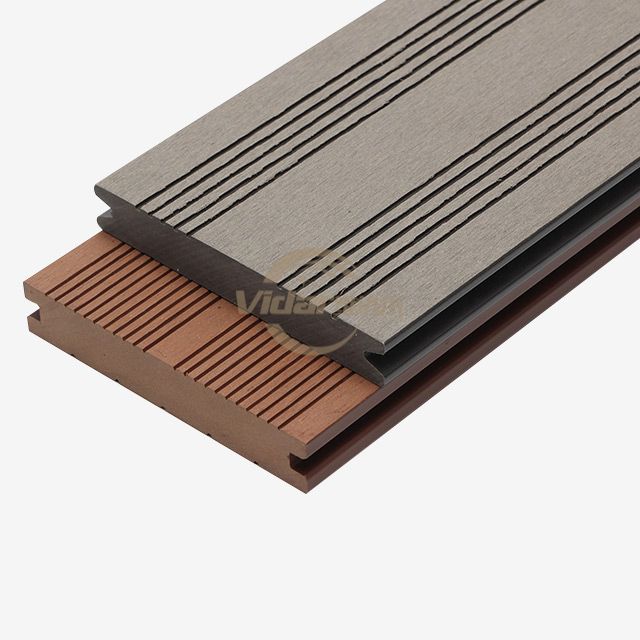
Even well-meaning homeowners destroy their outdoor spaces by applying traditional timber maintenance habits to synthetic materials. Avoiding these common pitfalls saves you thousands of dollars in replacement costs.
A massive misconception exists regarding pressure washers. People assume high pressure is necessary to blast away stubborn stains. For synthetic boards, high pressure spells disaster. The intense water stream can permanently score the plastic capping, leaving visible zigzag marks.
If you absolutely must use a pressure washer for the final rinse phase, follow strict expert rules. Always use a fan-tip nozzle, specifically a 40-degree tip. Keep the wand tip at least 8 to 12 inches away from the surface at all times. Never exceed 1500 PSI. Using a zero-degree (red) nozzle will slice through the plastic capping instantly, ruining the board.
Physical abrasion destroys synthetic capping. We strongly warn against using metal scrapers or stiff wire brushes to attack stubborn mould spots. Similarly, avoid stiff synthetic street brooms. These tools leave micro-scratches across the surface. These tiny scratches ruin the glossy finish and create microscopic pockets where new mould spores can anchor themselves safely.
Furthermore, never attempt to sand a synthetic board. Sanding traditional timber removes the top layer to reveal fresh wood. Sanding capped plastics destroys the protective shell entirely. Once you sand through the cap, the inner composite core is exposed to moisture, leading to rapid degradation.
Cleaning the boards solves the immediate visual problem. It does not solve the root cause. If you clean the surface without addressing the surrounding environment, regrowth is guaranteed. Overhanging tree branches drop sap and shade the area constantly. Misdirected gutter downspouts dump excessive roof runoff directly onto your patio. You must fix these environmental issues. Cut back the branches and reroute the downspouts. Otherwise, you will be scrubbing fungi away again next month.
Preventative maintenance requires far less effort than corrective deep cleaning. By implementing a few simple habits, you can keep your outdoor living space continually pristine.
You must remove the organic food source before fungi can establish a colony. Establish a strict baseline recommendation for sweeping. Give the area a thorough sweep bi-weekly. If you live in a heavily wooded area, sweep weekly during the fall and spring. A simple push broom removes pollen, leaves, and dirt before they break down into a sticky biofilm.
Sunlight and airflow are natural enemies of fungi. Trim back dense foliage, bushes, and low-hanging tree branches around the perimeter. Ensure direct sunlight hits the deck for at least a few hours each day. Additionally, check the area beneath the substructure. Ensure proper cross-ventilation is maintained below the joists. Stagnant, damp air trapped under the boards encourages moisture vapor to rise, feeding spores from underneath.
Outdoor dining presents unique risks. Clean up dropped food immediately. Wipe up grease splatters from the barbecue grill. Wash away spilled wine or sugary drinks instantly. These localized spills create concentrated breeding grounds. Fungal colonies latch onto grease spots rapidly. Keep a spray bottle of mild dish soap and warm water handy near your grill for rapid spot treatments.
Sweep thoroughly every two weeks to remove pollen and dirt.
Keep the gaps between boards clear of compacted debris.
Trim surrounding bushes to promote sunlight exposure.
Wipe up barbecue grease and food spills immediately.
Inspect underneath the joists yearly to ensure proper airflow.
Removing mould from synthetic outdoor boards does not require back-breaking labor. It requires a chemical-first, gentle-agitation approach. Relying on oxygen bleach and adequate dwell time preserves both the structural integrity and the beautiful aesthetics of your outdoor space. Aggressive scrubbing and high-pressure washing only lead to permanent damage and voided warranties.
By understanding how fungi feed on surface debris, you can easily implement preventative habits. Simple routine sweeping and prompt spill management will keep your outdoor area immaculate year-round.
Next Steps:
Review your specific manufacturer’s care guide to confirm cleaner compatibility before purchasing supplies.
Purchase a high-quality oxygen bleach powder and a soft-bristle nylon brush.
Evaluate your surrounding landscaping and trim back branches blocking sunlight.
Contact a professional soft-wash service if your deck exceeds a manageable square footage or features difficult multi-level architecture.
A: Yes, for mild spot treatments. It is safe and eco-friendly, but generally lacks the potency to lift severe, widespread mould stains compared to oxygen bleach.
A: It can. Many manufacturers state that using PSI above their recommended threshold (often 1500-3100 PSI max, depending on the brand) or using the wrong nozzle will void the warranty. Always verify with your specific brand.
A: New decks can sometimes accumulate pollen or construction dust. If shaded and wet, this organic layer will quickly grow mould, even if the deck is only a few months old.
A: Standard Simple Green is generally safe for general dirt, but for mould, you need a targeted composite-safe mould remover or an oxygen-bleach solution for effective spore eradication.