Views: 0 Author: Site Editor Publish Time: 2026-07-22 Origin: Site


Most homeowners invest in composite materials to permanently escape wood's endless cycle of rotting, splintering, and painting. Therefore, seeing a fracture spread across your new deck feels like a profound failure of that investment. We naturally expect these modern boards to act as invincible upgrades. However, while premium capped composites offer immense durability, they remain strictly bound by the rigid laws of thermal dynamics. Cracking rarely happens because of a spontaneous material flaw. Instead, it serves as a glaring symptom of deeper structural issues. Common culprits include major installation errors, extreme environmental stress, or simply picking the wrong product tier for your local climate. Preventing these structural fractures demands a clear understanding of how boards expand and contract. You must specify the right board architecture for your backyard. Most importantly, you have to adhere strictly to precise fastening tolerances. In this guide, you will learn exactly how to protect your deck from stress fractures before the first screw even goes in.
Thermal Movement is Inevitable: WPC decking requires precise gapping; restricting its natural expansion and contraction is the primary cause of stress cracks.
Fastening Systems Matter: Hidden clip systems accommodate lateral movement better than rigid face-screwing.
Material Architecture Dictates Resiliency: Capped, solid composite boards offer significantly higher resistance to impact and freeze-thaw damage than hollow alternatives.
Installation Voids Warranties: Manufacturer warranties rarely cover cracking caused by improper joist spacing or over-torqued screws.
Understanding deck failure starts with physics. Manufacturers design polymer-wood blends to act as highly resilient hybrid materials. They blend plastic polymers and organic wood fibers. Plastics naturally expand outward when exposed to intense ambient heat. Wood fibers constantly try to absorb environmental moisture and swell. When a rigid installation restricts this inevitable movement, the board forces itself outward. It will eventually rupture to relieve the mounting internal pressure.
Next, we must thoroughly examine the wooden substructure. Joist spacing exceeding manufacturer limits introduces severe structural risks. For most residential decks, standard framing guidelines dictate a maximum of 16 inches on-center. If builders place joists further apart, the boards deflect downward under heavy foot traffic. This constant bending creates microscopic fractures inside the core. Over time, these tiny micro-cracks propagate into massive, highly visible splits.
Finally, improper fastening mechanics destroy board integrity almost instantly. Over-torquing screws crushes the vital polymer shell. Failing to pre-drill near board ends applies immense outward pressure on the dense core. Driving fasteners at sharp angles creates immediate, localized stress points. The moment the temperature fluctuates, these stress points snap.
Skipping pre-drilling on board ends, causing instant splitting.
Spacing joists at 24 inches for standard residential dynamic loads.
Sinking screw heads completely through the protective cap layer, exposing the core to water.
Butting boards tightly against permanent structures like brick walls.
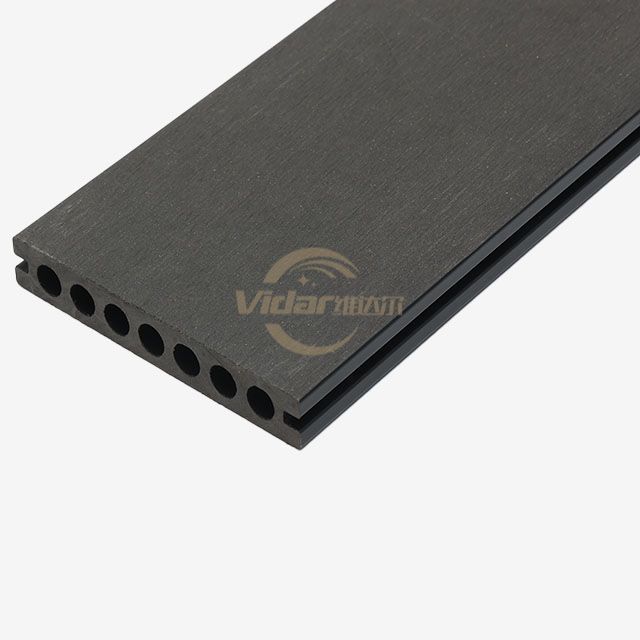
Choosing the right board architecture dictates the long-term survival of your outdoor space. Not all composites possess the same structural integrity. Selecting cheap materials often results in premature cracking.
Solid boards closely resemble traditional lumber. They pack dense composite material uniformly throughout their entire core. Conversely, hollow boards feature large internal channels designed to reduce weight and cut manufacturing costs. While budget-friendly, hollow profiles remain highly susceptible to impact cracking. Heavy objects dropped on hollow boards easily puncture the thin surface. Furthermore, if water pools inside the hollow channels, freeze-thaw cycles will literally burst the board from the inside out.
Material Profile Structural Comparison
Profile Type | Impact Resistance | Freeze-Thaw Vulnerability | Ideal Use Case |
|---|---|---|---|
Solid Core | High (Absorbs heavy drops) | Low (No internal water pooling) | High-traffic residential and commercial spaces. |
Hollow Core | Low (Easily punctured) | High (Traps water inside channels) | Light-duty, budget-conscious residential projects in mild climates. |
The exterior polymer shell plays a vital role in preventing decay. Capped boards wrap the inner wood core in an advanced, co-extruded plastic shield. This shield seals out moisture ingress completely. Uncapped older boards leave raw wood fibers exposed to daily rain and humidity. When moisture enters an uncapped core, internal swelling becomes a primary crack catalyst.
Always select premium Composite Decking specifically engineered for your local environment. High-sun exposure regions strictly require UV-stabilized materials. Relentless UV rays slowly degrade weak polymers over time, making them brittle and prone to surface crazing. Evaluating the thermal resistance ratings prevents rapid degradation. Advanced heat-mitigating formulations stay significantly cooler underfoot. They resist the extreme, sudden expansion common in sweltering southern climates.
Execution determines longevity. Even the most expensive materials fail spectacularly if installed incorrectly. You must respect rigid industry standards and follow strict risk mitigation rules during assembly.
You have to provide adequate physical space for inevitable thermal movement. Gap sizes depend entirely on your local climate and the exact temperature during installation.
Measure Ambient Temperature: Note the exact outdoor temperature when measuring, cutting, and laying the boards.
Calculate Butt Joints: Leave much larger gaps (typically 3/16 to 1/4 inch) between board ends during winter installs. Summer installs require tighter gaps (e.g., 1/8 inch), as the boards already sit in a fully expanded state.
Set Side-to-Side Spacing: Maintain consistent lateral gaps between parallel boards. This allows both lateral thermal expansion and crucial water drainage.
We strongly advocate using hidden fastener systems whenever possible. These modern systems utilize specialized metal or heavy-duty plastic clips. The clips hold the board securely to the underlying joist while simultaneously allowing it to slide laterally. This natural sliding motion absorbs wild temperature swings harmlessly.
If complex deck geometries force you into face-screwing, you face far stricter rules. You must use composite-specific, reverse-thread screws. Standard wood screws pull material upward, creating ugly, weak mushrooms around the screw head. Reverse-thread screws push the displaced polymer material neatly down into the hole. Pre-drilling becomes an absolute requirement for every face screw to relieve internal core pressure.
Trapped moisture slowly destroys wooden substructures and violently warps composite boards. Under-deck airflow proves essential. You need adequate ground clearance to facilitate continuous cross-ventilation. Poor airflow creates extreme temperature differentials. The top of the board bakes under the blazing sun while the bottom stays cool and damp. This severe thermal imbalance forces the board to cup. Cupping creates immense surface tension that inevitably leads to longitudinal cracking.
Standard installation rules change slightly when you face severe weather profiles. Effective scalability requires adapting your installation strategy to local environmental realities.
Harsh winters bring unique destructive forces. Trapped surface water often expands into solid ice overnight. If liquid water seeps into tiny, pre-existing micro-abrasions on the board's surface, the subsequent ice expansion will pry them wider. Proper deck pitching solves this issue effectively. Always slope the underlying deck substructure slightly away from the primary house structure. A standard drop of 1/8 inch per foot ensures rapid, reliable water drainage.
Relentless direct sunlight creates immense thermal retention. Dark-colored composite boards absorb solar heat rapidly. They expand aggressively during peak afternoon sun. For intensely hot climates, we strongly recommend selecting lighter colors. Many top-tier brands now offer specific heat-mitigating product lines. These specialized boards actively reflect solar radiation, keeping the core temperature stable and reducing thermal stress fractures.
You cannot place massive, concentrated weights directly on standard composite surfaces. Heavy backyard installations like hot tubs, heavy stone fire pits, or massive pergolas require dedicated structural support. Their immense weight must transfer directly onto the wooden substructure below. Resting a heavy load solely on the composite surface traps the board underneath. It pins the material down firmly, completely restricting natural expansion and causing severe localized fracturing under the pressure.
Consistent post-installation vigilance saves decks. Managing your long-term expectations helps you take appropriate, measured action when natural wear eventually occurs.
Not all visible marks signify total structural failure. You must differentiate between minor cosmetic flaws and real physical hazards. Superficial surface crazing usually indicates minor weathering on the cap layer. These small scratches remain entirely cosmetic. They do not threaten structural integrity. Conversely, full-thickness structural fissures penetrate deep into the interior core. These deep, widening cracks compromise the board's weight-bearing capacity. They pose an immediate safety hazard and require urgent intervention.
We must approach composite repairs with highly realistic expectations. Traditional natural wood allows you to inject strong wood glue or apply wood filler seamlessly. Modern polymer blends lack this forgiving nature. You cannot structurally "glue" distinct polymer chains back together. The constant thermal cycling quickly ejects most standard fillers. Avoid over-promising repair kits, colored markers, or specialty waxes. They merely hide cosmetic scratches temporarily and provide zero structural reinforcement.
A deeply cracked, structurally compromised board requires immediate replacement. However, simply dropping a pristine new board into the old slot guarantees a repeated failure. You must thoroughly establish the underlying criteria for replacement before proceeding. Identify the initial installation flaw first. Did the original board lack an appropriate expansion gap? Did the local joist spacing exceed maximum structural limits? Fix the wooden substructure, correct the gapping dimensions, and only then lay down the new WPC decking. Otherwise, the replacement board will crack exactly like the first one.
Preventing devastating cracks ultimately breaks down into a remarkably simple formula. It requires roughly 20% intelligent material selection and 80% flawless installation execution. Even the absolute highest-grade polymer caps cannot withstand the raw physics of restricted thermal expansion. If you trap the board, it will eventually break.
Smart buyers should always prioritize fully capped, solid-core boards for maximum long-term durability. Beyond simply analyzing the product, carefully vet your chosen contractors. Ask them specifically about their strict adherence to standard thermal expansion guidelines. Question their familiarity with premium hidden clip fastening systems.
As a crucial next step, prompt your installation team to review the exact manufacturer installation manuals for your specific climate zone. Always consult a certified, brand-approved installer. Have them thoroughly audit your deck's wooden substructure, drainage pitch, and joist spacing before purchasing your new materials.
A: Yes, they often do. Thermal cycling exacerbates existing weaknesses over time. As temperatures rapidly rise and fall, the board continuously expands and contracts. This repetitive lateral motion applies intense stress to any existing micro-cracks. In cold climates, standing water can also seep into these small surface flaws. When that water freezes and turns to ice, it forcefully pries the crack wider.
A: No. Standard wood fillers and construction epoxies prove highly ineffective on complex polymer blends. Composite boards experience significant daily thermal expansion. Because stiff fillers do not expand and contract at the exact same rate as the surrounding plastic, they quickly loosen. The naturally shifting board will simply pop the rigid filler right out of the crack.
A: It depends entirely on the proven root cause. Manufacturer warranties proudly cover genuine, documented material defects originating from the factory floor. However, they explicitly exclude damages caused by installation errors. If your board cracked due to improper joist spacing, a severe lack of thermal expansion gaps, or over-torqued face screws, the manufacturer will void your claim.
A: Generally, yes. Hollow boards feature large internal channels that significantly reduce overall mass and structural density. This lightweight design makes them far more susceptible to severe impact damage from heavy dropped objects. Additionally, if water infiltrates these internal channels and freezes, the resulting ice expansion easily bursts the thin exterior walls, causing catastrophic longitudinal cracking.