Views: 0 Author: Site Editor Publish Time: 2026-07-18 Origin: Site


Homeowners and contractors are increasingly shifting toward light, blonde, and pale grey decking. They use these brighter shades to create expansive, airy outdoor living spaces. These colors effortlessly bring an organic warmth to modern patios. However, selecting a light color introduces specific evaluation criteria for your project. Buyers routinely express concerns about dirt visibility, long-term UV color stability, and potential architectural mismatch. We offer a comprehensive, evidence-based framework for evaluating these bright boards effectively. You will discover exactly how to separate durable, premium solutions from common aesthetic risks. Navigating these choices requires careful attention to material composition and environmental factors. By the end of this guide, you will know how to match undertones, assess surface textures, and confidently choose the perfect light boards for your home.
Light decking significantly reduces surface heat retention compared to dark boards, improving barefoot comfort in direct sunlight.
"Blonde" and pale grey WPC decking require high-quality capping technology to prevent permanent staining from organic debris and spills.
Evaluating physical samples on-site across different times of day is a mandatory step before finalizing a purchase.
Contrasting light decking with dark architectural elements creates a modern aesthetic, while matching it with light exteriors requires careful tonal variation to avoid a "washed-out" look.
Choosing a light color for your outdoor space goes beyond simple aesthetics. It directly impacts daily usability and structural longevity. When you evaluate surface options, thermal performance remains a primary factor. We must look at the physics of heat absorption. Dark colors absorb a massive amount of solar energy. Light boards reflect this sunlight away. Materials feature a specific Light Reflectance Value (LRV). A higher LRV means the board bounces more light and heat back into the atmosphere. This reflection keeps surface temperatures noticeably cooler. You enjoy much better barefoot comfort during peak summer months.
Spatial perception also plays a major role in outdoor design. Pale colors visually expand small or heavily shaded areas. Creams, light greys, and blondes trick the human eye. They make tight courtyards and narrow balconies feel significantly larger. You can transform a claustrophobic backyard into an inviting retreat just by changing the floor color.
Many buyers express skepticism regarding fading and UV resistance. They worry bright boards will turn dull or yellow. High-quality capped boards utilize advanced UV inhibitors. Manufacturers blend these chemical stabilizers directly into the polymer shield. This technology prevents the severe fading historically associated with early-generation materials. You get vibrant, stable colors for decades. Premium Composite Decking effectively resists sun damage while maintaining its structural integrity.
The chart below outlines how different color profiles generally perform under direct sunlight.
Color Profile | Light Reflectance Value (LRV) | Heat Absorption Rate | Barefoot Comfort Level |
|---|---|---|---|
Pale Grey / Cream | High (50%+) | Low | Excellent |
Warm Blonde / Golden Oak | Medium-High (35-50%) | Moderate | Very Good |
Dark Brown / Walnut | Low (15-30%) | High | Poor |
Charcoal / Black | Very Low (<15%) | Very High | Uncomfortable |
The market offers a stunning variety of light hues. Each sub-category brings a distinct architectural vibe to your property. Understanding these profiles helps you make an informed aesthetic decision.
Warm blonde boards mimic the look of fresh-cut pine, white oak, or bamboo. They deliver an organic, coastal vibe. These tones perfectly replicate natural wood without the heavy maintenance. We highly recommend them for seamless transitions from indoor hardwood flooring to outdoor spaces. They blur the line between interior and exterior living. Golden oak tones pair beautifully alongside homes featuring warm exterior palettes. They complement beige stucco, red brick, and cream-colored siding effortlessly.
Pale greys offer a completely different visual experience. They exude a contemporary, minimalist, and slightly industrial vibe. Designers frequently use these cool tones for ultra-modern architecture. They blend flawlessly into environments heavily featuring concrete landscaping. Pale grey also acts as a striking counterbalance to dark exterior siding. If your home features navy blue, charcoal, or stark black walls, a silver-toned deck provides magnificent contrast. It grounds the space while keeping the area feeling bright.
Whitewashed boards simulate the appearance of sea-salt-cured timber. They provide a rustic, Hamptons-style aesthetic. The surface often features deep, distressed texturing. This style suits high-sunlight areas exceptionally well. A pre-weathered look actually helps mask minor surface wear over time. If you live near the coast or want a shabby-chic patio, whitewashed boards offer incredible charm. They deliver character right out of the box.
Blondes: Best for warm, natural, and traditional designs.
Greys: Best for modern, sleek, and high-contrast designs.
Whitewash: Best for coastal, textured, and rustic designs.
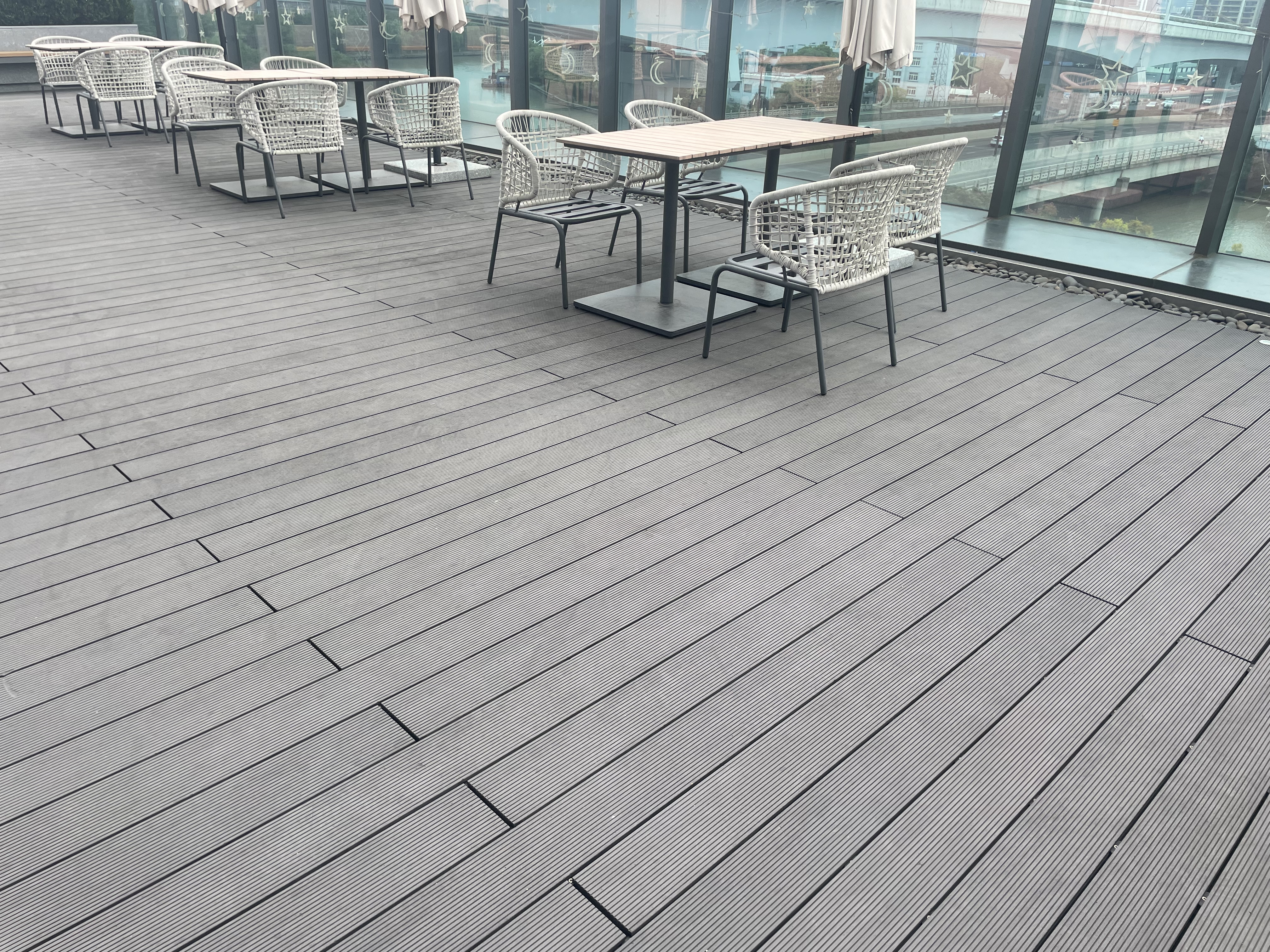
We must discuss the implementation risks honestly. Choosing a light-colored surface changes your daily maintenance reality. You need to understand the "dirt factor" before making a final commitment. Light boards hide certain types of debris incredibly well. They easily conceal fine dust, light pollen, and dried water spots. However, they aggressively highlight other messes. Muddy footprints, wet organic leaves, and dark pet hair stand out instantly. You will notice tracked-in garden soil much faster on a blonde board than on a dark brown one.
Because of this high visibility, capping technology matters immensely. Fully capped boards are absolutely non-negotiable for light colors. The manufacturing process extrudes a protective polymer shield around the board's core. This shield acts as a non-porous barrier. It prevents red wine, barbecue grease, and tannin stains from penetrating the material. Without this capping, wet leaves will permanently dye a pale board. Premium Composite Decking,WPC decking utilizes this advanced shielding to guarantee long-term stain resistance.
You should establish realistic cleaning protocols early. Routine maintenance requires very little effort if done correctly. We recommend standard soap-and-water cleaning. A soft-bristle brush easily lifts surface dirt. Avoid high-pressure washing whenever possible. Aggressive power washing can severely damage the board's delicate grain texture. It strips away the protective micro-layers. A common mistake involves using harsh bleach solutions on light boards. Bleach degrades the polymer capping over time. Stick to gentle, formulated deck cleaners for the best results.
Your deck does not exist in a vacuum. It sits directly against your home and interacts with your landscaping. You need a solid color-matching framework to ensure architectural harmony. We generally look at two primary strategies: contrast and cohesion.
The contrast strategy frames the decision around opposing tones. You use light decking specifically to offset dark exteriors. This approach creates a striking, modern aesthetic. A pale grey deck against a dark charcoal house makes the building pop. The deck acts as a bright stage. This strategy works exceptionally well for contemporary homes. It defines boundaries clearly and highlights the architectural geometry of the property.
The cohesion strategy applies when your house already features light-colored siding. If you have white or cream walls, matching the deck color exactly creates problems. It often results in a "washed-out" look. The entire property loses visual depth. We recommend choosing a decking shade at least two tones darker or lighter than the siding. This slight tonal variation prevents visual flattening. It provides subtle separation while maintaining a unified, airy theme.
You must also detail how the surrounding environment influences the final undertone. Landscaping plays a massive role. Heavy, lush greenery pairs beautifully with warm blondes. The organic greens and golden woods complement each other naturally. Conversely, hardscaping elements like stone pavers or concrete walls demand cool tones. Silver and pale grey boards harmonize best here. Finally, look at your roof color. A warm-toned roof (brown tiles, red terra cotta) calls for a warm-toned deck. A cool-toned roof (black shingles, grey metal) aligns perfectly with cool pale greys.
Digital screens cannot render true material colors accurately. Screen brightness, pixel density, and color calibration distort reality. You must follow a strict pre-purchase checklist before buying any light boards. We have developed a simple, foolproof framework for evaluating your options.
The Lighting Test: Instruct buyers to place physical samples in the exact location of the future deck. You must observe color shifts throughout the day. Check the boards during soft morning light. Look at them under harsh midday sun. Review them again in deep evening shade. Light colors reflect ambient light, meaning they often shift slightly in appearance depending on the time of day.
Texture and Realism Verification: Light colors can sometimes look artificial or "plastic-like" if the grain embossing remains shallow. You must evaluate the depth of the woodgrain texture. Look closely at the multi-tonal streaking. Premium boards feature subtle lowlights baked into the light color. Run your hand across the surface to ensure the texture feels authentic and provides adequate slip resistance.
Warranty Alignment: Always read the fine print. Confirm the manufacturer's stain and fade warranty specifically covers the light WPC lines you are evaluating. Some brands offer different coverage tiers based on the product line. Ensure you receive comprehensive protection against UV yellowing and organic staining.
Next Action: Direct your attention to acquiring physical materials. Order a curated sample pack of light and blonde boards. Begin localized testing immediately. Place them against your exterior walls and let them sit outside for a week.
Light composite decking provides a high-performance, aesthetically striking choice for modern outdoor spaces. It significantly enhances barefoot comfort by reflecting solar heat. It also visually expands your patio. However, successful implementation requires you to invest strictly in capped technology. You must also plan for minor, routine spot-cleaning to manage visible dirt. Never rely on digital screens for color accuracy. The only reliable way to finalize your decision is through rigorous physical sample evaluation on your property. Take the next step today. Order a curated sample box, test the boards against your home's exterior, and request a structural quote from a certified contractor.
A: It gets significantly less hot than dark boards. Lighter colors reflect more solar radiation, providing a higher Light Reflectance Value. However, all composites retain some heat due to their dense material core. Lighter colors ultimately offer the best barefoot comfort available for sunny locations.
A: Premium capped composites use advanced UV stabilizers and inhibitors to prevent yellowing and fading. The protective polymer shield blocks damaging sun rays. You must avoid uncapped, first-generation boards, as they remain highly susceptible to severe color degradation and yellowing.
A: It readily shows dark dirt, muddy footprints, and pet hair. However, it hides fine dust and light pollen much better than dark colors. Non-porous capping makes spot-cleaning straightforward. You can easily remove most messes using simple soap and water.