Views: 0 Author: Site Editor Publish Time: 2026-07-03 Origin: Site


Patio and balcony landscaping present unique architectural challenges. Structural load limits heavily restrict your material choices in elevated spaces. High wind exposure constantly threatens lightweight containers. Intense UV radiation degrades standard plastics rapidly. To overcome these hurdles, landscape designers increasingly turn to engineered materials. Wood-Plastic Composite (WPC) serves as a highly advanced alternative. It successfully bridges the gap between the aesthetic warmth of natural wood and the weather endurance of synthetic polymers. You need a reliable container for long-term outdoor landscaping. This article provides a definitive, evidence-based evaluation framework. We will help you select the ideal WPC container for your space. You will learn how to evaluate material durability, structural density, and drainage architecture. We also cover plant profiling and spatial layout strategies. Follow these practical guidelines to ensure your elevated garden thrives for years.
Elevated outdoor spaces create harsh microclimates for plants. Concrete floors and glass facades reflect intense sunlight. This albedo effect drastically increases ambient temperatures around your containers. Summer heat bakes the soil and dries out delicate root systems. Additionally, high floors experience severe wind tunneling. Wind sheer increases soil evaporation rates and threatens to topple lightweight pots. Direct UV exposure relentlessly breaks down material cellular structures over time.
Traditional materials struggle to survive these overlapping environmental stresses. Natural wood offers undeniable aesthetic appeal. However, it readily absorbs ambient moisture. Wood remains highly susceptible to fungal decay and bacterial rot. You must apply toxic chemical sealants annually to prevent structural failure. Standard plastic planters offer a cheaper alternative. Yet, they suffer rapidly from UV embrittlement. Sunlight degrades the polymer chains, causing the plastic to fade, become brittle, and crack. Furthermore, thin plastic provides zero thermal shielding for vulnerable roots.
WPC formulations solve these inherent material flaws scientifically. Manufacturers blend recycled hardwood fibers and high-density thermoplastic polymers. Extrusion processes create a highly stable, moisture-resistant matrix. The wood fibers provide excellent structural rigidity and natural texture. The polymers encapsulate these natural fibers completely. This prevents moisture penetration, stops fungal growth, and blockades pest infestations. The resulting composite material handles extreme balcony microclimates effortlessly.
| Material Type | Moisture Resistance | UV Stability | Thermal Insulation |
|---|---|---|---|
| Natural Wood | Low (Requires annual sealing) | Medium (Fades to gray) | Good |
| Standard Plastic | High (Waterproof) | Low (Cracks and becomes brittle) | Poor (Overheats soil) |
| WPC (Wood-Plastic Composite) | High (Fully encapsulated fibers) | High (Stabilizers prevent cracking) | Excellent (Dense matrix protects roots) |
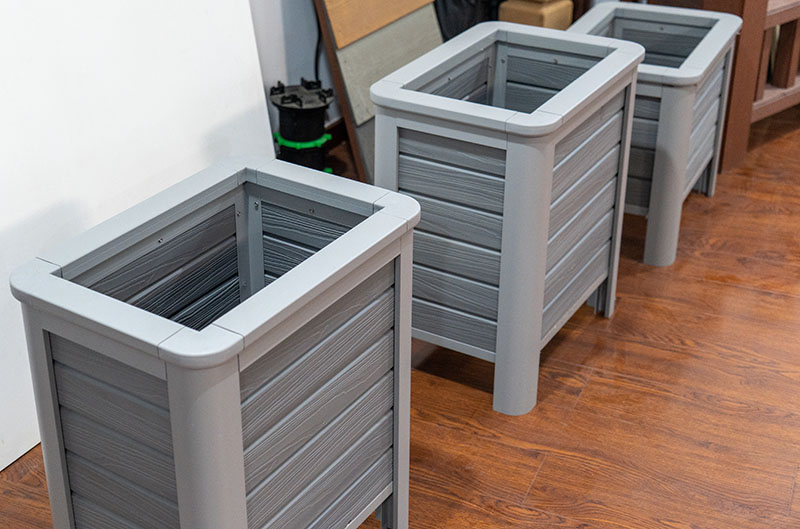
When choosing an Outdoor WPC flower pot, you must evaluate specific physical metrics. Structural density and wall thickness represent your first inspection points. Wet, compacted potting soil exerts immense outward pressure on container walls. Thin-walled containers will inevitably bow or warp under this stress. You should assess the material gauge before making a purchase. A premium composite matrix guarantees structural integrity. Look for a wall thickness that feels rigid and resists manual bending. Thick walls prevent the planter from splitting along its structural seams.
Thermal conductivity directly impacts long-term root health. The dense matrix of WPC acts as a powerful thermal insulator. It protects container-grown root structures from extreme summer heat waves. During winter months, this insulation slows down soil freezing. It prevents rapid freeze-thaw damage inside the pot. Healthy roots require stable temperature zones to absorb nutrients effectively. Uninsulated pots stress plants, stunting their growth.
Drainage and aeration architecture determine plant survival in engineered containers. WPC is a non-permeable material. It will trap water if improperly designed. You must look for essential drainage features to maintain aerobic soil conditions. Pre-drilled weep holes allow excess water to escape rapidly. Raised interior bases create a crucial air gap beneath the soil. Some premium models feature integrated water-reservoir systems. Proper drainage directly prevents root rot and suffocating soil conditions.
Finally, set realistic expectations regarding colorfastness and UV stabilizers. All outdoor composite materials undergo an initial weathering phase. You will likely notice a slight color lightening during the first three months. This represents a normal superficial reaction to sunlight. After this short period, internal UV stabilizers lock the pigment in place. The color stabilizes permanently. WPC retains its rich appearance far longer than stained timber.
Successful container gardening requires careful spatial planning. You must match the container volume to specific plant types. Root depth requirements dictate your optimal planter choice. Succulents, cacti, and culinary herbs thrive in shallow environments. An 8-inch container depth provides adequate space for their compact root systems. Conversely, dwarf patio trees, ornamental grasses, and large shrubs demand substantial room. They require an 18-inch depth or deeper. Deep pots allow them to anchor properly and access sufficient moisture.
Spatial aesthetics play a crucial role in balcony design. You want to visually integrate your planters with the surrounding architecture. Match the container finishes with your existing composite decking or patio furniture. Cohesive textures and colors elevate the entire outdoor living space. Consider the visual weight of the containers. Darker colors ground the space, while lighter colors make small balconies feel larger.
Use the popular "Thriller, Filler, Spiller" planting method for optimal visual impact. This technique works perfectly for managing elevated balcony sightlines.
Standard modular sizes cannot solve every architectural design challenge. Sometimes you need a Customizable WPC planter box to maximize your space. Custom dimensions allow perfect integration into awkward balcony corners. You can fit containers flush against angled walls or narrow ledges. Tailored sizing ensures you utilize every available square inch of usable floor space. It prevents clumsy gaps between containers and railings.
Elongated custom planters serve excellent secondary architectural functions. You can use them to create privacy and distinct functional zoning. A tall, rectangular planter box acts as a structural room divider. Plant it with dense bamboo or tall ornamental grasses. It blocks prevailing winds and creates a natural privacy screen. It effectively shields your outdoor seating area from neighboring balconies or busy streets.
Property managers and landscape architects appreciate B2B commercial scalability. Modular, customizable WPC systems offer distinct advantages for large commercial terraces. They guarantee uniform aesthetics across multiple residential units or hotel patios. You can specify precise dimensions for massive rooftop projects. This ensures consistent manufacturing quality and seamless installation across the entire property. Customization eliminates the chaotic look of mismatched retail pots.
Before finalizing your landscape design, thoroughly review the physical constraints of your space. You must address structural load considerations carefully. Always calculate the combined operating weight of your setup. Include the empty weight of the WPC flower pot. Add the weight of fully saturated potting mix. A standard cubic foot of wet potting soil weighs approximately 70 pounds. Finally, add the estimated weight of mature plants. Balconies strictly enforce architectural weight restrictions. Building codes typically measure load limits per square foot. Ensure strict compliance to avoid catastrophic structural damage to the building facade.
Maintenance protocols dictate how you care for these engineered containers. The reality of upkeep remains pleasantly simple. WPC demands near-zero maintenance compared to natural timber. You only need mild dish soap and warm water for routine cleaning. Use a soft-bristle brush to gently remove surface dirt, pollen, or bird droppings. Rinse the exterior with a standard garden hose.
You must avoid common maintenance mistakes to preserve the material.
Extreme water pressure forces moisture into the microscopic wood fibers. Gentle, routine cleaning preserves the structural integrity and aesthetic appearance indefinitely.
Selecting the right container transforms your patio into a resilient oasis. Let us summarize the core decision-making sequence. First, measure your exact spatial constraints and balcony layout. Next, calculate your balcony load capacities to ensure absolute structural safety. Then, determine the required root depth for your specific plant selections. Finally, select a WPC profile with adequate wall thickness, UV stabilizers, and smart drainage specs.
Take proactive steps before you begin planting. Request material samples from manufacturers to verify textures and colors. Review the warranty terms to ensure coverage for long-term outdoor use. Consult a spatial planning guide to map out your balcony zones efficiently. Proper preparation guarantees a beautiful, structurally sound outdoor space that requires minimal future upkeep.
A: Yes, high-quality WPC materials are entirely safe for edible plants. Unlike treated lumber, which often contains toxic chemical preservatives, WPC does not leach harmful compounds into the soil. The polymer matrix safely encapsulates the recycled wood fibers. Always ensure the manufacturer uses food-safe, non-toxic plastics in their composite blend.
A: WPC offers a superior weight-to-strength ratio. It is significantly lighter than solid concrete or thick terracotta, making it ideal for balconies with strict load limits. However, it remains heavy and dense enough to resist tipping over during high wind gusts, unlike cheap plastic pots.
A: You will notice an initial weathering phase. The material typically lightens by 10-15% during the first few months of UV exposure. After this brief period, internal UV stabilizers activate and lock the color permanently. It will not turn brittle or completely wash out like standard plastic.
A: Yes, you can easily modify WPC using standard woodworking tools. Use a sharp drill bit to create additional drainage holes. Place masking tape over the drilling spot to prevent minor surface splintering. The material cuts and drills smoothly without shattering the surrounding composite matrix.