Views: 0 Author: Site Editor Publish Time: 2026-07-05 Origin: Site


Landscaping projects and commercial outdoor spaces require high-quality planters. These containers must perfectly balance aesthetic appeal and long-term structural integrity. Frequent replacement cycles for rotting wood or cracked plastic frustrate property managers. Constantly replacing failed containers consumes valuable landscaping budgets. Wood-Plastic Composite (WPC) has recently emerged as a powerful, high-performance alternative. It expertly blends the natural beauty of timber and the rugged durability of modern polymers.
This guide provides an objective, evidence-based analysis. We will explore the expected lifespan of these composite planters. We will examine the specific environmental factors impacting their overall durability. You will learn how composites compare directly to traditional materials for long-term outdoor deployment. By understanding the underlying material science, you can confidently select the right containers. We will also cover essential maintenance practices to protect your landscape investment. Read on to discover how composites perform under the most extreme weather conditions.
When evaluating outdoor containers, predictable durability remains the top priority. A commercial-grade WPC flower pot typically lasts 10 to 15 years in harsh conditions. Many premium units exceed this timeframe easily. They rarely experience catastrophic structural failure. To understand this longevity, we must clearly differentiate between structural lifespan and aesthetic lifespan. Structural lifespan refers to how long the container safely holds heavy wet soil. It indicates how well it withstands growing root pressure. Aesthetic lifespan describes how long the surface looks brand new. While a composite container holds soil securely for over a decade, its visual surface will naturally weather slightly over time.
The science behind this material blend explains its impressive performance. Manufacturers create these composites by combining recycled wood fibers and high-density polymers. The wood fibers provide crucial tensile strength. They also deliver a natural, textured appearance. The high-density plastics act as an impermeable moisture barrier. During manufacturing, the melted polymers completely encapsulate the organic wood particles. This microscopic encapsulation stops liquid water penetration entirely. It creates a robust hybrid material completely resistant to biological decay, fungi, and insect damage.
However, accurate longevity estimates rely on specific quality assumptions. We must acknowledge several critical factors dictating real-world performance. You should carefully evaluate these specific elements before purchasing bulk containers for commercial sites:
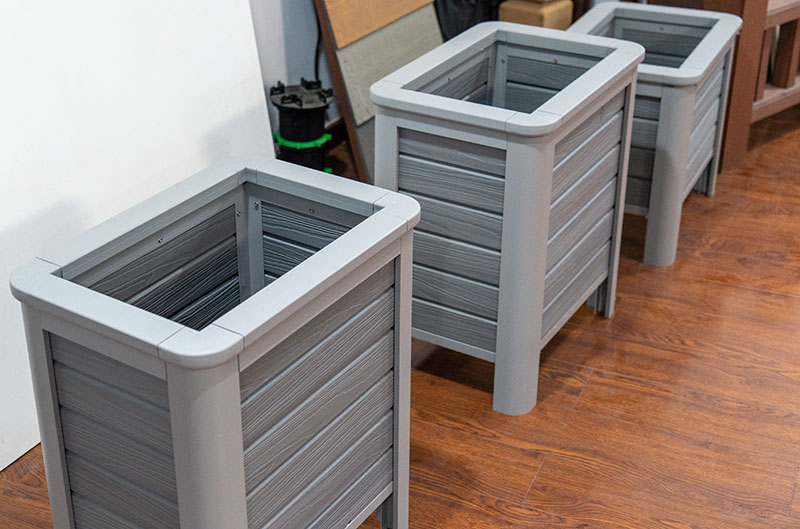
Outdoor landscaping elements face relentless environmental attacks every single day. Natural wood quickly surrenders to rain and humidity. Cheap plastics shatter in the freezing cold. Composites survive these harsh conditions through unique material engineering. They provide reliable defense mechanisms against nature.
Moisture and rot resistance represent the biggest advantages of composite materials. Natural timber absorbs rainwater like a sponge. This trapped moisture breeds dangerous fungal decay. It also attracts termite infestations quickly. Conversely, composite manufacturing fully coats the wood fibers in a protective polymer resin. Because WPC does not absorb significant moisture, rot simply cannot start. Pests completely ignore the plastic-coated fibers. You can safely place these containers directly on damp soil or wet concrete patios without fear of base rot.
Sunlight protection is another critical defense mechanism. Prolonged sun exposure aggressively destroys many outdoor materials. Manufacturers address this threat by adding specialized UV inhibitors during the extrusion process. A premium UV-resistant WPC planter box actively repels harmful solar radiation. It prevents the permanent degradation and brittleness common in basic plastics. You should expect minor "color weathering" early on. This is a slight, expected lightening occurring in the first three to six months. However, the embedded UV shields prevent severe chalking or structural breakdown over the subsequent decade.
Temperature extremes and wintering pose serious threats to standard ceramics. Addressing harsh freeze-thaw cycles reveals a major composite advantage. Terracotta and porous materials absorb ambient water easily. When winter arrives, this trapped water freezes solid. The ice expands rapidly. This violent expansion shatters the pot from the inside out. Because WPC aggressively repels water absorption, the material does not expand internally. The dense panels remain structurally stable through brutal winter freezing and rapid spring thawing.
Landscape architects must weigh various materials before specifying containers. Making the right choice prevents premature replacement and wasted budgets. We can structure this decision through a direct comparative evaluation. This helps highlight long-term value.
Let us compare composites against timber first. Traditional timber looks undeniably beautiful initially. However, standard pine or cedar lasts only 3 to 7 years outdoors. Wood requires annual staining, painting, or chemical sealing to prevent inevitable rot. These chemical treatments often leach into the surrounding soil. WPC requires absolutely no chemical treatments. It maintains its structural integrity without tedious annual sanding or toxic sealants.
Next, consider standard plastic alternatives. Basic plastic containers are undeniably cheap and incredibly lightweight. Unfortunately, standard plastic becomes highly brittle under intense UV exposure. It usually cracks or splits within 2 to 4 years. The sun degrades the fragile polymer chains rapidly. Composite materials feature much higher material density. Their robust UV inhibitors and wood-fiber reinforcement prevent this dangerous structural brittleness.
Finally, we evaluate fiberglass and metal containers. Fiberglass offers excellent structural durability. Yet, it remains highly prone to ugly surface chipping upon physical impact. Metal containers look sleek but carry severe functional flaws. Steel can rust rapidly without constant maintenance. Dark metals also absorb massive amounts of solar heat. This trapped heat transfers directly into the dirt. It can easily overheat and kill sensitive plant roots. WPC offers a perfectly balanced thermal profile. It protects root health while providing superior impact resistance against lawnmowers or heavy foot traffic.
Material Lifespan and Maintenance Comparison:
| Material Type | Expected Lifespan | Maintenance Level | Key Vulnerability |
|---|---|---|---|
| Natural Timber | 3-7 Years | High (Annual Sealing) | Rot, fungal decay, and termites |
| Basic Plastic | 2-4 Years | Low | UV brittleness and cracking |
| Metal (Steel/Iron) | 5-10 Years | Medium | Rust and severe soil overheating |
| Fiberglass | 10+ Years | Low | Surface chipping and cracking |
| Wood-Plastic Composite | 10-15+ Years | Very Low | Minor initial color fading |
Even the most durable materials benefit from thoughtful initial setup. You can significantly extend your container's life by following simple installation guidelines. Proper site preparation pays off over the decades.
Proper drainage setup is absolutely vital for long-term success. The composite panels are highly waterproof themselves. However, trapped standing water inside the container causes severe soil expansion issues. Saturated dirt becomes incredibly heavy and dense. This constant outward pressure heavily stresses the corner joints over many years. Always specify adequate drainage holes. Drill extra holes in the base panel if necessary. Add a thick gravel base layer before pouring in your potting soil. This ensures water escapes quickly after heavy rainstorms.
A Low-maintenance WPC flower pot still requires occasional basic care. We define "low maintenance" as avoiding chemical treatments, painting, or sanding. We highly recommend basic semi-annual cleaning. Wash the exterior panels using warm, soapy water. Use a soft bristle brush to gently remove accumulated dirt, sticky pollen, and bird droppings. This simple protocol prevents organic mold from growing on the surface debris. Remember, mold grows on the dirt attached to the pot, not on the composite material itself.
Winter preparation strictly protects the structural corner joints. We offer actionable overwintering advice for cold climates. The composite panels easily withstand freezing temperatures without cracking. However, wet soil expansion remains a persistent threat. Manage your soil moisture carefully before the first hard freeze. Move containers under an architectural overhang to limit late-autumn rain accumulation. Ensure the bottom drainage holes remain completely unblocked by dead autumn leaves. Dry soil expands much less when frozen solid. This saves the hardware joints from extreme tension.
Follow these core best practices for extending structural longevity:
Not all composites are manufactured to the exact same standard. Commercial buyers must evaluate key procurement criteria carefully before placing expensive bulk orders. Knowing what to look for prevents costly mistakes.
Material density is your first reliable indicator of quality. Check the physical weight of the sample panels. Higher weight generally indicates a much denser extrusion. Dense boards correlate strongly with higher impact resistance and longer life. Hollow, lightweight profiles might save money upfront. However, they lack the required strength to hold large shrubs or small trees long-term.
Hardware quality is equally crucial to the lifespan. A composite planter is genuinely only as strong as its metal fasteners. The composite boards might easily last 20 years. Cheap steel screws will rust and snap in two short seasons. Insist on 304 or 316 stainless steel screws. Demand heavy-duty stainless steel internal brackets. Grade 316 stainless steel contains molybdenum. This addition resists coastal salt spray excellently. It performs much better than standard 304 steel. Verify the assembly instructions to confirm the recommended hardware grade.
Finally, carefully investigate the capping technology used by the manufacturer. The composite industry offers both co-extruded (capped) and standard uncapped versions. Uncapped boards mix the color evenly throughout the core material. Capped boards feature an extra, highly protective polymer shell. This shell wraps entirely around the inner core. This co-extruded shield offers an extra layer of stain, scratch, and severe fade resistance. Capped variations represent the gold standard for premium commercial applications. They wipe clean effortlessly. They maintain their exact original color profile for decades.
A WPC flower pot represents a highly strategic, long-term investment for any outdoor space. It completely solves the frustrating, continuous replacement cycle strictly associated with traditional materials. By blending natural wood fiber strength with polymer moisture resistance, composites deliver unmatched durability. They easily survive brutal winters, intense summer sun, and constant soil moisture. You effectively eliminate the tedious need for toxic sealants and annual painting.
Take these actionable next steps before finalizing your next landscaping project:
A: Minor color stabilization occurs early on. You might notice slight lightening during the first few months of sun exposure. However, premium UV-resistant models will not suffer from severe chalking or continued fading over their lifespan. The specialized UV inhibitors lock the final color in place for many years.
A: Yes. Modern composites are completely non-toxic and incredibly safe for edible gardens. They do not leach harsh chemicals or dangerous heavy metals into the surrounding soil. This makes them a vastly superior and safer alternative to traditional pressure-treated lumber.
A: Yes, you can confidently leave them outside. Their incredibly low moisture absorption rate prevents the internal material from taking in water. This stops the destructive freeze-thaw cracking typical of porous ceramic, terracotta, or standard plastic pots.
A: They offer a highly balanced weight profile. They are heavier than cheap standard plastic, offering excellent stability against strong winds. However, they remain significantly lighter than solid concrete planters or water-logged wet wood. You can typically relocate them easily without requiring heavy machinery.