Views: 0 Author: Site Editor Publish Time: 2026-07-02 Origin: Site


Landscapers, municipal planners, and serious gardeners face a recurring problem. You invest in beautiful outdoor planters, only to watch natural wood rot within a few seasons. Standard plastic offers a cheap alternative but severely lacks durability and aesthetic credibility. We need a reliable middle ground. Wood-Plastic Composite (WPC) emerges as a highly engineered solution. It bridges the gap between an organic appearance and commercial-grade toughness. This innovative material solves the inherent weaknesses of traditional lumber.
Our comprehensive guide provides an evidence-based comparison. We help buyers evaluate the true mechanical value of these modern materials. You will learn how material science prevents fungal decay. We will explore structural differences and highlight potential installation limitations. Ultimately, you will discover if the higher upfront cost justifies the long-term return on investment for your specific landscaping projects.
Wood-Plastic Composite (WPC) represents a significant leap in landscaping material science. Manufacturers engineer this material by blending organic and synthetic components. A typical high-grade composite contains roughly 50 to 60 percent recycled wood fibers. These fibers often include reclaimed sawdust and wood chips. The remaining structure consists of 30 to 40 percent high-density polyethylene (HDPE) or similar polymers. Manufacturers then add about 10 percent specialized additives. These additives include color pigments, UV stabilizers, and binding agents.
Industry professionals often use the terms "pots" and "planters" interchangeably. However, subtle differences exist. Pots generally refer to smaller, freestanding containers. Planters typically serve as larger, often structural, architectural elements. Despite this terminology gap, the underlying material science remains identical. You might evaluate a massive commercial installation or a decorative Round WPC flower pot. In both cases, the composite matrix delivers the exact same weather-resistant benefits.
The manufacturing reality of WPC relies heavily on a specialized extrusion process. Factories heat the raw wood fibers and polymer plastics until they melt into a uniform paste. Heavy machinery then forces this paste through shaped dies under immense pressure. This high-pressure extrusion eliminates internal air pockets. It creates a dense, uniform, and highly water-resistant core. Because the plastic completely encapsulates the wood fibers, the final product will never splinter. It resists the physical degradation common in raw timber.
Evaluating landscaping materials requires a feature-to-outcome approach. We must examine how each material handles real-world garden challenges. Moisture management, chemical safety, and ongoing labor represent the most critical factors.
Natural wood inherently absorbs water. When you fill a wooden box with damp soil, the timber acts like a sponge. You must install heavy physical liners to protect the wood. Even then, wood remains highly prone to fungal decay at the soil-contact line. Moisture inevitably creeps in, causing structural failure.
Conversely, WPC is highly hydrophobic. The polymer matrix aggressively repels water. It requires no internal liners to protect its structure from damp soil. You can plant directly into the composite shell without fearing fungal rot. The material maintains its structural integrity regardless of constant moisture exposure.
Pressure-treated (PT) wood dominates traditional outdoor construction. Manufacturers infuse this wood with copper compounds or synthetic biocides. These harsh chemicals prevent rot and insect damage. However, these biocides can leach directly into your potting soil. This chemical migration poses a major concern for urban agriculture and edible gardens.
WPC serves as a completely inert material. It requires no chemical treatments or hazardous preservatives. The plastic matrix naturally protects the wood fibers from decay. This makes composites significantly safer for delicate root systems. You can grow organic vegetables and edible herbs without worrying about toxic soil contamination.
Traditional wood demands relentless upkeep. You must commit to seasonal sanding, staining, or sealing. Without this intensive labor, wood quickly loses its aesthetic appeal. It turns gray, warps, and eventually cracks.
WPC offers a true "set and forget" solution. It requires absolute minimal intervention. You never need to sand, paint, or seal the material. Occasional washing removes surface dirt. This drastically reduces your annual landscaping labor.
Material Performance Comparison: Wood vs. WPC
| Feature | Traditional Wood | Wood-Plastic Composite (WPC) |
|---|---|---|
| Moisture Resistance | Low (Absorbs water, prone to rot) | High (Hydrophobic, resists decay) |
| Chemical Safety | Low (Treated wood leaches biocides) | High (Inert, no toxic treatments) |
| Maintenance Needs | High (Annual sealing and sanding) | Low (Occasional surface cleaning) |
| Splinter Risk | High (Degrades over time) | None (Smooth extruded finish) |
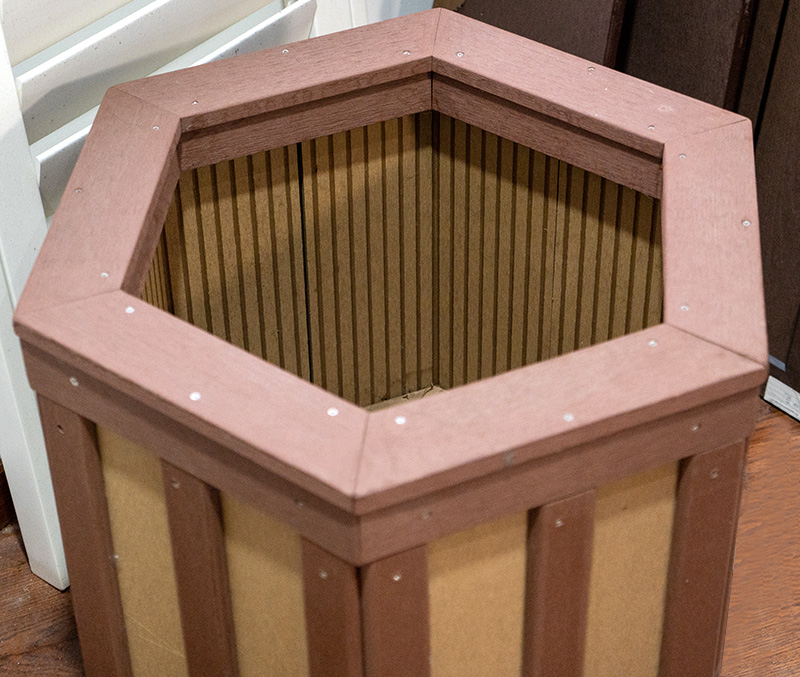
Not all composite materials offer the same quality. Buyers must evaluate specific engineering features before making a large investment. Use this buyer’s checklist to ensure a sound evaluation for any Outdoor garden planter box.
Trustworthy landscaping requires acknowledging material limitations. WPC performs exceptionally well in most scenarios. However, specific situations might expose its weaknesses. You must understand these downsides to ensure successful long-term implementation.
Composite materials handle heat differently than natural wood. Darker WPC blends actively absorb and retain solar radiation. They possess a higher thermal conductivity than light-colored cedar. During peak summer months, dark composite walls can become surprisingly hot. This trapped heat transfers directly into the potting soil. You must carefully monitor soil temperatures. Heat-sensitive plants might suffer in full-sun environments. Consider utilizing lighter gray or tan composites if you live in extremely hot climates.
Budget constraints often dictate material choices. WPC carries a notably higher initial purchase price. It costs significantly more upfront than untreated pine or basic standard plastic. You must view this purchase as a long-term infrastructure investment. Buyers seeking a quick, single-season fix often find composites too expensive. The financial justification relies heavily on avoiding future replacement cycles.
Material density directly impacts installation logistics. WPC combines dense wood fibers and heavy polymers. The resulting product is significantly heavier than standard plastic or hollow fiberglass. It also weighs marginally more than fully dry natural wood. You must plan accordingly. Transporting large units requires adequate manpower. Rooftop gardens and apartment balcony installations require strict weight load calculations. Always verify your structural weight limits before filling large composite boxes with saturated soil.
Commercial landscapers and municipal planners face unique operational pressures. They manage dozens, sometimes hundreds, of public installations. Traditional wood simply cannot survive in these demanding environments. The commercial sector is rapidly adopting WPC for several compelling reasons.
Public spaces endure heavy daily abuse. Municipalities transition from wood to WPC based on strict zero-maintenance mandates. City budgets cannot support teams sanding and staining wooden boxes every spring. Furthermore, WPC offers crucial vandalism resistance. Unlike wood, it does not splinter or dent easily when struck. It withstands pedestrian impacts, errant bicycles, and heavy public use. The extruded surface remains smooth and safe for public interaction.
Commercial purchasing decisions revolve around long-term lifespan metrics. Decision-makers usually frame their purchases around a 10-year operational window. Treated lumber typically rots or visually fails within five years. WPC reliably survives past a decade. You completely eliminate the recurring costs of replacement units. More importantly, you drastically reduce maintenance staff labor. Landscape crews spend their time planting and pruning, not repairing rotten timber.
10-Year Lifecycle Scenario Chart
| Action Required (10 Years) | Pine/Cedar Installations | WPC Installations |
|---|---|---|
| Annual Sealing/Staining | Required (10 times) | Never Required |
| Physical Liner Replacement | Required (Every 2-3 years) | Not Needed |
| Complete Structural Replacement | Likely (Around year 5-7) | Highly Unlikely |
| Routine Surface Cleaning | Required | Required |
Large architectural designs demand visual consistency. Natural wood varies wildly. Knots, grain patterns, and uneven drying cause visible discrepancies across multiple units. WPC extrusion eliminates this variability. The manufacturing process guarantees exact dimensional consistency across hundreds of units. Every corner aligns perfectly. Every surface shares the exact same color profile. This uniformity ensures a sleek, professional aesthetic for large commercial rollouts.
Material selection ultimately depends on your specific operational constraints. You must balance your immediate budget against your future labor capacity. Review this shortlisting logic to finalize your decision.
Traditional wood holds undeniable historical charm in the garden. However, it fundamentally fails when placed in constant contact with damp soil. Wood-Plastic Composite permanently solves these specific mechanical and chemical failures. It provides the visual warmth of natural timber while delivering the relentless durability of industrial polymers. By eliminating rot, splintering, and chemical leaching, composites offer a vastly superior environment for long-term plant health.
We encourage serious buyers to take actionable next steps. Contact trusted manufacturers and request physical material samples. Feel the density and inspect the color consistency firsthand. Always review the exact warranty specifications. Premium manufacturers typically offer robust 10 to 15-year guarantees for their composite materials. Finally, audit your historical 5-year maintenance budgets. When you calculate the hidden costs of sanding, staining, and replacing rotten wood, the engineered superiority of WPC becomes clear.
A: Most premium composites include UV stabilizers during manufacturing. You might notice a slight initial lightening during the first few months of sun exposure. However, the color quickly stabilizes. It will not suffer the severe structural fading or graying seen in raw untreated lumber.
A: Painting is neither necessary nor generally recommended. The material already features color mixed completely through its core. If architectural needs change, you can paint it. You must lightly sand the surface and apply a specialized plastic-bonding primer first.
A: Yes. WPC heavily utilizes recycled industrial plastics and reclaimed sawdust. This manufacturing process prevents the aggressive deforestation of old-growth cedar and teak forests. It actively diverts tons of plastic waste from local landfills.
A: No. Composite materials offer exceptional freeze-thaw resistance. Unlike porous terracotta clay or water-logged wood, WPC does not absorb standing water into its core. Therefore, it does not expand or crack when winter temperatures drop below freezing.