Views: 0 Author: Site Editor Publish Time: 2026-07-27 Origin: Site


Decking stability remains a critical factor in long-term structural integrity and outdoor safety. Homeowners routinely expect modern materials to stay perfectly rigid across shifting seasons. Do these engineered boards actually remain completely static? Yes, composite decking expands and contracts.
Unlike traditional timber boards, which swell significantly due to moisture absorption, engineered planks fluctuate primarily due to thermal changes. Temperature swings drive this physical movement. When exposed to direct sunlight, the plastic polymers inside the boards absorb heat and expand. During freezing winter nights, they contract.
This comprehensive guide outlines the material realities of Composite Decking,WPC decking. We will explore the severe structural risks of improper installation and highlight the exact spacing methodologies required. You will learn how to master these installation techniques to ensure a permanent, buckle-free finish for your outdoor living space.
Thermal vs. Moisture Movement: WPC decking expands in heat and contracts in the cold, driven by its plastic polymers, contrasting with wood’s moisture-driven movement.
Color and Climate Impact: Darker composite boards absorb more heat and experience higher thermal expansion rates than lighter boards.
Installation Temperature is the Baseline: The ambient temperature on the day of installation dictates the exact millimeter gaps required for end-to-end spacing.
Warranties Require Compliance: Manufacturer warranties are strictly tied to following proprietary gapping charts and using approved fastening systems.
Understanding how decking materials behave requires a look into their manufacturing process. Wood-Plastic Composite (WPC) blends organic wood fibers and synthetic thermoplastic polymers. Manufacturers typically use polyethylene (PE) or polyvinyl chloride (PVC) for the plastic component. The wood fibers provide core structural stability. They keep the board rigid under heavy foot traffic. However, the thermoplastic polymers react directly to temperature changes. When ambient heat rises, these polymers energize and expand.
You must differentiate between linear and lateral movement. Composite Decking primarily expands and contracts linearly. This means the boards grow longer and shorter lengthwise. Lateral movement across the width of the board remains minimal. Most installation failures occur because builders account for width but ignore length.
Environmental triggers heavily influence this movement. Two main factors dictate the severity of expansion.
Seasonal Temperature Shifts: Gradual transitions from freezing winters to scorching summers establish the maximum contraction and expansion limits.
Direct UV Exposure: Sunlight hitting the deck during peak afternoon hours causes rapid daily expansion. Boards exposed to direct sun will expand much faster than shaded sections of the same deck.
Ignoring thermal expansion coefficients leads to severe structural failures. When professionals evaluate a failing deck, they typically look for specific signs of thermal stress.
Buckling occurs when installers place boards tightly end-to-end during cold weather. In winter, the boards are fully contracted. If you leave no expansion gaps, the boards have nowhere to go when summer arrives. The rising heat forces them to expand lengthwise. They press against each other until the pressure forces them upward. This creates dangerous tripping hazards and permanently warps the planks.
Uncontrolled expansion generates immense physical force. This force can easily shear standard metal screws in half. When boards expand without proper gapping, they drag the fasteners along. This movement pulls hidden fasteners completely out of the wooden substructure. Repeated pushing and pulling stresses the joists, eventually compromising the entire deck frame.
Expansion issues do not only happen in summer. If you install boards loosely during a massive heatwave, you create a different problem. The boards are at their maximum expanded length. When winter arrives, the polymers shrink. This contraction leaves massive, unsightly gaps between the board ends. These oversized winter gaps trap debris, catch high heels, and ruin the visual flow of the deck.
Top decking manufacturers clearly define their installation requirements. Structural failures resulting from ignored thermal expansion guidelines are universally excluded from manufacturer warranties. If your deck buckles because you skipped the recommended end-to-end gap, the manufacturer will reject your claim.
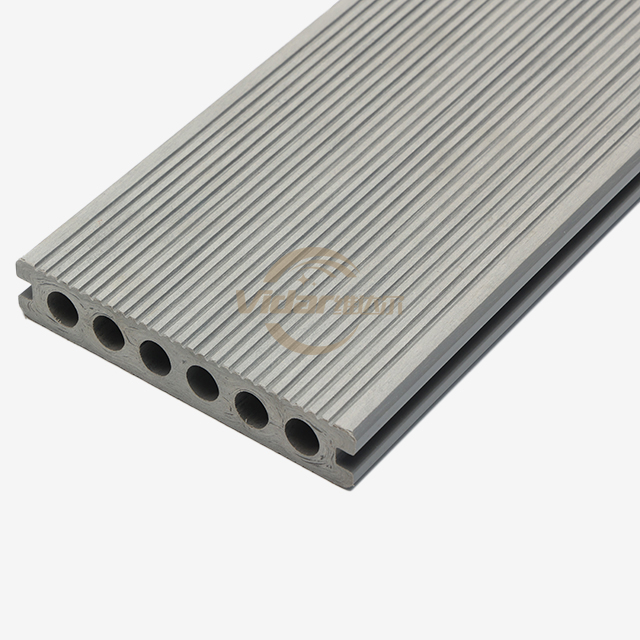
Professional deck builders follow strict mathematical frameworks to manage movement. You must master two different types of spacing to guarantee a successful installation.
You must leave a consistent gap between the long edges of adjoining boards. This side-to-side gap typically ranges from 3mm to 6mm. This space does not manage thermal expansion. Instead, it allows for proper water runoff. Rainwater must drain freely between the boards to keep the wooden substructure dry. This gap also provides critical ventilation. Good airflow prevents moisture buildup beneath the deck, stopping rot and mold growth.
Managing the space where two board ends meet requires careful calculation. You must use an "Installation Temperature" sliding scale. The ambient temperature on the exact day you install the deck dictates your gap size.
Consider this standard rule of thumb for end-to-end spacing:
Installing in extreme heat: The boards are fully expanded. You need tighter gaps (often 1mm to 2mm).
Installing in moderate weather: The boards are neutral. You need medium gaps (usually 3mm to 5mm).
Installing in freezing cold: The boards are fully contracted. You need wider gaps (up to 6mm or more) to allow for future summer expansion.
Composite boards require breathing room around the entire perimeter. Standardize the practice of leaving a gap wherever the decking meets a solid structure. If your deck abuts a brick wall, a foundation line, or heavy support posts, leave a dedicated gap. Failing to do so causes the expanding boards to push against the immovable wall. This pressure buildup inevitably leads to buckling.
Long deck runs pose a massive challenge. A series of boards laid end-to-end creates cumulative expansion. To combat this, experts use breaker boards. A breaker board is a single plank installed perpendicularly across the main deck run.
This technique effectively segments long spans into smaller, manageable sections. It resets the expansion gap requirements. Furthermore, wrapping the deck edges in a perpendicular "picture frame" masks unsightly end-to-end joints. It elevates the visual appeal while safely managing thermal movement.
Securing the boards correctly is just as important as spacing them. The hardware you choose directly impacts how well the material handles temperature shifts.
Modern deck designs rely heavily on hidden fastener clips. Engineers design these clips to secure the board firmly to the joist. However, they intentionally allow micro-movements along the channel groove. When the board expands or contracts, it slides slightly over the clip. This prevents the immense pressure buildup seen in rigid fastening methods. Always use the specific clip system recommended by your board manufacturer.
Advanced installers use a method called center-pinning to control unpredictable movement. When a long board expands, it usually pushes in the direction of least resistance. Center-pinning forces the board to behave predictably.
Measure to find the exact middle point of the composite board.
Drive one dedicated face-screw directly through this center point into the joist.
Use standard hidden fasteners for the rest of the board.
By rigidly fixing the center, thermal expansion is forced to distribute evenly to both ends. You effectively cut the expected movement at each end by 50%. This trick proves invaluable when installing highly responsive PVC materials in fluctuating climates.
Traditional wood builders often default to face-screwing every board. You must avoid doing this with WPC materials. Driving screws directly through the top of the board restricts its natural movement. When the temperature rises, the board tries to expand but the rigid screws hold it back. This tension inevitably causes the composite material to split around the screw heads. If you must face-screw a specific section, always pre-drill oversized pilot holes. This allows the screw shank some room to shift.
Not all synthetic boards react to heat in the same way. When selecting your materials, you must factor thermal movement into your final decision.
Different core materials possess vastly different thermal expansion coefficients. You should align your material choice with your local climate.
PVC (Polyvinyl Chloride): Contains no wood fibers. It offers excellent moisture resistance but generally expands and contracts much more than other options. It requires careful gapping.
WPC (Wood-Plastic Composite): Balances wood fibers and plastics. The wood content stabilizes the board, resulting in moderate, predictable expansion.
Mineral-Based Composites: Replaces organic wood with mineral fillers. These boards offer the lowest thermal expansion rates available. They remain highly stable even in extreme heat.
Thermal Expansion Comparison
Material Type | Primary Composition | Expansion Rate Profile | Best Climate Use |
|---|---|---|---|
PVC Decking | 100% Synthetic Polymers | High (Significant length changes) | Mild climates, shaded areas |
WPC Decking | Wood Fibers + PE/PVC | Moderate (Predictable movement) | Versatile, all-season climates |
Mineral Composite | Minerals + Polymers | Low (Highly dimensionally stable) | Extreme heat, direct sun exposure |
Evaluate different brands based on the clarity of their installation manuals. Trustworthy brands provide highly localized, temperature-specific gapping charts. They tell you exactly how many millimeters to leave based on the thermometer reading today. Avoid manufacturers who only offer vague guidelines like "leave a small gap." Precision in their documentation usually reflects precision in their manufacturing process.
You must weigh the pros and cons of your board length. Shorter boards (e.g., 12 feet) experience less total linear expansion per piece. They are easier to manage and put less stress on the fasteners. Longer boards (e.g., 20 feet) offer a cleaner look because they create fewer visible joints. However, a 20-foot board requires significantly wider end-to-end gaps to accommodate its larger total expansion. Plan your layout to balance aesthetics with structural reality.
Thermal expansion and contraction represent predictable material characteristics, not product defects. Understanding how synthetic polymers react to ambient temperatures empowers you to build a resilient outdoor structure. If you plan for movement from day one, your deck will easily survive extreme seasonal shifts.
Successful deployment relies entirely on strict adherence to temperature-based spacing guidelines. You cannot guess the gap size. You must measure the ambient temperature, consult the charts, and space the boards accordingly. Center-pinning and proper hidden fasteners further ensure long-term stability.
Before you finalize any material order, take action. Download the specific installation guide for your shortlisted brand. Review their proprietary spacing charts. Verify you have the correct hardware. Preparation is the ultimate key to a flawless, long-lasting installation.
A: Thermal expansion is a normal, temporary response to heat. The boards lengthen in the sun and shrink when cool. Permanent warping is different. Warping happens due to improper joist spacing, poor under-deck ventilation, or failing to leave expansion gaps. Installed correctly, boards will not permanently warp from sunlight.
A: Side-to-side spacing remains relatively fixed, typically requiring a 3mm to 6mm gap for drainage and airflow. End-to-end spacing depends strictly on the ambient temperature at the time of installation. Always consult the manufacturer’s temperature chart to determine the exact end-to-end gap required for that day.
A: No. You must never install boards tightly against any fixed structure. Always leave a perimeter expansion gap where the deck meets brick walls, foundation lines, or support posts. Failing to leave this gap causes pressure buildup, pushing the boards upward and causing severe structural buckling.
A: Yes. Darker colors naturally absorb and retain more solar heat than lighter colors. Because thermal expansion is driven by heat absorption, a dark grey or black board will expand faster and slightly more than a light grey board. Consider your climate's sun intensity when selecting deck colors.