Views: 0 Author: Site Editor Publish Time: 2026-07-12 Origin: Site


You spend thousands on landscaping, only to let outdoor clutter ruin the view. Disorganized tools, scattered seasonal gear, and degrading traditional storage structures turn beautiful backyards into chaotic dumping grounds. Traditional sheds made of wood, metal, or standard resin often fail over time due to rot, rust, or structural weakness. This inevitable decay leads to severe internal disorganization and completely ruined equipment. Moisture seeps in, rust destroys expensive tools, and weak walls prevent proper shelving installation.
Wood-Plastic Composite (WPC) has emerged as a premium alternative to solve these stubborn issues. This guide evaluates whether transitioning to a WPC garden shed genuinely resolves structural storage challenges, maximizes space, and justifies the investment for homeowners and property managers. You will discover exactly how modern composite materials revolutionize backyard organization, protect your valuable assets, and dramatically reduce ongoing maintenance tasks.
Many homeowners tolerate dysfunctional outdoor storage spaces far longer than they should. They mistakenly believe a disorganized shed is a personal failure rather than a structural one. In reality, traditional shed materials actively fight against your organizational efforts. Wooden sheds inevitably warp and rot when exposed to damp ground. This moisture ingress creates a humid microclimate inside. Mold spores quickly attack stored patio cushions, bags of organic soil, and wooden tool handles. Metal sheds present a different but equally destructive problem. They lack insulation, leading to severe condensation on the interior walls. This trapped moisture drips onto your equipment, rusting expensive lawnmower blades and degrading expensive fertilizers into useless, rock-hard clumps.
Beyond moisture damage, traditional entry-level sheds suffer from poor load-bearing capabilities. Thin-walled plastic models and flimsy corrugated metal structures cannot handle vertical stress. You simply cannot attach heavy-duty shelving brackets to a thin sheet of unreinforced resin. As a result, you must rely on freestanding shelving units taking up valuable floor space. When you run out of floor space, you resort to inefficient floor-level stacking. Retrieving a simple garden hose suddenly requires moving three bags of mulch and a wheelbarrow. The structure itself forces you into disorganized habits.
Eventually, every property owner reaches the upgrade trigger. This tipping point occurs when the hidden costs of a failing shed become too high to ignore. You calculate the cost of replacing a rusted riding mower battery or buying a new string trimmer. You factor in the deep frustration of looking at an unusable, cluttered yard space. When the mental and financial toll outweighs the procurement cost of a modern structure, transitioning to an upgraded material becomes the only logical step forward.
To understand why a composite structure changes the storage game, we must look at its core engineering. Wood-Plastic Composite blends recycled wood fibers with dense thermoplastics. Manufacturers combine these materials under extreme heat and pressure. The resulting hybrid material captures the best traits of both parent materials. It offers the structural rigidity and classic aesthetic of natural timber. Simultaneously, it provides the exceptional weather resistance and longevity of modern polymers. You get a dense, heavy board behaving like wood but resisting the elements like plastic.
This hybrid composition delivers outstanding climate control. WPC features excellent thermal properties, naturally reducing extreme temperature fluctuations inside the structure. Traditional metal sheds turn into literal ovens during summer afternoons. This intense heat degrades plastic fuel cans, ruins stored seed stock, and drastically shortens the lifespan of power tool batteries. WPC panels insulate the interior far better. They block extreme UV radiation and mitigate wild temperature swings. Your valuable electronics, rechargeable batteries, and sensitive garden supplies remain shielded from extreme environmental stress.
Furthermore, this composite material offers absolute pest and decay resistance. Termites and carpenter ants completely ignore composite materials because they cannot digest the polymer matrix. Fungal rot, which devastates traditional timber bases, cannot take hold on the non-porous surface of WPC. Your organizational structure remains pristine year after year. The structural integrity never compromises, ensuring your shelves stay securely anchored and your doors continue to swing smoothly without sagging. This permanence allows you to treat the shed as a true extension of your home rather than a temporary garden shack.
Material Performance Comparison
| Material Type | Moisture Resistance | Thermal Insulation | Wall Load-Bearing | Pest Resistance |
|---|---|---|---|---|
| Raw Timber | Low (Requires Sealant) | Moderate | High | Low (Prone to Termites) |
| Standard Metal | Low (Condensation/Rust) | Very Low | Low | High |
| Thin Resin/Plastic | High | Low | Very Low | High |
| Wood-Plastic Composite | Very High | High | High | Absolute |
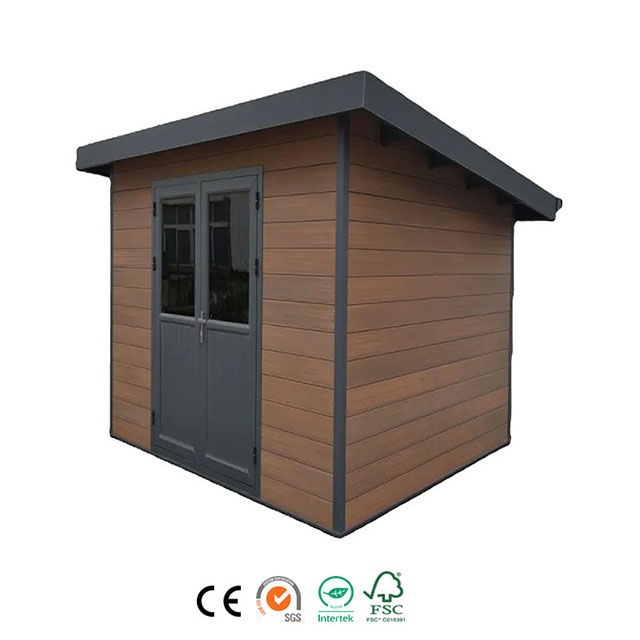
The true secret to outdoor organization lies in vertical space utilization. A high-quality Garden storage solution relies on strong, rigid walls capable of holding heavy gear. WPC panels provide substantial density. Many modern composite sheds also incorporate internal aluminum or steel reinforcement profiles within the wall framing. This combination delivers exceptional weight tolerances. You can confidently install heavy-duty steel brackets, robust floating shelves, and expansive pegboard systems. Instead of leaving heavy extension cords, chainsaws, and hedge trimmers on the floor, you hang them securely at eye level. The walls bear the load effortlessly, freeing up your floor space for large rolling equipment like lawnmowers or snowblowers.
To maximize efficiency, treat the interior of your composite shed like a professionally designed kitchen. Implement a strict zone-based framework. Grouping items by their specific use cases prevents clutter from returning. Follow this proven blueprint for assigning interior zones:
A well-organized composite structure frequently expands beyond simple storage. The premium aesthetic and clean interior finish of WPC encourage multi-use applications. Because the walls do not look like raw industrial tin or cheap plastic, you can create highly functional micro-spaces. Dedicate one corner to a robust potting bench. The sturdy walls easily support overhead grow lights and heavy bags of potting soil. Alternatively, set up a mini-workshop for minor home repairs. Install a folding workbench and mount your power tool chargers directly to the reinforced wall panels. Some homeowners even partition their composite structures, using one half for traditional lawn equipment and the other half as a clean, dry hub for pool filtration systems or outdoor cushions.
Achieving a perfectly organized space begins with proper installation. A common misconception is assuming you can throw a shed onto any patch of grass. The reality is quite different. The foundation serves as a critical constraint for the entire project. An Easy installing WPC shed depends entirely on a perfectly level base. If the ground dips even slightly, the rigid composite panels will not align correctly. The doors will bind, and the roof joints may leak. You must choose an appropriate foundation type before purchasing the structure.
You generally have two viable options for a permanent composite structure. A poured concrete pad offers the ultimate stability, especially if you plan to store heavy riding mowers or install heavy-duty freestanding shelving. However, concrete requires significant labor and curing time. Alternatively, a compacted gravel grid system works exceptionally well. You excavate a few inches of topsoil, lay down a heavy-duty plastic grid or timber frame, fill it with crushed gravel, and tamp it completely flat. This method provides excellent drainage and sufficient load-bearing capacity for most residential needs. Whichever method you choose, absolute levelness remains non-negotiable.
Once you prepare the foundation, the assembly dynamics proceed predictably. Modern composite sheds utilize modular, interlocking panel systems. You slide the precision-cut panels into grooved corner posts or floor tracks. This engineering dramatically reduces the guesswork associated with raw timber construction. You do not need to measure, cut, or frame wooden studs from scratch. The manufacturer pre-drills many of the critical connection points.
However, you must set realistic expectations regarding time and labor. Ignore exaggerated marketing claims promising a one-hour setup. Building a durable composite structure requires dedicated effort. You will need two moderately handy adults working together. One person holds the heavy panels in place while the other secures the hardware. You will need standard tools, including a cordless drill, a rubber mallet, a level, and a step ladder. Depending on the size of the model, expect the assembly to take one to two full weekends. Do not rush the process. Take the time to ensure every panel seats fully into its track.
Finally, address permitting and compliance early. High-quality WPC structures look permanent, which often attracts the attention of municipal inspectors and Homeowner Associations (HOAs). Check your local guidelines before pouring a foundation. You may need to adhere to strict property line setback rules or keep the roof peak below a certain height. Securing the proper approvals beforehand prevents costly teardowns later.
When planning a backyard upgrade, you must look past the initial price tag. Basic metal sheds and thin resin boxes tempt buyers with low upfront costs. However, evaluating the initial cost versus the lifetime value paints a very different picture. Wood-Plastic Composite carries a higher procurement cost because it utilizes advanced manufacturing processes and premium raw materials. You are purchasing engineered longevity. A cheap structure usually fails within five to seven years, forcing you to buy a replacement and spend another weekend building it. A quality composite model lasts decades with minimal degradation.
The true financial justification reveals itself through immense maintenance savings. If you purchase a traditional wooden shed, you commit to a relentless cycle of upkeep. You must buy expensive exterior wood stains or paints every three years. You spend hours scraping peeling paint, replacing rotted trim boards, and patching damaged roof felt. If you buy a metal shed, you constantly battle rust with specialized sealants and wire brushes. WPC eliminates these deferred costs entirely. The color permeates the material, meaning it never requires painting or staining. You simply wash it with a garden hose once a year to remove surface dust. Over a ten-year period, the money and weekend labor saved on maintenance easily offset the higher initial purchase price.
Furthermore, consider the positive impact on your property value. A degraded tin shack or a warped plastic box creates an immediate eyesore. It signals neglect to potential homebuyers. Conversely, a visually appealing, architecturally sound composite structure enhances your backyard aesthetics. It looks like a deliberate, premium outbuilding. It elevates the overall functionality of the property, providing clean, secure, and attractive storage. Buyers view a well-maintained composite shed as a valuable asset rather than a liability they will eventually have to tear down and haul to the dump.
Transitioning from a chaotic pile of outdoor gear to a perfectly organized space requires the right structural foundation. A WPC shed is not just a storage box; it represents a significant infrastructural upgrade for your outdoor space management. It delivers the strength to support heavy vertical shelving, the climate resilience to protect sensitive equipment, and the visual appeal to enhance your landscaping. By moving away from materials that rot, rust, and warp, you eliminate the constant maintenance cycle and finally achieve lasting organization.
Before making a purchase, take practical steps to ensure success. Measure your largest pieces of equipment, including riding mowers and long-handled tools, to determine your exact volume requirements. Assess your yard's slope and determine your strategy for creating a perfectly level foundation base. Do not buy the shed until you know exactly where and how it will sit.
Take action today to reclaim your outdoor space. Review specific composite model dimensions, browse interior shelving systems designed for heavy loads, and consult local contractors regarding proper foundation preparation. Your tools deserve a dry home, and your backyard deserves to look beautiful.
A: While concrete is ideal for maximum stability and heavy loads, a perfectly leveled, compacted gravel base with a timber or heavy-duty plastic grid frame can suffice. Levelness is non-negotiable. If the base dips or slopes, the rigid composite panels will not align properly, causing the doors to bind and compromising the structural integrity.
A: Yes, but it requires specific anchors or mounting directly into the structural aluminum/steel reinforcement profiles usually built into the WPC framework, rather than the raw paneling alone. Using the proper mounting hardware ensures the weight of heavy shelving or power tools is distributed safely across the reinforced sections of the wall.
A: WPC is highly resilient to UV fading and freezing, avoiding the brittleness of standard plastics or the heat-conduction of metal. The dense composite material acts as a thermal barrier. However, adequate ventilation (usually built-in) is still necessary to manage ambient internal temperatures and prevent stale air buildup during intense summer months.