Views: 0 Author: Site Editor Publish Time: 2026-07-20 Origin: Site


Hospitality developers and facility managers face immense dual pressure today. They must deliver premium, resort-quality aesthetics to impress guests. High-end visual appeal directly influences guest satisfaction scores. Simultaneously, they must aggressively manage operational expenditures and liability risks. Traditional timber routinely fails under commercial wear-and-tear. Splintering boards, deep rot, and high maintenance demands plague natural wood installations. On the other hand, concrete or tile often lacks the warmth and luxury guests expect.
Commercial-grade composite solutions seamlessly bridge this critical gap. We introduce commercial-grade WPC Decking as the definitive industry-standard solution. It perfectly aligns high-end design requirements with strict facility management realities. You will learn how these advanced materials mitigate risks in wet zones. We will explore how they eliminate constant upkeep. Finally, we will guide you through selecting the right profiles for large-scale hospitality projects.
Hospitality environments demand absolute perfection daily. Guests expect flawless, beautiful surroundings during their expensive resort stays. Natural wood looks incredibly beautiful upon initial installation. However, it quickly deteriorates under high commercial foot traffic. Traditional decking materials exhibit multiple severe failure points. Wood fibers absorb ambient moisture rapidly in humid climates. This moisture absorption leads to severe warping and dangerous structural rot. Splinters become a significant safety hazard for barefoot guests.
You face a constant, stressful conflict. You want a natural, warm wood look for your property. Yet, you must avoid the hazards of warped boards. You absolutely must prevent slippery surfaces near water features. Guest safety always takes priority over mere aesthetics. A single slip-and-fall incident damages your brand reputation permanently. It also invites expensive legal liabilities and raises insurance premiums.
Beyond immediate safety, natural wood creates a massive operational burden. Facility downtime during deck maintenance frustrates guests. Sections of your resort must close for mandatory repairs. Continuous labor costs add up quickly over a fiscal year. Your maintenance teams spend hundreds of hours sanding boards. They apply toxic sealants and specialized oils frequently. Frequent material replacement drains your yearly operational budget. Hotels need materials engineered for extreme endurance. You simply cannot afford the hidden costs of traditional timber. Wood requires constant vigilance that modern facilities cannot provide.
Selecting materials for resorts requires strict, objective evaluation. You must prioritize safety and liability above all else. Pool surrounds, spa decks, and dining terraces require exceptional traction. Wet environments naturally increase severe slip risks. You need surfaces engineered specifically for these hazardous zones.
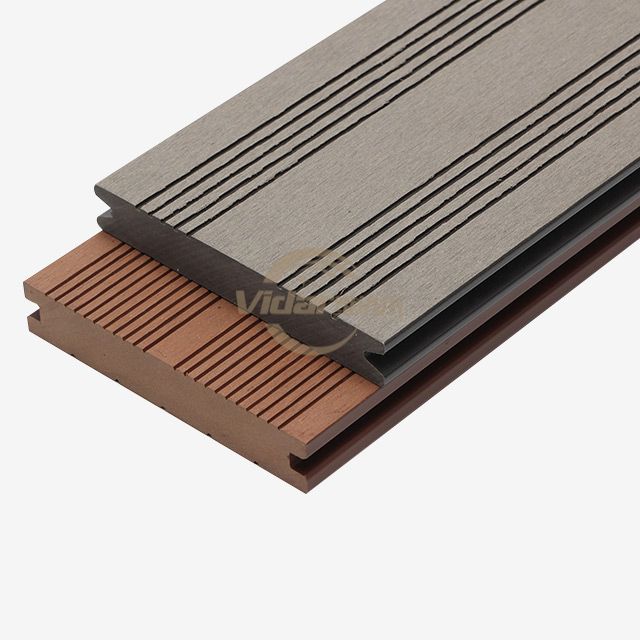
Architects consistently specify Anti-Slip Solid WPC Decking for these critical areas. These dense boards deliver a superior coefficient of friction. They grip human feet firmly even when completely wet. Their heavy mass provides excellent structural stability underfoot. This stability complies with strict commercial safety standards easily.
Environmental resilience forms the second crucial evaluation criterion. Resorts face constant, intense UV exposure from direct sunlight. Traditional wood fades and cracks quickly under these harsh conditions. Co-extrusion capping technology solves this specific issue effectively. A protective polymer shield completely wraps the composite core. This advanced shield offers incredible fading resistance over time.
Dining areas also face spilled food and beverages constantly. The capping resists aggressive stains effectively. Consider these vital resistance factors for commercial spaces:
Finally, you must consider aesthetic continuity. Hotel chains must maintain strict brand standards everywhere. Standardized manufacturing guarantees uniform texture and distinct colorfastness. You can achieve identical aesthetic results across multiple global property locations. This visual consistency strengthens your overall brand identity.
| Performance Metric | Natural Timber | Concrete/Tile | Composite Boards |
|---|---|---|---|
| Slip Resistance (Wet) | Low to Medium | Medium | High |
| Maintenance Demands | High (Sanding, Sealing) | Medium (Grout Cleaning) | Low (Basic Washing) |
| Aesthetic Warmth | High | Low | High |
| Stain Resistance | Poor | Good | Excellent |
Let us translate material composition directly into tangible financial benefits. Manufacturers blend recycled wood fibers and durable thermoplastics together. This unique combination delivers exceptional physical strength. It completely alters your facility maintenance economics. You save money every single month on upkeep.
You will see an immediate maintenance cost reduction. We must clarify a common industry claim right here. Composite decking is not completely "zero maintenance". You still need routine washing to remove surface dirt. You must sweep away organic debris periodically. However, it is definitively a "low maintenance" solution. You require zero expensive chemical treatments. You never need specialized wood oils or toxic stains.
This reality leads to a highly favorable lifecycle cost analysis. Solid composite boards require a higher initial capital expenditure than basic timber. Yet, hotels typically recoup this initial investment within three to five years. Eliminated labor costs drive this rapid financial payback. You stop buying expensive chemical treatments annually. Your maintenance staff can focus on enhancing the guest experience elsewhere. The boards perform flawlessly for decades without replacement. This impressive longevity protects your operational budget long-term. It ensures a stable, predictable financial forecast for property managers.
Large-scale properties present unique physical construction challenges. Commercial installations require stricter subframe engineering than standard residential decks. Heavy outdoor furniture creates intense localized pressure constantly. Crowds gather frequently for large events and parties. Rolling carts transport heavy luggage and catering supplies daily.
You must reduce your joist spacing accordingly. We highly recommend 12-inch joist spacing rather than the standard 16-inch span. This tighter framework prevents any board deflection. It handles immense commercial weight loads effortlessly. It ensures structural rigidity across the entire resort terrace. Proper stainless steel hidden fasteners secure this rigid structure perfectly.
Thermal expansion management represents another critical physical reality. Composite materials expand and contract during extreme temperature changes. You must acknowledge these physical realities early in design. Proper gapping between boards is absolutely essential. Ventilation underneath the deck is equally mandatory. This ventilation becomes crucial over solid concrete slabs. Rooftop terraces also trap heat heavily. Trapped heat and moisture will damage the installation over time. You must design adequate airflow pathways beneath the substructure.
Profile selection directly impacts your long-term success. We strongly argue against using hollow profiles in commercial settings. Hollow boards simply cannot survive high-impact hospitality environments. Solid boards remain mandatory for commercial durability. They provide necessary impact resistance against heavy dropped items. They also offer crucial acoustic dampening properties. Solid profiles prevent the loud, hollow echoes under heavy foot traffic.
Finding the right manufacturing partner requires a strategic approach. You must demand strict commercial certification and compliance documents. Do not accept vague marketing claims or unverified data. You need solid proof of real-world performance.
Follow these actionable steps to vet your suppliers properly:
Next, evaluate the product warranty carefully. You must know how to read a commercial warranty. It differs vastly from a standard residential warranty. Many residential warranties become completely void under heavy commercial foot traffic. Ensure the manufacturer explicitly covers high-volume hospitality environments. Check the specific terms regarding fading and stain resistance.
Finally, mandate a rigorous physical prototyping phase. Never specify materials based solely on glossy digital catalogs. Order physical samples directly to your construction site. Conduct rigorous onsite wet-testing with your facility management team. Review the supplier’s track record closely. Ensure they can handle large-scale B2B logistics effectively. They must guarantee reliable, phased delivery schedules. Material delays cost hospitality developers thousands of dollars daily.
Our final verdict is quite clear. Advanced composite decking is not just a simple design choice. It serves as a highly strategic operational asset. It actively protects your valued guests from dangerous safety hazards. It simultaneously protects your profit margins from endless maintenance costs. You easily bridge the gap between luxury aesthetics and operational practicality.
Take decisive action to secure your next hospitality project today. Prompt your procurement manager or lead architect to step forward. Request commercial product data sheets from verified manufacturers immediately. Order solid-profile samples for your own onsite testing. Schedule a dedicated technical consultation soon. You can discuss your site-specific subframe engineering requirements in detail.
A: Dense composites do retain heat. We acknowledge this transparent truth. However, you can manage this effectively. For barefoot areas with direct sun, specify lighter colors. Utilize shade structures where possible. You should opt for advanced co-extruded boards specifically engineered for lower heat retention.
A: Solid boards offer higher impact resistance, better load-bearing capacity, and exceptional sound dampening. These traits are strictly essential for commercial durability. Hollow boards easily crack under heavy localized loads, like heavy parasol bases. They are generally only suited for light residential use.
A: Yes, it can easily support heavy loads. You must ensure a solid profile is used. Additionally, the underlying joist span must be specifically engineered for commercial weight loads. Stricter spacing prevents localized deflection and guarantees long-term structural integrity.