Views: 0 Author: Site Editor Publish Time: 2026-07-02 Origin: Site


Decision fatigue often strikes during the final stage of planning a landscape project. You have already chosen the core material for your backyard. Now you must decide on the specific surface finish. This final choice dictates your long-term satisfaction. The choice between smooth, grooved, or wood-grain boards goes beyond mere aesthetic preference. It remains a highly functional decision. This selection directly impacts slip resistance, thermal retention, and overall lifespan value.
We know the "best" surface depends heavily on your specific landscape zone. A poolside environment demands different features than a covered patio. Daily usage realities must guide your final selection. Consider your pets, bare feet, and heavy furniture. They all interact with your deck daily. In this guide, we will explore how different surface profiles perform. You will learn how to match the right finish to your exact outdoor needs.
3D embossed WPC decking offers the most authentic timber aesthetic but requires capping technology (co-extrusion) to prevent heavy wear in high-traffic zones.
Grooved/Fluted surfaces provide maximum slip resistance and structural drainage, making them the objective choice for pool surrounds and wet climates.
Darker finishes like Charcoal WPC decking deliver premium modern aesthetics but require strategic placement due to higher thermal retention in direct sunlight.
Many homeowners fall for the myth of a "maintenance-free" deck. We must replace these exaggerated marketing claims with the reality of "low-maintenance" living. Every outdoor surface requires some basic care. However, different surface profiles trap dust, pollen, and moisture differently. A deep wood grain might look beautiful. Yet, it can hold onto fine dirt more aggressively than a smooth board. Understanding these nuances helps you protect your investment over the next two decades.
When selecting a decking profile, visual appeal is only one part of the equation. You must evaluate several critical performance metrics. These metrics determine how well the deck serves your daily lifestyle.
Slip Resistance: This remains crucial for compliance and safety in residential backyards. Wet climates and pool areas amplify this need. Smooth boards become hazardous when wet. Textured surfaces provide essential grip for running children and pets.
Scratch and Wear Tolerance: Think about patio furniture. Heavy metal chairs drag across the floor. Pet claws constantly scrape the boards. Textured surfaces hide minor scratches better. Smooth surfaces show imperfections quickly.
UV Degradation: Sunlight breaks down materials over a decade. Different surface profiles interact with harsh sunlight in unique ways. Deep textures cast micro-shadows. These shadows can slightly mitigate fading over time.
By prioritizing these three metrics, you ensure your deck remains functional and beautiful. You avoid premature replacement. You also guarantee a safer environment for your family.
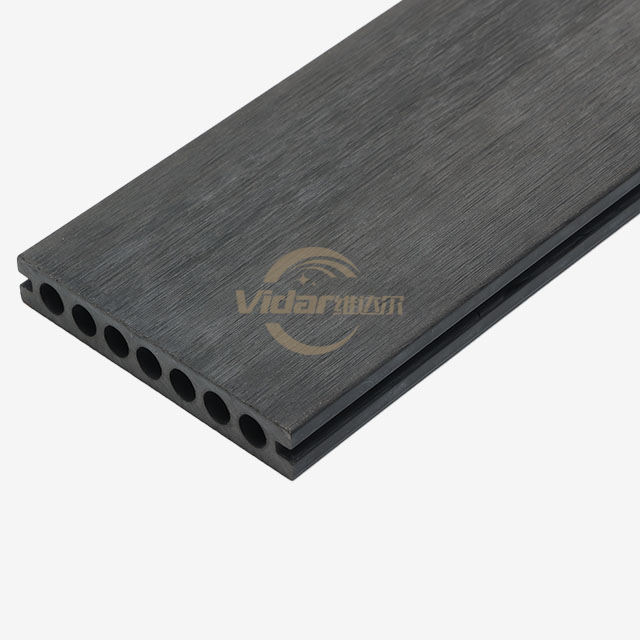
You must compare solutions objectively. Every manufacturing choice involves engineering trade-offs. We will examine the core profiles available in the market today. This helps you understand which profile suits your specific application.
3D embossed WPC decking provides the closest visual match to natural timber. Manufacturers press deep, realistic grain patterns into the boards. This texture scatters light beautifully. It also hides minor surface dust exceptionally well. Homeowners love this profile for its organic, traditional appearance.
However, this beauty comes with a trade-off. Deep grooves harbor fine dirt. You must occasionally power-wash these boards to keep the grain looking sharp. Furthermore, uncapped versions may wear flat over a decade. Heavy foot traffic slowly erodes the raised texture. Therefore, we recommend this profile for specific areas. It works best on main entertainment patios, dining areas, and visible landscape steps.
Grooved or fluted surfaces offer utilitarian durability. They feature parallel ridges running down the board. This creates a structured, linear look. The primary value lies in superior water shedding capabilities. These channels direct water away quickly. Consequently, they offer exceptionally high slip-resistance.
The main drawback is their distinctly artificial appearance. They do not mimic natural wood. They look decidedly manufactured compared to 3D embossed options. Despite this, their functional benefits remain unmatched. They serve as the ideal application for pool decks, hot tub surrounds, and commercial-grade landscape walkways.
Understanding the technical distinction between capped and uncapped boards is vital. Co-extruded boards feature a protective polymer shell. This capping surrounds the composite core. It acts like an impenetrable shield. Standard boards lack this outer layer. They leave the wood-plastic mixture exposed to the elements.
This distinction becomes a major decision factor. Capped surfaces resist red wine spills effortlessly. They repel grease from BBQs. They also resist fading significantly better than standard boards. This protective layer easily justifies the slightly higher upfront cost. Capped boards deliver far better long-term value.
Surface Profile | Best Feature | Primary Drawback | Ideal Application |
|---|---|---|---|
3D Embossed | Authentic wood look | Can wear in high traffic | Dining patios |
Grooved / Fluted | High slip resistance | Artificial aesthetic | Pool surrounds |
Co-Extruded (Capped) | Stain and fade resistance | Higher initial cost | Outdoor kitchens |
Color choice heavily influences both aesthetics and physical performance. Many buyers hold specific objections regarding heat retention. We must address these concerns transparently.
Dark grey and charcoal currently stand as the industry standard for modern landscape architecture. These shades anchor a space visually. They provide a striking contrast against green foliage and bright outdoor furniture. Minimalist designs rely heavily on these deep, sophisticated tones. They look premium and highly intentional.
However, we must face the thermal reality. Charcoal WPC decking will absorb more heat than light grey or oak variants. Dark colors naturally pull in solar energy. In peak summer direct sunlight, these boards get hot. They may become uncomfortable for bare feet. You must plan for this physical property during the design phase.
You can easily employ mitigation strategies. We recommend pairing dark boards with shaded structures. Pergolas, shade sails, and large umbrellas work perfectly. Alternatively, restrict dark boards to East-facing backyards. This placement avoids the harsh afternoon sun. Strategic placement lets you enjoy premium aesthetics without sacrificing bare-foot comfort.
Successful landscape design requires matching materials to their specific zones. You rarely need the exact same board across an entire property. Use this actionable, consultant-style shortlisting logic to guide your choices.
Zone 1: Pool Surrounds and Wet Areas. Safety stands as the absolute priority here. You must prioritize deeply grooved surfaces. They provide high-friction coefficients. Wet feet need aggressive grip to prevent dangerous falls. Additionally, capping is essential in this zone. The polymer shell resists harsh pool chemicals like chlorine and salt. Standard boards will degrade quickly in this environment.
Zone 2: Outdoor Kitchens and BBQ Areas. This zone faces constant threats from food and grease. Prioritize capped, smoother, or lightly embossed surfaces. Deep 3D grains can trap dropped food. They also hold onto splattered grease from the grill. A lightly textured capped board wipes clean effortlessly. It prevents permanent staining from dropped wine or condiments.
Zone 3: High-Traffic Walkways. Main paths endure repetitive footfalls every single day. Opt for dense, heavy-duty profiles. Avoid uncapped deeply embossed boards here. The concentrated traffic path will eventually wear down the texture. This creates a highly visible, "bald" trail through your landscape. Capped boards maintain their integrity far longer under heavy use.
Choosing the right surface only solves half the puzzle. Proper installation guarantees long-term success. We must examine the implementation realities and potential contractor-level risks.
Understructure requirements change based on your surface choice. Heavier embossed or capped boards carry more mass. They may require stricter joist spacing. Standard decks often use 16-inch centers. Premium boards often demand 12-inch centers. This tighter spacing prevents long-term sagging. It ensures a rigid, premium feel underfoot.
Fastener compatibility represents another critical reality. Your surface choice dictates your hardware options. Hidden clip systems work flawlessly with grooved edges. They keep the surface entirely unblemished. Conversely, face-screwing can disrupt the visual flow. If you choose a premium 3D embossed surface, face screws look terrible. You must use color-matched plugs to hide the screw heads. This adds labor time but preserves the aesthetic.
Finally, consider thermal expansion and contraction. Surface color directly increases thermal expansion rates. Darker colors heat up and expand more aggressively. You require precise gapping during installation. Proper gaps prevent the boards from buckling during peak summer heat. Experienced contractors understand these tolerances. They adjust gap sizes based on the ambient temperature during installation.
There is no universal "best" surface finish for every backyard. Your final choice depends entirely on how you use the space. Use 3D embossed boards to achieve a stunning, authentic wood aesthetic. Select grooved surfaces to guarantee safety in wet zones. Always opt for capped boards to maximize stain resistance in dining areas.
Take action before making your final purchase. Order physical samples of different surface profiles. Leave these samples in your backyard sun for 48 hours. Test their heat retention with your bare hand. Scratch them with a house key to evaluate durability. Pour water over them and test the slip resistance yourself. This hands-on testing guarantees you choose the perfect WPC decking for your specific lifestyle.
A: Yes, uncapped versions will slowly wear down in high-traffic paths after 7 to 10 years. Constant foot friction erodes the raised grain. However, co-extruded (capped) 3D WPC features a hard polymer shell. This protective layer retains its deep texture for 20+ years under normal residential use.
A: Yes, in direct peak summer sun, dark boards absorb significant heat. They become noticeably hotter than light grey or tan options. They are best suited for shaded areas, covered patios, or regions with milder summers. Always pair dark boards with shade structures if you prefer walking barefoot.
A: Lightly textured, co-extruded boards remain the easiest to clean. Their polymer cap repels moisture and stains effortlessly. Deep wood grains require occasional stiff brushing to lift dirt out of the artificial valleys. Grooved boards demand sweeping in a strict linear motion to clear the channels.
A: No, standard carbide-tipped woodworking blades work perfectly. You do not need specialized composite blades. However, careful cutting remains required. You must feed the saw slowly to avoid chipping the polymer cap on premium boards. A sharp, high-tooth-count blade delivers the cleanest possible edge.