Views: 0 Author: Site Editor Publish Time: 2026-06-07 Origin: Site


Choosing the right materials makes or breaks an outdoor project. Contractors, architects, and homeowners face a common dilemma today. Both capped and uncapped WPC decking offer significant low-maintenance advantages over traditional timber. However, choosing the wrong variant often leads to blown budgets or premature material failure.
The "better" option depends entirely on your specific project parameters. You must carefully evaluate lifespan requirements, environmental exposure, and upfront budget constraints versus annualized costs. A temporary flip property has different needs than a permanent coastal residence.
This guide bypasses flashy marketing claims. We objectively compare the structural mechanics, real procurement costs, and implementation realities of both types. You will learn how to identify fake materials and avoid catastrophic installation errors. By the end, you can confidently specify the exact decking type for your unique outdoor environment.
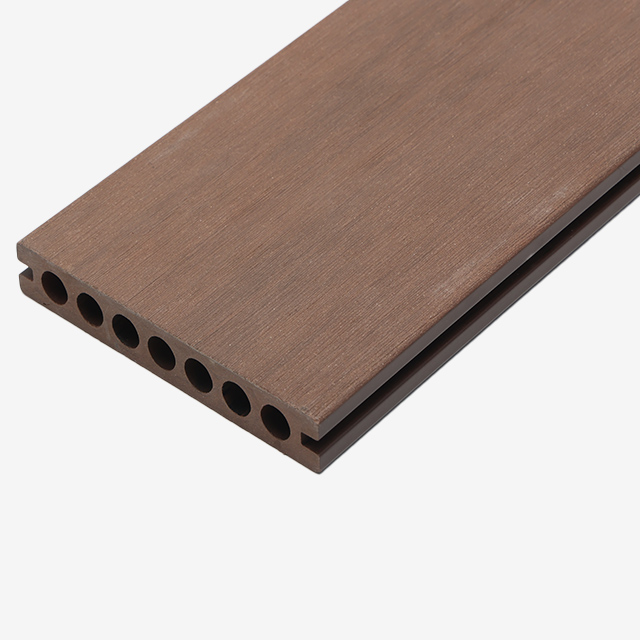
Technology: Capped decking uses co-extrusion for a protective polymer shell; uncapped uses traditional compression molding, leaving wood fibers partially exposed.
ROI: Capped WPC decking carries a 20–50% upfront premium but offers 25–30+ year warranties, lowering the annualized cost compared to the 10–20 year lifespan of uncapped boards.
Aesthetics vs. Durability: Uncapped offers a high-friction, natural "weathered wood" finish. Capped delivers superior stain, fade, and moisture resistance required for harsh climates.
Implementation Risk: Poorly engineered capped decking (e.g., half-capped without proper drainage) can trap moisture and cause severe structural cupping.
Understanding how manufacturers produce these boards reveals their core strengths and hidden weaknesses. The manufacturing method dictates the physical properties of your finished deck.
Manufacturers produce first-generation boards through standard compression molding or simple extrusion. During this process, factories mix raw wood fibers uniformly with high-density polyethylene (HDPE). They heat this mixture and push it through a shaping die.
This single-layer manufacturing reality produces a very specific physical outcome. Wood fibers remain exposed directly on the surface of the board. This exposed composition creates a highly natural, matte finish. It looks and feels remarkably like traditional timber. The exposed fibers also provide excellent natural slip resistance.
However, this uniform mixture leaves the board vulnerable. The exposed wood flour easily absorbs trace amounts of moisture from rain or humidity. Furthermore, direct sunlight triggers oxidation in the raw wood fibers, altering the board's appearance over time.
Second-generation decking relies on a more advanced manufacturing technique called co-extrusion. Factories simultaneously extrude two distinct materials. An inner core of standard wood-plastic composite is permanently bonded to an outer engineering polymer shell. We call this outer shell the "cap."
The physical outcome of co-extrusion solves many legacy issues. The tough polymer shell entirely protects the vulnerable inner core. It blocks UV rays, repels corrosive salt, and prevents water ingress. Manufacturers can also mold this cap to mimic highly complex, realistic wood grains.
Producing these boards requires high-precision machinery. The core and cap must cool at the exact same rate. If the manufacturing process lacks precision, the boards suffer from delamination. This occurs when the protective cap physically separates and peels away from the inner core.
Field performance differs wildly between the two variants. We must evaluate them across moisture resistance, color stability, and daily maintenance needs.
Uncapped boards inevitably absorb trace amounts of surface moisture. This moisture penetrates the exposed wood fibers via capillary action. Over decades, this constant wet-to-dry cycling breaks down the binding agents. This makes the boards susceptible to deep-seated mold. Eventually, the material can suffer from gradual crumbling or powdering.
Conversely, capped boards actively repel water. The non-porous plastic shell forces water to bead and roll off. This moisture barrier is vital for maintaining structural integrity.
We must also note the role of architectural stress. Capped boards possess significantly higher density. This higher density makes them mandatory for complex installations like "picture framing." In these intricate designs, boards must withstand higher screw-tension and severe localized stress without cracking.
Sunlight drastically alters first-generation materials. Uncapped WPC decking naturally "weathers" once installed outdoors. The ultraviolet rays react with the exposed wood lignin. The boards typically fade to a lighter, softer shade over the first three to six months before stabilizing.
Capped alternatives lock in their factory color immediately. The polymer shell contains heavy doses of UV inhibitors. This chemical engineering ensures long-term color consistency. Superior color fastness becomes crucial in partially shaded backyard areas. Without UV inhibitors, a partially shaded deck will develop ugly, uneven fading patterns.
Homeowners prize both types for their low-maintenance profiles compared to timber. You never need to sand, stain, or seal either option. However, their cleaning routines differ noticeably.
Uncapped surfaces feature microscopic pores. Algae, moss, and organic dirt easily build up inside these porous cavities. You will require more frequent power washing to blast away this trapped debris. Capped surfaces lack these pores. Mud, spilled wine, and grease cannot penetrate the plastic shell. You typically only need a simple wipe-down with soapy water to restore the deck.
Performance Metric | Uncapped WPC Decking | Capped WPC Decking |
|---|---|---|
Moisture Resistance | Moderate (absorbs trace water) | Excellent (completely non-porous surface) |
Color Fastness | Fades naturally over 3-6 months | Locks in color via UV inhibitors |
Stain Resistance | Vulnerable to grease and wine stains | Highly resistant to organic and chemical stains |
Slip Resistance (Wet) | High natural traction | Moderate (relies on embossed grain textures) |
Budgeting for a deck requires looking past the initial price tag. You must balance upfront capital against long-term financial expectations and supply chain realities.
Procuring materials requires distinct capital allocations. Capped options utilize expensive engineering polymers and require complex co-extrusion machinery. Therefore, they typically demand a 20–50% price premium over uncapped equivalents at checkout. For a large commercial project, this upfront CapEx increase can be substantial.
While standard boards cost less today, their warranties reflect their structural limitations. Uncapped products typically carry a 10-to-15-year limited warranty. Once they degrade, replacement requires fresh capital and labor.
Capped products routinely carry a 25-to-30-year warranty. Some premium lines even offer lifetime guarantees. When you spread the initial premium across a 30-year horizon, capped decking yields a much lower annualized expenditure. You completely eliminate the labor costs of a 15-year replacement cycle.
Contractors must respect factory production speeds. Because capped boards require slower, highly calibrated co-extrusion lines, factory output is lower. Consequently, lead times can extend significantly during peak building seasons.
Uncapped boards extrude much faster. Factories can stockpile them in massive quantities. They are often more readily available for tight project turnarounds. If your client demands immediate installation, standard boards might be your only feasible choice.
Exterior assets impact property appraisals. Real estate professionals increasingly recognize premium capped composites as value-adding features. Their documented longevity and pristine appearance boost home valuations. Standard boards, while functional, do not command the same premium appraisal bumps after five years of weathering.
Every outdoor environment presents unique threats. Selecting the right product requires matching material strengths to specific geographical and commercial scenarios.
Coastal & Marine Environments: Salt spray destroys traditional materials. The non-porous shell offers superior resistance to corrosive salt air. It also repels excessive moisture and withstands highly acidic seagull droppings.
High-Traffic / Commercial: Restaurants and public boardwalks face brutal abuse. The rigid cap resists deep scratching from chair legs. It effortlessly repels food grease, spilled wine, and heavy daily footfall.
Frost-Prone Climates: Northern regions experience severe winter weather. The protective shell minimizes internal moisture absorption. This prevents the catastrophic freeze-thaw expansion that leads to deep structural cracking.
Budget-Constrained / Short-Term Projects: Sometimes, maximizing longevity is unnecessary. Standard boards are ideal for property flips. They also suit temporary outdoor structures where a 15-year lifespan is entirely sufficient.
Aesthetic Purists: Some clients despise the slight sheen of plastic. Standard boards are best for environments where a natural, slightly weathered, non-glossy timber look is strictly desired.
Dry, Shaded Climates: Desert patios or heavily forested backyards present fewer threats. A lower risk of UV fading and minimal moisture damage neutralizes the main disadvantages of uncapped boards.
The composites industry suffers from misleading marketing. Many contractors accidentally purchase inferior materials or ruin premium boards through flawed installation techniques.
Some unethical suppliers market "painted" or low-grade single-extrusion boards as premium capped products. You can verify the structural truth before buying bulk pallets by executing a simple field test.
Order a small sample block of the intended product.
Inspect the raw cross-section under good lighting.
Look for a distinct, ultra-thin plastic layer physically separating the outside from the inner wood-fiber core.
Use a utility knife to scrape the surface aggressively. A true cap will not flake off like a layer of paint.
If the material color is uniform all the way through, it is not a co-extruded product.
Manufacturers fiercely debate capping coverage. Some cap only the top and sides (3-sided). Others wrap the entire board, including the bottom (4-sided). You must understand the physics of cupping to make an informed choice.
If a board is only half-capped, the exposed bottom absorbs ground moisture. The top remains bone dry. This creates immense internal tension. The wet bottom expands, causing the board to warp upward into a U-shape. This is known as cupping.
However, evidence-based nuance complicates the debate. While 360-degree capping offers maximum external protection, it creates a new hazard. If the installation lacks proper sub-deck drainage, rainwater enters the core through top screw holes. The waterproof bottom cap traps this water inside the board. This trapped moisture rapidly accelerates internal rot. High-quality 3-sided capping featuring engineered bottom drainage grooves can actually outlast poorly installed 4-sided boards.
Eco-conscious buyers face a frustrating dilemma. While capped decking lasts longer in the field, it poses severe recycling challenges. Uncapped decking consists of a single, uniform composite blend. This uniformity makes it significantly easier to melt down and recycle at the end of its lifespan.
Conversely, a co-extruded board acts as a fused bi-material. The tough polymer shell must be physically separated from the composite core before reprocessing. Most municipal recycling centers simply lack the specialized machinery to process them. Consequently, these premium boards often end up in landfills despite their eco-friendly marketing.
Navigating the composite market requires pushing past surface aesthetics. Both technologies serve specific purposes, but misaligning them with your environment guarantees failure.
Your shortlisting logic should center on three dominant factors. First, assess the maximum local weather exposure, particularly freeze-thaw cycles and UV intensity. Second, determine your acceptable maintenance frequency. Finally, outline your firm project lifespan expectations. A short-term property flip rarely justifies the premium of co-extruded polymers.
Your actionable next step is physical verification. We highly recommend ordering cross-section samples of both types. Take these samples and physically test their scratch resistance with a key. Observe the co-extrusion quality under a magnifying glass. Finally, perform a wet slip-test on the surface before authorizing bulk procurement.
A: Surface temperature is dictated primarily by the color of the board and its direct sun exposure, not the presence of the polymer cap. Darker boards retain significantly more heat in both categories. If heat retention is a major concern, you should always select lighter colors like pale grey or light oak, regardless of the manufacturing process.
A: You should not paint either type. However, painting capped decking is strictly impossible. The PE or ASA plastic surface is entirely non-porous. Any paint or stain you apply will lack adhesion and will inevitably peel and flake within 12 to 24 months. Uncapped boards accept stains slightly better due to exposed fibers, but it ruins their low-maintenance appeal.
A: Yes, generally. The exposed wood fibers and the compression-molded matte surface of uncapped boards offer slightly higher natural traction when wet. They easily outperform the smoother first-generation capped boards. However, manufacturers have adapted. Modern capped decking now features deep-embossed, highly textured wood grain explicitly designed to counteract this issue and restore safe traction.