Views: 0 Author: Site Editor Publish Time: 2026-09-02 Origin: Site


High-quality deck boards cannot compensate for the wrong fastening system. Using standard hardware on modern composites leads to board warping, "mushrooming," and voided warranties. You must treat these advanced materials differently. Unlike traditional timber, composite materials respond dynamically to structural stress and extreme temperature shifts. Wood shifts mostly from moisture, while composite materials expand and contract laterally as the weather changes. This crucial difference means your installation approach requires highly specialized hardware. This guide breaks down the engineering realities of securing these modern materials. We provide an objective comparison of hidden clips, composite screws, and material grades. We will help you finalize your installation strategy flawlessly. You will learn how to accommodate thermal expansion, choose the right materials, and avoid common installation pitfalls. Protecting your investment starts entirely by understanding what holds everything together beneath the surface.
Understanding the core physical differences between natural wood and composite materials remains your most critical first step. Traditional lumber acts like a sponge. It swells heavily when wet and shrinks as it dries. Builders have used standard wood screws for decades to lock these timber boards firmly against the joists. Conversely, composite materials behave like a plastic polymer. They expand and contract laterally based purely on temperature fluctuations. When the summer sun hits the deck surface, the boards grow in length. When winter temperatures plummet, they shrink. If you lock them down rigidly, you invite immediate structural failure.
We see countless failed installations because contractors try using traditional wood fasteners. Standard wood screws trap expanding boards tightly against the sub-framing. Because the board has nowhere to go as it heats up, it buckles upward. The extreme lateral shear force often snaps the screw shaft cleanly in half. Even if the screw survives the stress, you will likely experience the dreaded "mushrooming" effect. This happens when the expanding plastic material displaces and pools around the screw head, creating an unsightly and dangerous bump on your deck surface.
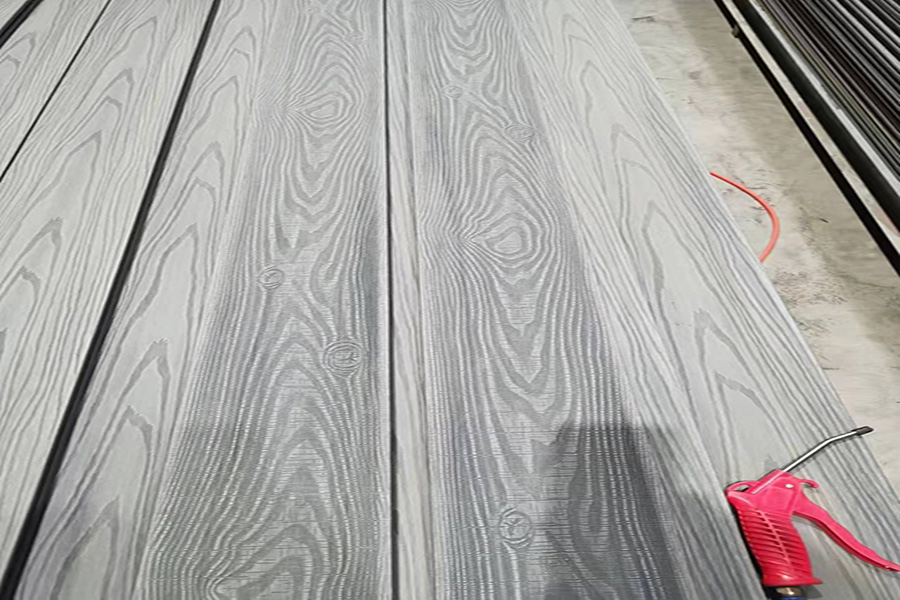
Top-tier manufacturers engineer their products to endure these environmental stresses, but they rely entirely on proper fastening techniques. Premium Outdoor Co-Extrusion WPC Decking requires specific gap tolerances to maintain structural integrity. These gaps typically range between 3–6mm depending on your local climate and board length at the time of installation. Engineered hidden fasteners automatically provide these precise gaps. They allow the boards to slide back and forth microscopically as temperatures change, eliminating the sheer forces tearing standard decks apart. Failing to use these specialized fasteners easily voids manufacturer warranties, leaving you responsible for costly replacements.
Hidden clip systems represent the industry standard for modern deck installations. Manufacturers design these clips specifically to slide directly into the pre-cut side grooves of your boards. You drive a screw through the center of the clip and into the joist below. This mechanism secures the board downward while still allowing crucial lateral micro-movements.
You gain several major advantages by using hidden clips. First, they deliver a flawless, fastener-free aesthetic. You never see ugly screw heads dotting your pristine deck surface. Second, they act as built-in spacers. The clip body automatically creates uniform expansion gaps across the entire deck structure. This guarantees perfect alignment and optimal drainage. Finally, eliminating face screws reduces surface water penetration, keeping the inner core of your boards dry and secure.
However, this system presents one major drawback. Troubleshooting becomes a frustrating reality. If you damage a single board located squarely in the middle of your deck, you cannot simply unscrew it. You must often cut the damaged board out completely and manipulate the surrounding clips to drop a replacement into the existing matrix. We highly recommend keeping specialized clip-removal tools on hand if you manage large commercial decks.
Not every application supports hidden fasteners. Solid-edge boards, fascia trim, and specialized framing require composite deck screws. You face-drive these fasteners directly through the top of the board and into the joist beneath. They provide maximum hold-down power where structural stability matters most.
You must use face-driven composite screws for high-stress areas. Stair treads demand absolute rigidity to prevent slipping hazards. Breaker boards (the boards running perpendicular to your main deck pattern) and perimeter picture-frame borders also require unyielding attachment points. You cannot rely on flexible clips for these specific structural elements.
When selecting these screws, you must look for two specific engineering features. First, demand reverse-threaded designs. Standard screws push material upward. Reverse threads act like an auger, pushing the displaced composite material back down into the hole to prevent mushrooming. Second, source color-matched heads. Most premium fastener brands offer epoxy-coated screw heads perfectly matched to popular composite board colors, ensuring they blend seamlessly into your finished surface.
Fastening Method Comparison
| System Category | Best Application Scenario | Primary Structural Advantage | Key Installation Limitation |
|---|---|---|---|
| Hidden T-Clips | Main deck field using grooved boards | Allows maximum thermal movement and auto-spaces gaps | Difficult mid-deck board removal |
| Composite Screws | Stairs, fascia, and perimeter framing | Unmatched hold-down power and rigidity | Creates visible holes; restricts thermal expansion |
| Starter/End Clips | First and last boards against walls | Secures outer edges without face-screwing | Requires precise initial alignment |
Polymer and nylon T-clips dominate the residential market for good reasons. Manufacturers mold these fasteners from high-strength industrial plastics. Their performance profile emphasizes flexibility and absolute corrosion resistance. Because they contain no metal components (aside from the driven screw), they naturally repel moisture, rot, and rust.
They are highly compatible with the thermal movement of standard WPC Decking. As the boards expand and push against the clips, the nylon material flexes slightly. This microscopic give absorbs the shear force and prevents the boards from buckling. We find these clips work best in inland climates facing high temperature variances. If your region experiences freezing winters and scorching summers, you can expect maximum lateral board movement. Nylon clips handle this dynamic shifting beautifully without fatiguing or breaking over time.
Stainless steel clips offer a completely different performance profile. They are rigid, boast exceptionally high tensile strength, and deliver incredible uplift resistance. Engineers specify steel clips when sheer holding power outranks flexibility.
You should deploy stainless steel clips primarily in high-wind zones, hurricane-prone regions, and commercial areas expecting heavy foot traffic. They also serve as the mandatory choice for coastal environments. However, you must specify the correct grade. Use 304-grade stainless for standard commercial applications. If you build within a few miles of the ocean, you must upgrade to 316 Marine-Grade stainless. The 316 alloy contains molybdenum, which drastically increases resistance to saltwater corrosion and chloride pitting.
You must understand the distinct trade-off when choosing steel. Steel clips are completely unforgiving of structural movement. They will not flex when your boards expand. Therefore, you must ensure perfect joist spacing and strictly follow manufacturer guidelines for expansion gaps. If you pin boards too tightly using steel clips, the expanding composite material will actually crush its own groove edges against the unyielding metal.
Even the highest-quality fasteners fail if you install them incorrectly. We frequently observe catastrophic deck failures stemming from basic installation errors. You must control your tools, secure your perimeters, and match your materials perfectly.
Choosing the right hardware does not need to be complicated if you follow a clear logical pathway. Review this decision tree to pinpoint the exact fastener setup for your specific project requirements.
Your next-step actions should involve a thorough audit of your deck plan. Calculate your joist spacing accurately. Most composite manufacturers require 16-inch on-center spacing for residential decks and 12-inch spacing for commercial or diagonal layouts. Once you verify your framing, order your fasteners. A standard rule dictates ordering hardware at a ratio of roughly 20-22 clips per square meter of decking surface. Always order 10% extra to account for dropped screws and unexpected layout changes.
Fasteners represent the literal backbone of your outdoor living space. They are absolutely not the place to cut project budgets or accept cheap alternatives. Selecting the right fastening system guarantees the structural longevity of your installation while preserving the pristine aesthetic promise of modern composite materials. By accommodating thermal expansion and matching your hardware to your specific climate, you eliminate the risk of buckling boards and sheared screws.
Before beginning your build, prompt your contracting team to review the manufacturer-approved fastener lists thoroughly. Consult the official technical data sheets for your specific product line. If you are using non-standard sub-framing, contact the manufacturer's engineering team directly for a compatibility check. A few minutes of verification today prevents thousands of dollars in warranty-voided repairs tomorrow.
A: No. Regular wood screws lack the reverse-thread design required to push displaced material down, causing severe "mushrooming" around the screw head. They also lock the boards rigidly to the joists. Because composites expand and contract with temperature shifts, these rigid screws trap the material, leading to sheer-offs, buckled boards, and voided warranties.
A: First, run a circular saw down the center of the damaged board and remove the two halves. Next, carefully loosen the screws on the adjacent hidden clips without removing them completely. Slide the new replacement board into place, engaging the grooves. Finally, re-tighten the loosened clips to lock the new board securely.
A: Screws typically snap due to immense lateral shear forces. This happens when expanding composite boards push forcefully against screws driven without pre-drilled holes, especially near board ends. Snapping also occurs if you use low-grade metal screws that cannot withstand thermal expansion forces, or if your underlying joist structure shifts excessively.