Views: 0 Author: Site Editor Publish Time: 2026-09-15 Origin: Site


Specifying decking materials for commercial spaces or heavily used residential areas carries significant financial risk. Choosing inadequate standard boards often leads to disastrous outcomes. You face premature surface wear, unexpected structural failure, and potential slip-and-fall liability claims. When foot traffic peaks during busy seasons, you need a material engineered for extreme resilience. Solid WPC Decking stands as the ultimate heavy-duty alternative to traditional natural wood and standard hollow composite boards. We built this comprehensive guide to help you evaluate your structural options objectively. We provide a transparent, evidence-based framework for your next architectural installation. You will discover if the long-term performance benefits of solid boards truly justify their increased weight and upfront cost. You will also learn exactly how to match material specifications to your precise high-traffic project requirements.
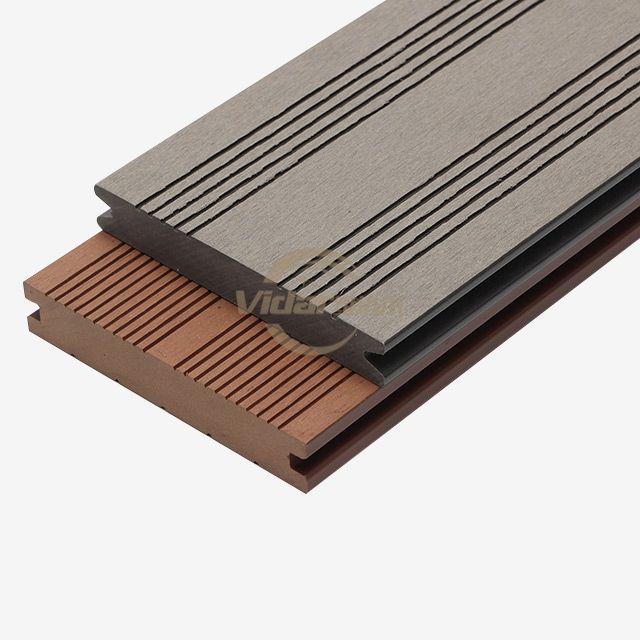
Solid boards lack internal voids. Manufacturers extrude them as a single, dense piece of composite material. This basic design choice creates massive structural advantages. They contain significantly more raw wood fiber and polymer per linear foot. This extreme density directly improves their overall structural integrity. When you install solid boards, they handle constant weight far better than hollow options. Hollow boards rely on internal arch architectures. These hollow structures work well for light residential use. However, they introduce points of potential weakness under heavy commercial strain.
Consider how boards handle deflection under load. Structural engineers measure this using pounds per square foot. Residential decks usually support basic baseline loads. Commercial spaces demand much higher load-bearing capacities. Crowds gather tightly on public boardwalks. Patrons drag heavy outdoor furniture across busy restaurant patios. Hollow boards can flex downward under this repetitive weight. Over time, continuous downward flexing causes micro-cracking in the protective capping layer. Solid boards resist this downward pressure naturally. They maintain their rigid shape perfectly, even during peak capacity events.
You will also notice clear acoustic differences during daily use. Hollow boards often produce a loud, echoing drumming sound. Every heavy footstep echoes through the empty internal channels. This creates unwanted noise pollution in outdoor dining areas. Solid profiles dampen this sound highly effectively. Their dense core absorbs the acoustic energy of heavy foot traffic. Your commercial patio remains much quieter. It feels substantially more premium to your guests.
Look at moisture resistance as well. Hollow boards feature open internal channels. These channels can trap humid ambient air. When environmental temperatures drop, condensation forms inside the board. This trapped moisture has nowhere to escape easily. Solid boards completely eliminate this internal surface area. They present a single, impenetrable block to environmental moisture. This density prevents internal water infiltration entirely. It protects the structural integrity of the deck over decades.
| Evaluation Feature | Solid Core Profile | Hollow Core Profile |
|---|---|---|
| Material Mass and Density | Exceptionally high density | Lower density due to internal voids |
| Deflection Risk Under Load | Minimal flexing or bending | Moderate flexing under heavy weight |
| Acoustic Output Profile | Dampened and quiet | Resonant and echoing |
| Point-Load Vulnerability | Highly resistant to crushing | Susceptible to surface punctures |
Sudden impacts destroy standard decking materials quickly. Bartenders often drop heavy steel kegs. Landscapers drag large concrete planters across the floor. Facility maintenance teams roll heavy lifting equipment over the surface. We classify these sudden events as dynamic point loads. Solid boards absorb these concentrated loads flawlessly. They do not crush, dent, or crack under sudden mechanical stress. Hollow boards remain highly vulnerable to these concentrated surface punctures. A single dropped metal object can break straight through a hollow channel. This ruins the board instantly. You must then perform an immediate, disruptive replacement.
Continuous public footfall introduces abrasive debris constantly. Dirt, coarse beach sand, and small rocks grind relentlessly against the deck surface. Winter conditions introduce harsh rock salt. Solid boards pair a dense, unyielding core with an advanced co-extruded capping layer. This distinct manufacturing combination offers exceptional scratch resistance. The rigid core prevents the outer capping layer from stretching or compressing. It maintains a hard, unyielding surface against daily aggressive scuffing. You completely avoid the rapid visual degradation seen in softer composite materials. The deck looks newly installed for many years.
Safety always remains a primary commercial requirement. Public spaces carry massive liability risks for property owners. You must prevent slip-and-fall accidents aggressively. Commercial building codes mandate strict surface friction standards. This makes Anti-Slip Solid WPC Decking absolutely essential for commercial venues. Premium manufacturers use deep wood-grain embossing techniques to create reliable physical texture. They also apply specialized polymer capping technologies to increase surface friction. These specialized boards maintain excellent friction coefficients during heavy rainstorms. They perform safely even in high-spill environments like outdoor bars and pool decks. Providing a secure footing protects your guests and your business.
You must plan carefully for the increased material weight. Solid boards are significantly heavier than hollow composite profiles. They also weigh substantially more than traditional natural softwood lumber. Installation crews need more physical effort to move them around the job site. You often need two-person lifts for longer commercial boards. You must factor this heavier labor into your project estimates. Ignoring the weight difference leads to delayed timelines and exhausted crews.
Joist spacing requires meticulous attention during the framing phase. Solid boards span standard joists exceptionally well. However, high-traffic commercial applications demand maximum structural rigidity. We strongly recommend using tighter joist spacing for these specific environments. Framing your substructure at 12 inches on center provides incredible stability. It eliminates any potential surface bounce completely. Installers should also add solid blocking between the joists. This prevents lateral twisting and strengthens the entire frame.
Consider these substructure best practices for high-traffic installations:
Fastener selection also changes drastically for heavy-duty environments. High-vibration areas loosen standard hidden fasteners over time. You must use specific heavy-duty stainless steel hidden fastener systems. Flimsy plastic clips will fail quickly under commercial stress. Furthermore, some commercial building codes require traditional face-screwing techniques. Face-screwing secures the heavier boards permanently directly to the joists. It prevents any lateral shifting during heavy crowd movement. Installers can use color-matched composite plugs to hide the screw heads. Always verify fastener shear strength ratings before beginning the installation.
Solid boards carry a very noticeable upfront price premium. You can expect to pay 20% to 40% more than standard hollow profiles. This initial price difference deters some budget-conscious buyers. However, you must evaluate the long-term structural return. Commercial spaces generate critical revenue. Closed sections due to deck maintenance hurt your bottom line directly.
Heavy-use zones destroy cheap decking materials very quickly. Solid boards eliminate splintering, warping, and rot entirely. You avoid expensive, disruptive replacement cycles altogether. The financial benefits accumulate rapidly over a two-decade lifespan. Standard commercial decks require continuous repairs. Heavy-duty solid boards simply perform reliably year after year. The extra upfront capital guarantees operational continuity.
Think about operational downtime. Commercial venues rely heavily on their outdoor spaces for revenue. When a restaurant patio requires deck repairs, seating capacity drops instantly. You lose money every hour the space remains closed. Standard hollow boards fail faster under commercial stress. They require frequent spot repairs and board replacements. Solid boards prevent this operational downtime entirely. They handle the daily abuse without failing. Your outdoor space remains open, safe, and highly profitable.
Use this rapid shortlisting guide to make your final material choice:
Solid profiles represent the mathematically and structurally safer choice. They provide unparalleled structural superiority for true high-traffic applications. The added mass prevents deflection, resists sudden impact, and ensures lasting safety. You invest slightly more upfront to guarantee decades of flawless performance. You protect your business from liability claims and operational downtime.
Take these actionable next steps to advance your project:
A: We strongly advise against this approach. Hollow DIY systems are engineered strictly for light residential use. Installing them in commercial spaces carries massive risks. High foot traffic accelerates structural fatigue rapidly. The thin walls will crack under heavy commercial loads. Furthermore, using residential products in commercial settings automatically voids the manufacturer warranties. You remain fully liable for all structural failures.
A: All composite materials expand and contract with temperature fluctuations. However, solid boards possess much higher thermal mass. They heat up and cool down slower than hollow alternatives. Despite this slight behavioral difference, proper gapping during installation remains absolutely critical. You must follow standard manufacturer spacing guidelines. This ensures the boards have sufficient room to move without buckling.
A: Solid profiles excel in harsh winter environments. Standard hollow boards feature internal channels. Water easily accumulates inside these voids. When temperatures drop drastically, this trapped water freezes and expands. This expansion causes severe internal splitting. Solid boards eliminate these empty spaces entirely. They drastically reduce the risk of structural freeze-thaw damage, ensuring a longer winter lifespan.