Views: 0 Author: Site Editor Publish Time: 2026-08-30 Origin: Site


Waterside pedestrian environments present complex engineering hurdles for modern developers. They endure constant ambient humidity. They face frequent seasonal flooding risks. They also experience incredibly high foot traffic daily. These public areas carry strict safety liabilities for municipalities. Traditional construction materials often fail under these harsh realities. Timber rots quickly. Concrete permanently disrupts fragile riverbanks. Property managers and city planners urgently need reliable alternatives. Wood-plastic composite has firmly emerged as a standard commercial solution. We no longer ask if composite works near rivers. Instead, we evaluate how well it performs against legacy materials. This comprehensive article explores critical performance metrics and implementation realities in riparian zones. You will discover exactly how modern composite technology handles extreme moisture. We will outline essential installation practices to ensure long-lasting walkways. By the end, you will know how to specify the safest materials for your next waterside project.
Riverside construction projects face unique environmental challenges. Planners must understand these threats before selecting materials.
Boardwalks built near rivers endure punishing micro-climates. Ambient moisture levels remain consistently high year-round. Morning dew coats the walking surfaces daily. Poor sub-deck ventilation often traps damp air below the boards. Furthermore, regions experiencing winter weather face destructive freeze-thaw cycles. Water infiltrates porous materials during the day. It freezes and expands at night. This expansion destroys structural integrity over time.
Riparian zones create perfect breeding grounds for biological hazards. Mold, mildew, and algae thrive in constant dampness. They accelerate timber decay rapidly by breaking down the cellular structure of wood. These organisms also create severe public risks. Algae accumulation turns walkways into treacherous slip hazards. It forms an invisible biofilm. Pedestrians easily lose traction on slimy surfaces. Managing biological growth dictates ongoing maintenance schedules. Property managers spend thousands annually power-washing infected wood.
Public paths handle intense dynamic stress daily. Commuters, joggers, and cyclists apply heavy loads continuously. Municipalities require materials built for this endless punishment. The boards cannot splinter under heavy use. They must never suffer catastrophic failure. Public safety remains the absolute top priority for civic engineers.
Understanding material performance separates successful projects from costly failures. Modern composites engineered specifically for outdoor use excel here.
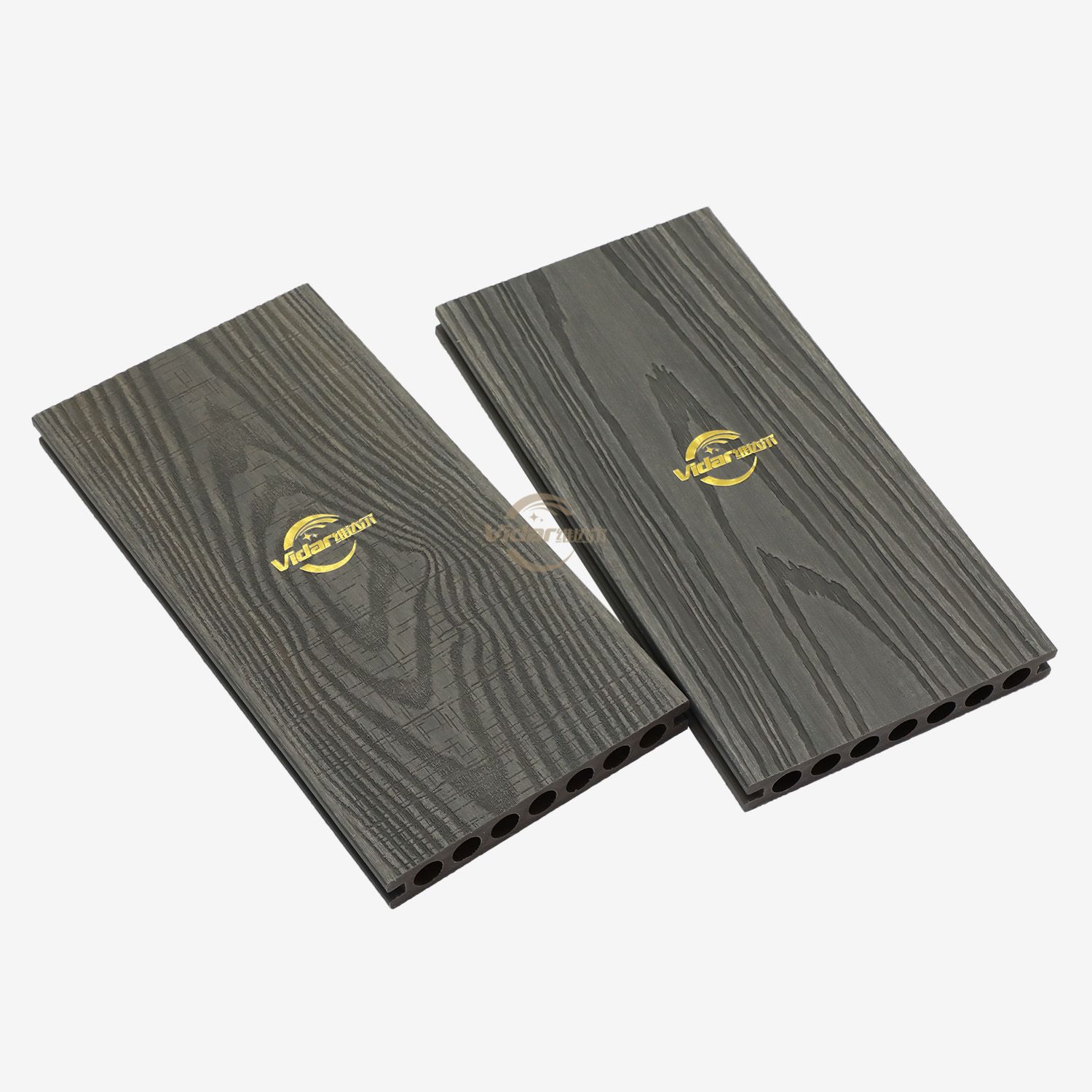
Manufacturers extrude recycled wood fibers encapsulated tightly in high-density polyethylene (HDPE). This advanced process creates highly durable WPC Decking. The plastic base significantly lowers the overall water absorption rate. It easily outperforms porous organic wood. The polymer completely surrounds the wood particles. It blocks moisture from reaching the vulnerable organic core.
Quality composite boards maintain their structural integrity perfectly. They strongly resist warping, cupping, or twisting. Even exposed to wildly varying moisture levels, they stay flat. River environments demand this specific reliability. Traditional lumber swells during wet seasons. It then shrinks during dry spells. Composite materials limit this movement drastically. You get a consistently smooth walking path year after year.
Safety requires highly predictable traction. Factories use deep 3D embossing techniques during production. They also apply aggressive brushed finishes to the top layers. These manufacturing methods ensure a consistent coefficient of friction (COF). The surface stays safe under wet conditions. They easily meet ADA guidelines for accessible design.
Not all composites perform equally near water. You must establish a clear decision framework before purchasing.
First-generation uncapped composite falls dangerously short for riverside use. The manufacturing process leaves some wood fibers exposed on the surface. These fibers absorb ambient moisture slowly. They eventually swell and degrade. Uncapped boards also stain easily. They cannot survive the demanding riverside environment long-term.
Modern solutions completely eliminate this fatal flaw. Riverside Capped WPC Decking features a tough, co-extruded outer layer. It utilizes an impermeable polymer shield. The best products offer full 360-degree encapsulation. Even the grooves remain protected. Water simply cannot penetrate the core. This shield guarantees decade-long durability.
This capping technology provides massive operational benefits. Municipalities and commercial properties save countless labor hours. The shield prevents mud, silt, and flood debris from staining the walkway. After a seasonal flood, maintenance crews simply wash the mud away. The boards look brand new again. Furthermore, the capping blocks harmful UV rays. Sun exposure will not fade the colors. It retains its premium aesthetic indefinitely.
Project planners usually weigh three primary materials. Let us compare them directly based on maintenance and ecological impact.
Timber demands exhausting maintenance schedules constantly. It requires biannual chemical sealing and staining. Environmental agencies heavily restrict these toxic sealants near waterways. They easily leach into the soil. They harm fragile aquatic ecosystems. Conversely, composite boards remain chemically inert post-manufacturing. They leach absolutely nothing into the river. You protect the local environment effortlessly.
Concrete installation causes massive environmental disruption. Construction crews need heavy machinery to pour the foundations. This invasive work destroys natural riverbank vegetation. It compacts the soil severely. Composite paths utilize much lighter substructures. They leave a minimal ecological footprint behind. You preserve the delicate riparian zone better.
Material Comparison Chart for Waterside Paths
| Performance Metric | Timber Wood | Concrete Solid | Composite Capped |
|---|---|---|---|
| Maintenance Demands | Very High | Low | Very Low |
| Ecological Footprint | High (Chemicals) | High (Disruption) | Low (Inert) |
| Moisture Resistance | Poor | Excellent | Excellent |
| Installation Speed | Moderate | Slow | Fast |
Even the best materials fail if installed incorrectly. Waterside environments amplify basic construction errors.
Procurement teams must demand rigorous documentation. Use this checklist to evaluate potential suppliers effectively.
Successful riverside walkways demand highly specialized engineering. You need materials built specifically for extreme moisture and low maintenance. Traditional lumber and concrete fall short in modern public applications.
Capped composite boards provide the ultimate balance. They offer outstanding environmental resilience and exceptional public safety. They also ensure excellent financial viability over their long lifespan. You eliminate toxic chemical sealants and reduce ongoing labor.
Architects, contractors, and project managers should take immediate action. Request physical material samples today. Ask your suppliers for specialized technical datasheets detailing waterside applications. Compare independent testing scores thoroughly. Choose the safest path for your community infrastructure.
A: No. While highly water-resistant, it is not designed for continuous underwater applications like marine pilings. It requires periods to dry. Continuous submersion can force moisture into the core over time. Always maintain proper clearance above the high-water mark.
A: High-quality composite boards use deep wood-grain embossing to maintain excellent traction. They meet strict ADA slip-resistance guidelines. However, regular cleaning remains essential. You must wash away surface algae to prevent biological slip hazards from forming.
A: Yes, standard composite boards leach no toxic chemicals into the water. This makes them much safer than chemically pressure-treated woods, which often harm fragile aquatic environments. They offer a highly inert, eco-friendly solution for sensitive riparian zones.