Views: 0 Author: Site Editor Publish Time: 2026-07-01 Origin: Site


Outdoor construction projects constantly face one major failure point. Materials degrade prematurely under harsh weather conditions. This degradation leads to escalating maintenance demands and frustrating repair cycles. Over the years, composite materials evolved significantly from first-generation options to advanced second-generation technologies. Traditional WPC decking successfully solved the splintering and rotting issues common in natural timber. However, these early composites introduced new vulnerabilities, including rapid fading and stubborn organic staining. This guide evaluates the structural and operational differences between traditional uncapped boards and modern co-extruded capped profiles. You will learn how these specific manufacturing methods impact moisture resistance, UV stability, and surface durability. We will help you navigate the exact specifications needed for your next project. Our goal is to ensure you achieve lasting performance, visual appeal, and structural safety across all your outdoor living spaces.
Technological Shift: Co-extrusion applies a non-porous polymer shield during the manufacturing process, effectively sealing the wood-plastic core.
Performance Gap: Shielded boards virtually eliminate moisture ingress, UV fading, and organic staining, drastically reducing lifecycle liabilities.
Financial Reality: Co-extrusion requires a higher initial capital outlay (typically 20–30%) but offers a faster ROI through zero-maintenance performance and longer warranty cycles.
Aesthetic Retention: Advanced capping allows for realistic, multi-chromatic streaking that retains a natural wood appearance without weathering.
To make an informed material specification, you must first understand the manufacturing mechanics. The industry classifies composite boards into two primary generations. Each generation utilizes a distinctly different production method. These methods dictate how the final product will behave in real-world outdoor environments.
Manufacturers create traditional composites using a homogenous blend. They mix raw wood fibers thoroughly with polymers like polyethylene (PE) or PVC. This mixture goes through an extrusion process to form a solid board. The resulting profile features a uniform composition from the core to the outer surface.
This early technology carries a significant vulnerability. The manufacturing process leaves raw wood fibers exposed on the surface layer. These microscopic organic fibers act like tiny sponges. They remain highly susceptible to microscopic moisture absorption. Over long periods, this moisture ingress leads to gradual color fade and mold growth. In extreme cases, the boards experience warping as they expand and contract unevenly.
Common Mistake: Many buyers install first-generation composites in damp, shaded areas. The exposed wood fibers trap moisture, accelerating organic decay and fungal growth.
Co-extrusion represents a massive technological leap forward. Manufacturers use a simultaneous extrusion process. They extrude a high-performance engineering polymer layer at the exact same time as the inner core. Extreme heat fuses these two materials together. This process creates an inseparable, permanent bond between the core and the outer shell.
You can think of this shielding effect as structural armor. The outer polymer shell contains absolutely no organic wood fibers. It acts as an impenetrable barrier. Depending on the manufacturer, these boards come capped on either three or four sides. This encapsulation completely protects the vulnerable core materials from environmental threats.
Theoretical manufacturing differences only matter if they translate to tangible field performance. We must evaluate how these two generations handle daily environmental stressors. Outdoor materials face relentless attacks from rain, sunlight, and human activity.
Traditional boards remain perfectly usable in standard, dry environments. However, they carry substantial risk in high-humidity zones. Continuous moisture exposure threatens their structural integrity. For example, poorly ventilated ground-level decks trap damp air underneath the substructure. Uncapped boards will absorb this ambient moisture over time.
Co-extrusion profiles boast a near-zero water absorption rate. The non-porous polymer shield simply repels water. This impenetrable barrier eliminates the risk of swelling and rotting. It also protects the board from the severe structural compromises associated with freeze-thaw cycles. When water freezes, it expands. Because capped boards block water entry, they never suffer from internal ice expansion.
Ultraviolet radiation destroys outdoor aesthetics. Traditional composite boards remain subject to a process called photo-degradation. When exposed to direct sunlight, the exposed wood fibers bleach. You will notice the boards predictably lighten over the first 12 to 16 weeks of sun exposure. After this initial weathering period, the color will finally stabilize.
Co-extruded boards behave entirely differently. Manufacturers inject specialized UV-inhibitors directly into the outer polymer shell. These chemical agents absorb and dissipate radiation. They effectively lock in the original color. This technology delivers predictable, permanent aesthetic fidelity. Your deck will look exactly the same ten years from now as it did on installation day.
Uncapped boards feature a naturally porous surface structure. This porosity creates severe maintenance headaches. Oil, grease, or wine spills require immediate intervention. If you drop barbecue grease on a traditional board, it will soak into the wood fibers. You must scrub it rapidly to prevent permanent staining.
The co-extrusion process creates a completely non-porous shell. Spills simply sit on the surface, waiting for you to wipe them away. You only need mild soap and water for cleanup. Furthermore, the engineering polymer provides superior hardness. It remains highly resistant to scratching from heavy foot traffic, pets, or dragging patio furniture.
Best Practice: Always test surface durability before buying. Ask your supplier for a sample piece. Drag a heavy metal key across the surface to evaluate its scratch resistance firsthand.
Performance Metric | Traditional WPC (Uncapped) | Co-Extrusion WPC (Capped) |
|---|---|---|
Water Absorption Rate | Moderate (Surface fibers exposed) | Near-Zero (Non-porous shell) |
Color Fading | Noticeable fading in first 12-16 weeks | High UV stability, permanent color |
Stain Resistance | Low (Requires immediate cleaning) | High (Spills wipe off easily) |
Scratch Resistance | Susceptible to scuffs and gouges | Highly resilient polymer armor |
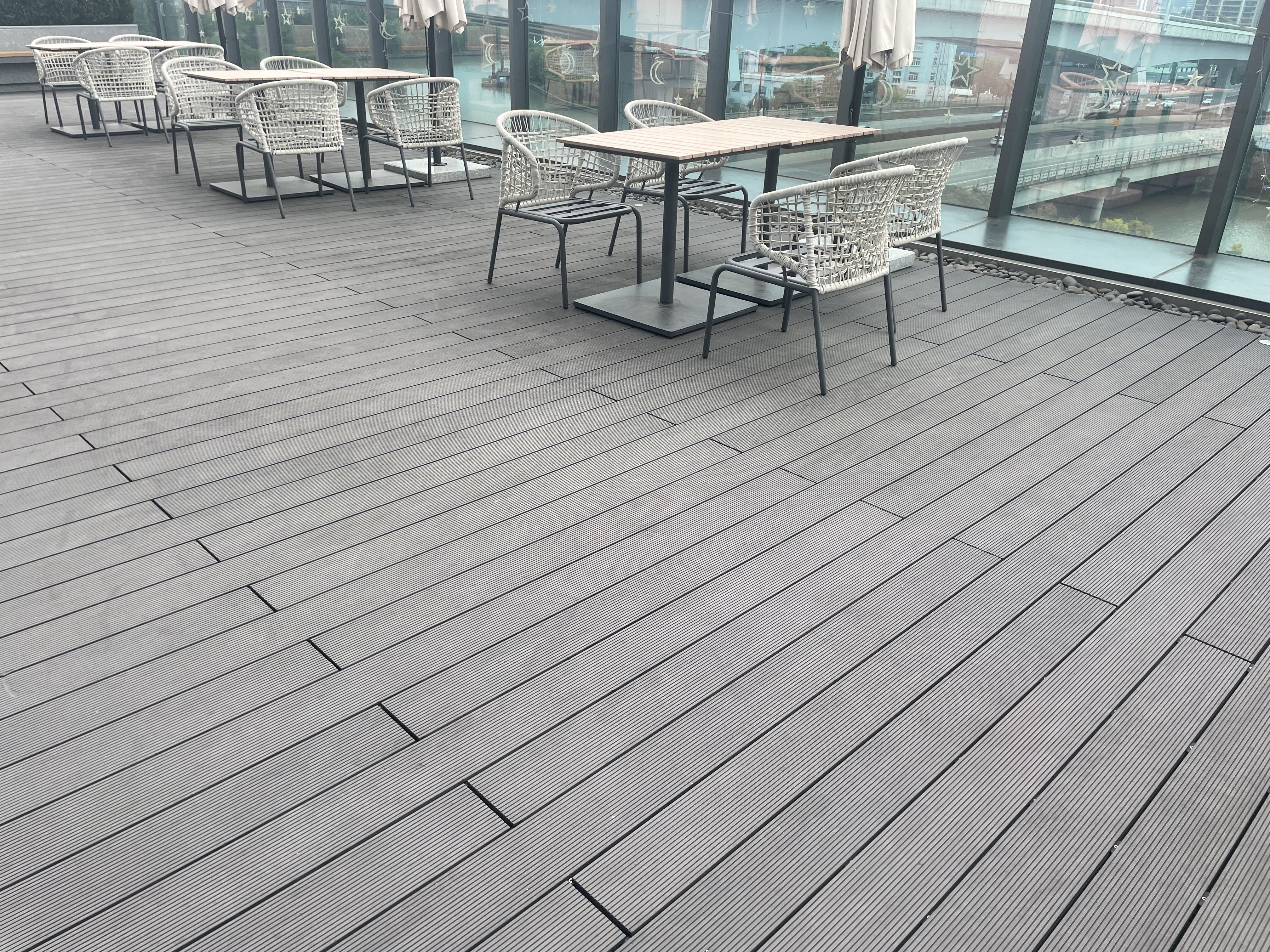
Modern architecture demands premium finishes. Outdoor living spaces should seamlessly extend the interior design of a home or commercial property. The visual differences between first and second-generation composites are striking.
First-generation aesthetics suffer from distinct manufacturing limitations. Traditional WPC often presents a flat, monochromatic finish. Manufacturers struggle to inject complex color variations into a homogenous wood-plastic mix. Over time, as the surface oxidizes in the sun, these boards can look artificial. Many homeowners complain they develop a dull, plastic-like appearance after a few years.
The co-extrusion process completely revolutionizes composite aesthetics. The protective polymer shell accommodates highly advanced manufacturing techniques. Factories use precision embossing rollers to stamp deep, realistic wood grain textures into the warm polymer. Furthermore, the extrusion equipment can blend multiple pigment colors simultaneously. This creates stunning dual-tone pigmentation and realistic streaking.
This advanced technology is the only reliable way to deploy Natural wood color WPC decking. You can achieve the luxurious look of exotic hardwoods like Teak, Ipe, or Walnut. More importantly, it maintains this premium architectural finish permanently. You achieve absolute authenticity without ever performing the routine sanding and oiling required by natural timber.
You must align your material choice with your specific project environment. Over-specifying wastes money, while under-specifying leads to premature project failure. Below, we outline exactly where each material belongs.
Traditional WPC remains highly viable in certain controlled environments. Consider using uncapped boards in the following scenarios:
Low-budget residential applications where upfront cost is the primary driving factor.
Low-traffic garden paths or secondary outdoor utility areas.
Fully covered environments, such as porches under structurally integrated roofs.
Regions with exceptionally dry climates where moisture exposure remains minimal.
Conversely, co-extrusion technology becomes absolutely mandatory in harsh or demanding environments. You must specify capped composite boards in these specific situations:
Commercial Installations: Hospitality venues, retail centers, and public boardwalks demand extreme durability. These areas face heavy foot traffic and require high slip resistance for public safety.
High-Moisture Zones: Marine docks, boardwalks, or poolside applications require absolute moisture defense. The near-zero water absorption of capped boards prevents rapid degradation.
Premium Residential Builds: Luxury homes tie long-term aesthetic retention directly to property valuation. High-end clients will not accept fading or staining on their expensive outdoor living spaces.
Extreme Climate Regions: Areas facing intense sun exposure or severe freeze-thaw cycles require the advanced chemical stabilization found only in co-extruded polymers.
Selecting the right composite requires more than just picking a color. You must evaluate the physical geometry and safety certifications of the boards. Following a strict decision framework ensures you procure the correct Co-extrusion decking board for your specific application.
First, verify the shield coverage. Manufacturers produce both half-capped and fully capped boards. Half-capped boards feature the protective polymer only on the top surface and the sides. The bottom remains exposed. Fully capped boards feature a 360-degree protective wrap. We highly recommend 360-degree encapsulation as the superior choice for high-moisture environments. It prevents ground moisture from vaporizing and entering the bottom of the board.
Next, evaluate the core profiling. You must decide between solid and hollow profiles. Solid profiles offer higher structural density and superior impact resistance. They are the undeniable choice for commercial applications and public spaces. Hollow or scalloped profiles use less raw material. They remain cost-effective and lightweight, making them perfectly suitable for standard residential deck builds.
Finally, demand compliance and safety standards. Do not purchase composite materials based solely on visual appeal. Advise your purchasing team to request official specification sheets. You must verify slip resistance ratings. Look for recognized industry benchmarks like an R10 or R11 rating, or request local pendulum test equivalents. Additionally, check the fire-retardant classifications for the outer polymer shell to ensure compliance with local building codes.
Common Mistake: Failing to check the expansion and contraction coefficients on the spec sheet. Capped boards expand differently than traditional wood. You must leave proper gapping during installation to accommodate thermal movement.
Feature Category | Specification to Verify | Recommendation |
|---|---|---|
Shield Coverage | Half-capped vs. 360-degree fully capped | Choose 360-degree for ground-level or high-moisture areas. |
Core Geometry | Solid vs. Scalloped/Hollow | Choose solid for commercial; scalloped for residential budgets. |
Safety Certifications | Slip resistance and Fire rating | Demand R10/R11 slip ratings for public or poolside applications. |
Navigating the composite materials market requires a clear understanding of manufacturing technologies. While traditional WPC serves as a functional, entry-level composite for protected environments, it carries inherent vulnerabilities. Co-extrusion represents the definitive industry standard for risk-averse buyers. By wrapping a robust wood-plastic core in an impenetrable polymer shield, manufacturers have solved the fading, staining, and moisture issues that plagued early composites.
Your next steps should focus on physical verification. Reach out to reputable manufacturers and request physical board samples. Take these samples outside and evaluate the natural wood texturing under your local lighting conditions. Test the scratch resistance firsthand using common household items. Finally, verify the safety specifications and shield thickness before signing off on your final material procurement.
A: No, high-quality co-extruded boards will not delaminate. True co-extrusion technology extrudes the core and the polymer shield simultaneously under extreme heat. This creates an inseparable, permanent molecular bond. Beware of cheap imitations that use glued veneers, as those can peel over time.
A: Yes, both generations are completely compatible with standard hidden fastener systems. They use grooved edges that accept hidden clips. However, you must carefully follow the manufacturer's specific thermal expansion gapping rules, as capped polymers may expand slightly differently than uncapped boards.
A: No composite material is entirely scratch-proof. However, co-extrusion boards are highly scratch-resistant. The engineering polymer easily withstands normal daily wear, pet claws, and light impacts. Severe damage only occurs if you drag heavy, sharp metal furniture directly across the surface without protective pads.