Views: 0 Author: Site Editor Publish Time: 2026-06-29 Origin: Site


The procurement landscape for outdoor flooring has dramatically shifted over the last decade. Architects and commercial builders are rapidly moving away from traditional timber toward engineered composites to escape relentless maintenance cycles. Natural wood looks beautiful initially but quickly falls victim to rot, splintering, and extensive moisture damage. You inevitably spend massive amounts of time and resources on sanding and sealing just to keep the surface safe and structurally sound.
Fortunately, modern material science offers a much more resilient solution for challenging climates. This comprehensive guide serves as a technical evaluation tool for your next exterior project. We will unpack the exact engineering behind WPC decking to help you validate materials before purchasing. You will learn how to spot critical quality differences and confidently specify the perfect profiles for demanding environments.
WPC decking resolves the rot, splintering, and high-maintenance drawbacks of natural wood while maintaining structural integrity in outdoor environments.
The market has shifted from traditional WPC to Co-extrusion WPC decking, which features an advanced polymer shield for superior durability.
Anti-UV capped WPC decking significantly reduces color fading and structural degradation in high-sunlight exposure areas.
Evaluating WPC requires looking beyond aesthetic appeal to assess core density (solid vs. hollow profiles), thermal expansion rates, and warranty structures.
The engineering behind composite materials is fascinating. Manufacturers blend wood fibers and polymer resins to create highly durable hybrid boards. Typically, the standard mixture contains roughly 60% wood fiber. This organic material provides structural strength and a natural tactile feel. The remaining portion consists of thermoplastics. These plastics deliver crucial moisture resistance and long-term flexibility.
Factories also mix in essential chemical additives. Colorants give the boards a rich, uniform aesthetic. Coupling agents bind the wood and plastic molecules together permanently. Stabilizers protect the entire mixture during the high-heat extrusion process. This precise chemistry creates a remarkably stable flooring product.
This unique composition solves massive problems. Traditional timber absorbs moisture quickly. It inevitably rots over time. Termites also destroy natural wood effortlessly. Thermoplastic encapsulation mitigates these exact risks. Plastic completely surrounds the vulnerable wood fibers. Moisture simply cannot penetrate the core. Termites cannot consume the synthetic plastic barrier.
When you evaluate these products, you will encounter two distinct profiles. Solid and hollow designs serve very different implementation realities.
Profile Type | Implementation Reality | Best Application Scenarios |
|---|---|---|
Solid Profile | Higher impact resistance, significantly heavier, handles heavy dynamic loads effectively. | Commercial plazas, public boardwalks, high-traffic hospitality venues. |
Hollow Profile | Highly cost-effective, lighter weight, requires strict adherence to drainage rules. | Residential patios, private balconies, low-traffic garden terraces. |
Best Practice: Always specify solid boards for stairs or commercial zones. Hollow boards trap moisture easily if installers ignore proper drainage and span guidelines.
The earliest composite generations faced notable limitations. First-generation boards were completely uncapped. These early iterations exposed a raw mix of wood and plastic directly to the elements. They absorbed moisture slowly over time. Barbecue grease and spilled wine caused permanent, ugly stains. The organic fibers faded heavily when exposed to direct sunlight.
The industry quickly responded to these field failures. Engineers developed a massive co-extrusion upgrade. Today, we call this advanced product Co-extrusion WPC decking. The manufacturing process applies a 360-degree polymer shield around the inner core. This creates an impermeable, highly defensive protective layer. Moisture cannot reach the inner wood fibers. Stains wipe off the sleek surface effortlessly.
Weathering defenses also improved dramatically. Sustained sunlight degrades inferior plastics quickly. It makes them brittle and visually dull. To solve this, manufacturers formulated Anti-UV capped WPC decking. This specialized version features powerful chemical additives embedded in the outer shell. These additives actively delay photo-oxidation. They block harmful ultraviolet radiation effectively. Your outdoor floors will not become brittle. They maintain their original color depth for decades, even in blistering climates.
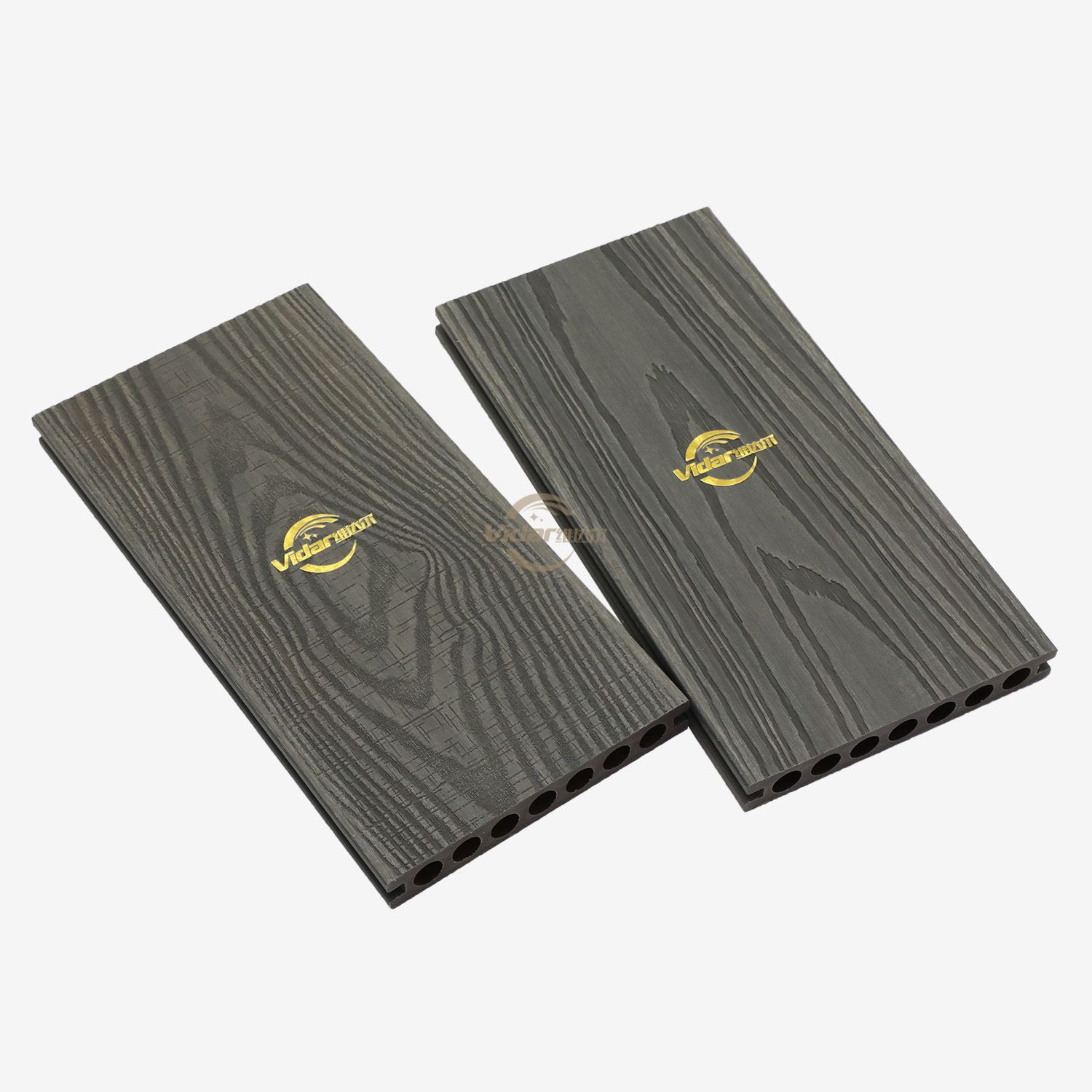
Design professionals choose composites because they deliver predictable, long-term results. We can analyze this through a distinct features-to-outcomes framework. This framework highlights exactly how material properties translate to real-world value.
Water Resistance: Traditional wood fails rapidly around moisture. Composites repel water completely. They are ideal for pool surrounds, exposed balconies, and coastal terraces. You never have to worry about structural rotting.
Slip Resistance: Safety is paramount in commercial design. High-quality composites feature deep 3D embossing. They are fully compliant with commercial safety standards for wet-environment foot traffic. This reduces liability significantly.
Low Maintenance ROI: The upfront cost of composites is higher than basic pine. However, you must contrast this against the 10-year cumulative cost of natural timber. Wood requires constant sanding, staining, and plank replacement. Composites only require occasional washing. The long-term return on investment is undeniably superior.
Beyond material properties, contractors appreciate the scalability. Installation standardization changes how large projects operate. Modern composite systems utilize innovative hidden fastener clips. These clips slide directly into the grooved edges of the boards.
Hidden fasteners guarantee perfectly consistent gapping between every single plank. Installers no longer need to measure spaces manually. They also eliminate unsightly top-down screw holes. This method reduces labor hours drastically on large commercial or multi-family residential rollouts. Teams finish jobs faster and deliver a perfectly uniform aesthetic.
You cannot specify materials effectively without understanding their weaknesses. Every building product has limitations. Acknowledging these risks ensures successful, long-lasting project implementation.
Thermal expansion is a non-negotiable physical reality. Composite materials expand when they get hot. They contract when temperatures drop. You must calculate proper end-to-end gapping during installation. If you ignore these expansion rates, your boards will buckle under pressure. They will push against each other and warp. We highly recommend leaving adequate space at butt joints based on local climate fluctuations.
Heat retention is another objective limitation. Dense composite materials naturally retain more heat than light-colored timber. Darker boards absorb intense solar radiation aggressively. They will feel hot under direct, midday sunlight. You should objectively state this fact to your clients. Warn them about walking barefoot during peak summer hours. Selecting lighter colors like gray or beige mitigates this heat absorption significantly.
Substructure requirements demand strict attention. You must understand one critical structural fact. Composite decking bends under pressure. It is not a standalone structural material. It requires a perfectly leveled joist framework underneath. You can build this using treated timber, aluminum, or galvanized steel. You must space these joists properly to prevent the boards from sagging. Industry standards usually dictate a maximum span of 16 inches or 400mm.
The composite market is highly saturated. You will encounter dozens of suppliers making similar promises. We developed a clear buyer’s framework to help you separate premium manufacturers from low-tier producers. Follow these steps carefully.
Request Material Testing and Compliance Data: Never trust marketing claims alone. Look for documented, third-party testing. Request data on load-bearing capacity. Ask for official slip resistance ratings. Check for fire-retardant classifications such as EN 13501-1 or ASTM E84. Reputable suppliers provide these documents willingly.
Identify Hidden Warranty Traps: Always read the fine print. A bold "25-year warranty" badge means very little on its own. Ensure the document specifically covers fading, permanent staining, and structural integrity. Many cheap warranties only cover initial manufacturing defects. They leave you unprotected against long-term environmental damage.
Perform Physical Sample Validation: Encourage your procurement team to request cross-section samples. Cut the boards open. Inspect the core density yourself. Measure the actual thickness of the co-extrusion cap. Assess the 3D wood grain embossing for visual realism. The cap should wrap fully around the core without any exposed weak points.
Common Mistake: Buyers often choose the cheapest hollow profile available. They skip sample validation completely. These thin boards often crack within three years under standard patio furniture weight.
Engineered composites represent a major leap forward in exterior building materials. These advanced boards eliminate the constant scraping, sealing, and replacing associated with natural wood. The initial investment pays off through decades of effortless durability and sustained visual appeal.
However, successful implementation requires careful selection. You must choose the right generation of material. Prioritize fully capped profiles to guarantee stain and fade resistance. You must also select the appropriate internal structure based on your anticipated foot traffic. Solid boards remain the gold standard for heavy commercial use.
Your next step is simple. Assess your specific environmental constraints thoroughly. Determine your expected UV exposure and local moisture levels. Then, reach out to verified manufacturers. Request their technical data sheets and physical cross-section samples. Validate their claims firsthand before signing any procurement contracts.
A: High-quality capped composites realistically last between 15 and 25 years. The advanced polymer shield protects the core from moisture and rot. If you follow standard maintenance protocols and ensure proper substructure drainage, the boards will maintain their structural integrity for decades.
A: No. You never need to seal, stain, or paint these engineered boards. In fact, applying chemical sealers can severely damage the protective polymer cap. You only need to wash the surface periodically using mild soap and a standard water hose.
A: Yes, but you cannot attach the boards directly to the concrete slab. You must install a framework of sleeper joists first. This elevates the decking. It ensures adequate airflow and critical water drainage underneath the installation, preventing moisture entrapment.
A: Yes, it is highly sustainable. Premium composites are usually manufactured from 85% to 95% recycled materials. Manufacturers utilize reclaimed wood fibers from the furniture industry and repurpose common household plastics. This process diverts thousands of tons of waste from local landfills annually.