Views: 0 Author: Site Editor Publish Time: 2026-04-29 Origin: Site


Moving beyond basic aesthetics reveals the strategic advantage of composite materials in modern construction. Builders and homeowners alike increasingly rely on engineered solutions for residential and commercial outdoor spaces. High-quality composites solve inherent vulnerabilities found in traditional building materials.
Buyers evaluating outdoor wpc decking face a saturated, often confusing market. The decision usually hinges on balancing higher initial procurement costs against long-term structural predictability. You must weigh lower maintenance overhead against upfront prices to find true value. Furthermore, strict environmental compliance plays a massive role in modern material selection.
We provide a transparent, evidence-based framework for evaluating these composite materials. This guide will help you separate premium engineered boards from low-grade alternatives. You will learn exactly how to calculate lifecycle costs, ensure environmental compliance, and choose materials built to last.
TCO Advantage: WPC eliminates ongoing chemical treatments and staining, crossing the break-even point against traditional timber within 5–7 years.
Project Predictability: Uniform board quality eliminates the warping, culling, and high callback rates associated with natural wood.
Risk Mitigation: High-quality WPC avoids cheap fillers (like talcum powder) that cause rapid UV degradation and structural brittleness.
Compliance: Premium boards meet strict commercial safety standards for slip resistance and zero formaldehyde (E0) emissions.
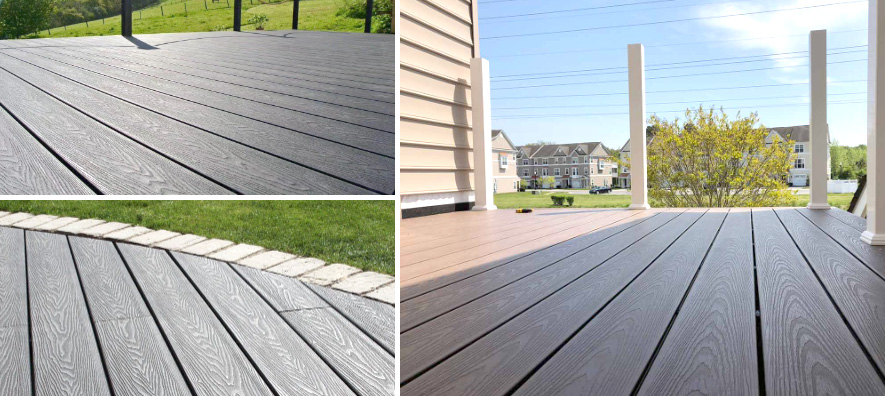
Start by addressing the core business problem framing. Many contractors and property owners naturally gravitate toward traditional timber. They see the initial price tag and assume it represents the total cost. This assumption creates a severe financial trap. Natural timber incurs compounding maintenance debts over its entire lifecycle. Owners must continuously invest in sanding equipment, premium paints, and chemical sealants. Moreover, natural wood simply breaks down faster. A typical wooden surface often requires full replacement within 5 to 10 years.
Let us compare the initial capital expenditure of WPC Decking against its extended lifespan. Premium composite materials usually command a higher upfront price. However, they boast an expected functional lifespan of 20 to 30 years. When you install composite boards, you instantly eliminate annual labor costs. You no longer buy expensive waterproofing treatments. You never need toxic pest control chemicals.
Consider this baseline cost comparison over a standard 10-year period:
Cost Category | Traditional Timber | Engineered WPC Decking |
|---|---|---|
Initial Procurement | Low to Medium | Medium to High |
Annual Maintenance | High (Sanding, painting, sealing) | Virtually Zero (Soap and water cleaning) |
Pest Control Costs | Required annually | Not required |
Replacement Cycle | 5 to 10 years | 20 to 30 years |
10-Year Total Cost | Extremely High | Highly Cost-Effective |
This financial comparison reveals a clear break-even point. Most commercial and residential installations cross this threshold within 5 to 7 years. After this initial period, composite materials generate pure financial savings year over year.
Low-maintenance outdoor spaces directly increase your overall asset valuation. For commercial properties, reducing operational expenses dramatically improves overall yield. Hotel managers and restaurant owners prefer outdoor dining areas demanding zero downtime for staining. They keep their spaces open and profitable.
For residential properties, these outdoor spaces appeal strongly to environmentally conscious buyers. Prospective homeowners actively seek out low-maintenance backyards. They willingly pay a premium for properties offering immediate, hassle-free relaxation. Tenants also place high value on safe, splinter-free lounging zones.
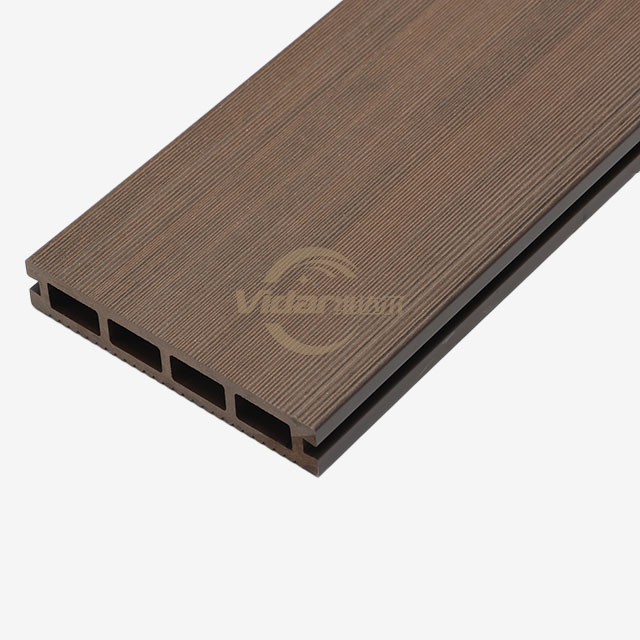
Modern construction relies heavily on predictable material performance. Let us discuss the specific solution categories and material matrix making this durability possible. Manufacturers engineer these boards by combining recycled wood fibers and advanced polymers like HDPE. This unique blend creates a formidable, weather-resistant shield. The plastic encapsulates the wood fibers perfectly, blocking moisture intrusion completely.
Contractors and project managers distinctly prefer composite solutions for large commercial rollouts. Imagine building massive rooftop terraces or expansive hotel deck layouts. Material consistency becomes absolutely critical here. Natural wood bundles arrive full of unusable pieces. Workers waste hours sorting out knots, cracks, and warped boards. Project managers frequently face high callback rates when natural boards twist after installation.
Composite materials guarantee absolute uniformity. Every single board matches the next in density, weight, and straightness. You eliminate sorting time entirely. You experience zero culling waste on the job site. This predictability keeps tight construction schedules firmly on track.
Natural wood quickly falls victim to harsh environmental forces. Premium composite boards display incredible resistance to moisture, rot, and insect damage. They achieve this impressive longevity without relying on toxic chemical pressure-treatments.
Consider these specific resilience factors:
Moisture Resistance: Polymer encapsulation prevents water absorption, stopping destructive mold and mildew growth in damp climates.
Pest Immunity: Termites and boring insects cannot digest the plastic-wood matrix, ensuring absolute structural integrity.
Weather Stability: Boards withstand extreme weather events easily. They perform beautifully provided installers manage thermal expansion correctly during construction.
Modern construction carries a vital dual mandate. Builders must balance environmental responsibility and uncompromising user safety. Composite architecture directly addresses both of these crucial demands, satisfying strict security and compliance focuses.
Let us examine the modern composite supply chain. High-quality manufacturing diverts massive amounts of plastic waste from overburdened landfills. Factories rescue everyday items like milk jugs and industrial plastic scrap. They combine these recycled plastics using reclaimed wood fibers from furniture plants and sawmills.
This innovative closed-loop process actively combats global deforestation. It completely removes the need to harvest virgin timber. By transforming industrial waste into long-lasting building materials, manufacturers drastically reduce their carbon footprint. You actively support sustainable architecture when selecting these engineered products.
Safety remains non-negotiable for high-liability areas. Public walkways, hotel balconies, and poolside lounging areas demand rigorous protection. Premium boards meet and exceed strict commercial safety standards.
Key safety features you should expect include:
Slip-Resistant Engineering: Advanced surface texturing provides deep traction. This prevents dangerous falls near water features or during heavy rain.
Splinter-Free Composition: The dense polymer matrix guarantees a perfectly smooth surface. Guests and children can walk barefoot safely at all times.
Zero-Formaldehyde Emissions: Clean E0 formulations strictly meet both indoor and outdoor air quality standards. They emit zero harmful chemical gases into your living space.
You need a highly skeptical evaluation framework to assess manufacturers properly. The market contains many hidden cost-cutting traps. We will equip you to spot these specific dangers before you finalize your material purchase.
Budget boards often hide fatal structural flaws. Unscrupulous manufacturers frequently reduce crucial antioxidants to save manufacturing costs. They also pack their boards using extremely cheap fillers. Common culprits include light calcium carbonate and simple talcum powder.
These compromised formulations cause severe structural failures. The cheap fillers interrupt the vital polymer bonds holding the board together. As a result, the boards suffer rapid UV fading. Within just one or two years, they develop serious structural brittleness. You will quickly notice ugly surface cracking and edge crumbling. Replacing these failed boards entirely destroys any initial upfront financial savings.
Always demand physical samples before committing to large bulk orders. Use these precise tactics to verify structural quality firsthand:
Cross-Section Check: Carefully examine the board's cut end. Look for incredibly dense, uniform cores. You should never see large air pockets, loose fibers, or crumbly edges inside the material.
Scent Test: Smell the sample closely. Premium materials retain a very subtle, pleasant wood scent. An overpowering chemical or pungent plastic odor strongly indicates poor raw materials.
Certifications: Demand immediate proof of standard industry testing. Reliable suppliers readily provide independent CE, ISO, Intertek, or ASTM testing reports upon request.
Below is a quick reference chart for physical inspections:
Evaluation Dimension | Premium Board Indicators | Inferior Board Warning Signs |
|---|---|---|
Core Density | Solid, uniform, heavy | Air pockets, crumbly edges |
Material Scent | Faint natural wood aroma | Harsh chemical or plastic smell |
Flexibility | Rigid but structurally resilient | Brittle, easily chips at corners |
Documentation | ASTM, CE, Intertek certified | No independent test reports |
A decking board is genuinely only as good as its fastening system. Proper implementation considerations dictate the ultimate success of your entire outdoor build. You must pay attention to what happens beneath the surface.
You must plan carefully for polymer expansion and contraction. Unlike natural wood, composite materials shift slightly along their length as ambient temperatures change. We emphasize the absolute necessity of engineered hidden decking clips.
Installers cannot simply drive screws straight through the top of the boards. They must use specialized fastening clips. These clips secure the boards while allowing microscopic sliding movements. Furthermore, installers must maintain proper gapping between board ends. This deliberate spacing absorbs thermal movement safely. It prevents structural buckling and warping over the long term.
Proper sub-frame construction protects your entire investment. Moisture must never pool beneath the deck surface. Outline clear sub-frame requirements to your installation team. They should slope the ground slightly away from the main building structure to redirect rainwater.
Good drainage protects the structural integrity of your wooden or metallic joists. Adequate sub-deck ventilation allows trapped heat and dampness to escape easily. This careful airflow planning ensures the outdoor space easily surpasses its 20-year expected lifespan without rotting from below.
Summarizing your shortlisting logic ensures a flawless final decision. Prioritize manufacturers offering fully transparent material compositions. You should demand comprehensive warranty terms covering fading and structural integrity. Always insist on proven, hidden fastening systems designed specifically for thermal movement.
Take decisive action before your next build. Encourage your procurement team to request physical samples directly. Test the cross-section density and surface finish yourself using the tactics provided. Finally, ask suppliers for specific structural testing certifications before confirming bulk orders. Following this logical framework guarantees a beautiful, enduring outdoor space.
A: Yes, high-grade HDPE resilience allows these boards to withstand extreme temperatures. Installers must properly manage thermal expansion during construction. Using engineered hidden fasteners and leaving precise gaps between board ends allows the polymer to expand and contract naturally without buckling.
A: Premium boards undergo a natural weathering process during the first 12 weeks, slightly lightening to their permanent shade. They contain high-quality UV inhibitors. In contrast, cheap boards lacking antioxidants suffer permanent, severe UV degradation and fading within a single year.
A: Absolutely. You can cut, drill, and route these boards using standard woodworking tools. This remarkable installation versatility makes them perfect for custom angles, curved edges, and intricate outdoor architectural designs.
A: WPC offers a natural wood feel and superior thermal retention. PVC consists entirely of plastic, which can look artificial and feel uncomfortably hot underfoot. SPC contains a heavy stone core, making it incredibly dense but much harder and less resilient for outdoor lounging.