Views: 0 Author: Site Editor Publish Time: 2026-10-23 Origin: Site


How can global buyers secure competitive WPC Decking wholesale prices without sacrificing quality? Material specifications, order quantities, and shipping costs all affect your budget. This guide explains price comparisons, bulk purchasing, landed costs, and supplier negotiations to help you make informed buying decisions.
Material composition is an important factor in WPC decking wholesale prices. Manufacturers combine wood fibers, plastic polymers, and functional additives to produce composite boards. The proportions and quality of these materials influence processing requirements and product characteristics. Buyers should therefore compare technical specifications rather than relying on the term "WPC" alone.
For example, Vidar lists decking products using a composition of 60% wood fiber, 30% HDPE, and 10% additives. This is a product-specific formulation, not a universal formula for every WPC board. Other manufacturers may use different formulations, so buyers should request the exact composition where it matters to the project. Board quality also depends on manufacturing consistency, dimensional accuracy, surface finish, and inspection procedures. A low quotation may reflect a different specification rather than better purchasing value. Ask suppliers to provide product data, samples, and relevant test reports before placing a large order. For commercial applications, also check the required support spacing, fastening compatibility, and expected exposure conditions.
Board dimensions directly affect material usage and effective coverage. Thickness, width, and length influence how many boards are needed for a specific area. A wider board may cover more surface per piece, but its price alone does not reveal the cost per square meter. Buyers should calculate the effective coverage after accounting for installation gaps.
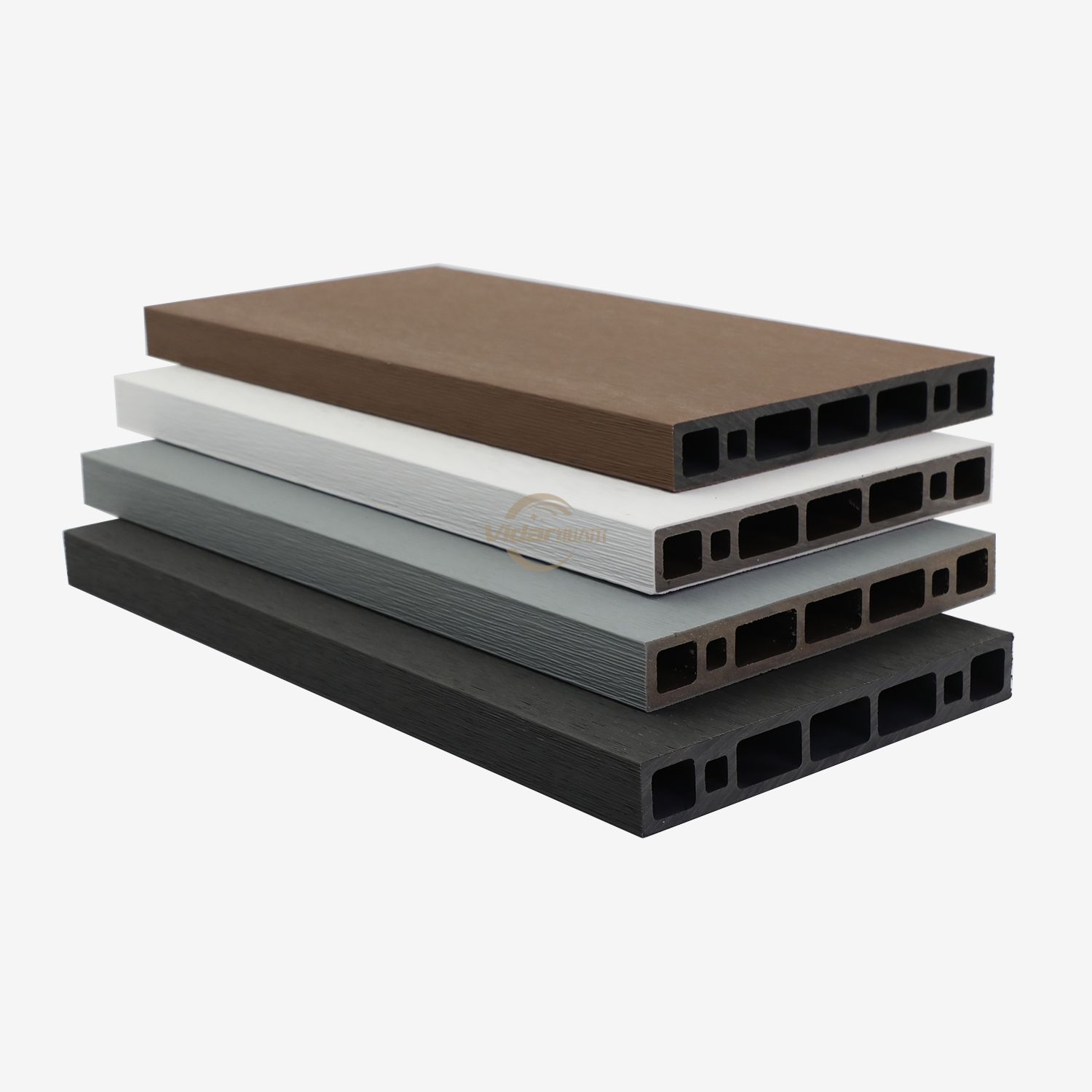
The board profile also matters. Solid boards and hollow boards differ in material usage, weight, and construction. Hollow profiles may reduce product weight, while solid profiles may suit different design or structural requirements. Neither option should be selected on price alone. Confirm that the chosen profile meets the project's loading and installation requirements.
Surface construction can create further price differences. Traditional, embossed, and co-extruded products may involve different manufacturing processes. Vidar offers a range of profiles and finishes, including hollow round-hole co-extruded WPC decking. Buyers should compare the same dimensions, profile, surface treatment, and length before deciding which quotation offers better value.
Surface treatments affect appearance and may influence manufacturing costs. Common options include smooth surfaces, sanding, brushing, woodgrain embossing, and co-extruded protective caps. Each option serves different design and performance needs. Buyers should identify the required finish before requesting quotations.
Color selection can also affect order planning. Standard colors may be easier to source than customized shades, depending on the manufacturer's production arrangements. Special colors, customized lengths, or branded packaging may require additional coordination. They may also affect minimum order quantities or delivery schedules. These conditions should be confirmed rather than assumed.
When comparing finishes, consider the project's environment. Outdoor decks exposed to sunlight, rain, and frequent use may require different surface characteristics from sheltered garden areas. Ask suppliers for relevant evidence supporting any requested performance claims. A premium finish may justify a higher price when it meets a clear project requirement, but it is not automatically the best choice for every application.
Reliable quality control helps buyers reduce variation between production batches. Important checks may include board dimensions, color consistency, surface defects, and packaging condition. For larger orders, even small differences can affect installation speed and the finished appearance. Buyers should establish measurable acceptance criteria before production begins.
Ask the supplier how products are inspected and what documentation is available. If a project requires specific test results, certifications, or environmental documentation, identify those requirements in advance. Verify that the documents apply to the exact product being purchased. General company statements should not replace product-specific evidence.
Packaging also deserves attention. Boards must be protected during handling, storage, and transportation. Damaged products can create replacement costs and delay installation. When comparing quotations, review the packaging method, inspection arrangements, and responsibility for damage claims. A slightly higher quotation may offer better value if it includes the quality controls and protection your project needs.
Tip: Request quotations using one written specification so every supplier prices the same product and quality requirements.
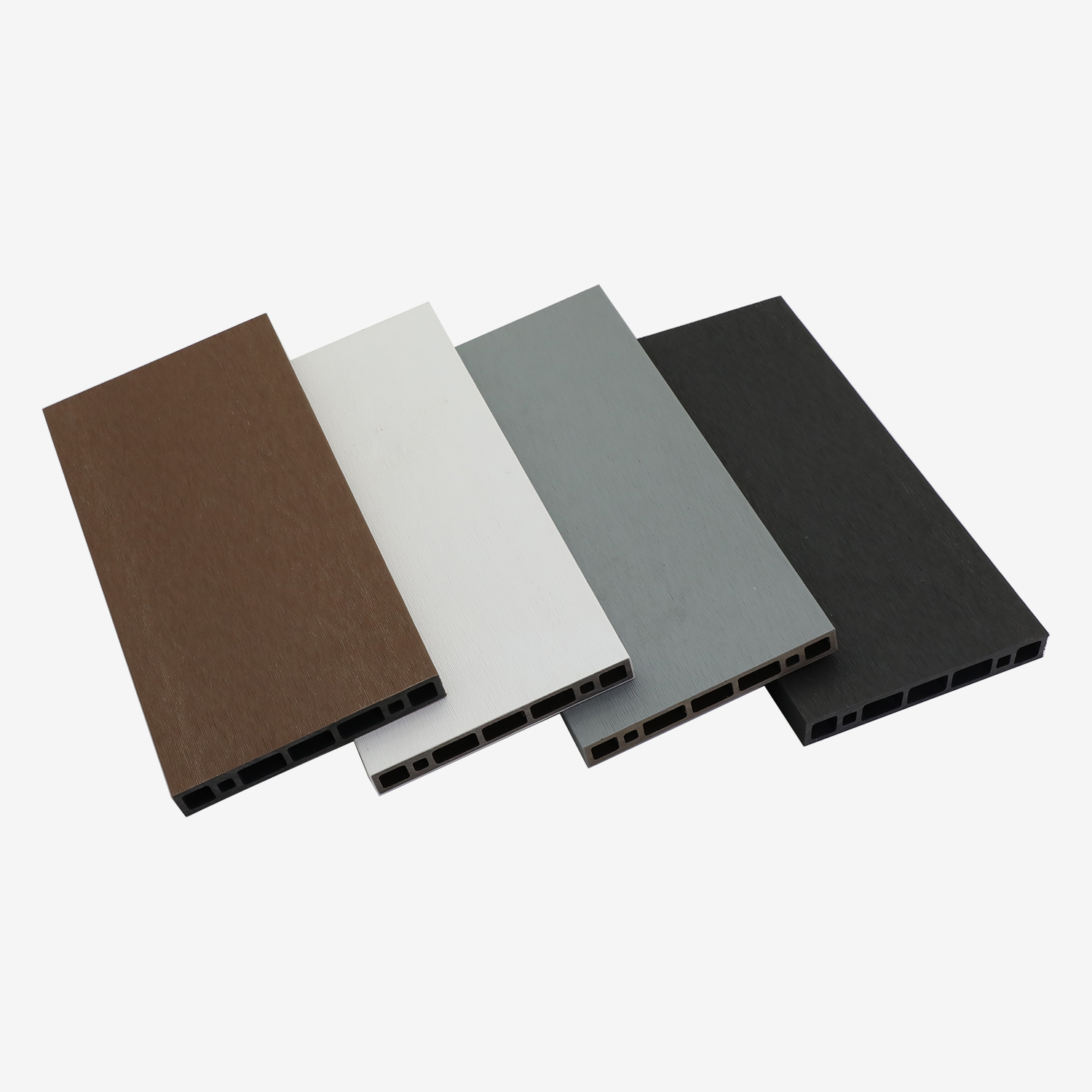
Suppliers may quote WPC decking by board, linear meter, square meter, or package. These units are not directly comparable unless the dimensions and effective coverage are known. Start by confirming the board width, thickness, length, and required installation gap. Then convert each quotation into a common unit.
For example, assume a board is 2.9 meters long and 143 millimeters wide. Its nominal face area is approximately 0.415 square meters. This calculation does not include installation gaps or account for cutting waste. The actual coverage should therefore be based on the installation layout and usable board dimensions. Example only; verify the selected product dimensions before using this calculation.
Compare products with the same profile, finish, and material specifications. Include the required accessories when calculating the material cost per square meter. This approach helps prevent a low unit price from appearing more attractive simply because it covers less area or excludes necessary components.
A wholesale quotation should identify the products and services included in the price. Check whether it covers decking boards, clips, screws, edge trims, protective packaging, and any customized components. Some suppliers quote boards only, while others offer accessories separately. This difference can significantly affect the final material budget.
Also confirm the quotation currency, validity period, minimum order quantity, and delivery terms. Ask whether customized colors or lengths create additional charges. If inspection services or special packaging are required, request separate prices for those items.
For project procurement, a written quotation is more useful than an informal unit-price message. It gives purchasing teams a consistent basis for comparing suppliers. It also reduces misunderstandings when the order moves from negotiation to production. Keep the final specifications and commercial terms together so they can be checked against the purchase order.
Supplier evaluation should cover more than price. Buyers need to understand whether the manufacturer can produce the selected specifications consistently and meet the required delivery schedule. Request product samples, technical data, and details about available quality inspections. Where possible, compare the samples against the stated specifications before approving production.
For repeat orders, ask how the supplier manages color matching, dimensional tolerances, and product identification. These details matter when different shipments will be installed within one project or sold through a distributor's inventory. Product consistency can reduce sorting, installation adjustments, and customer complaints.
Vidar Material Technology Co., Ltd. offers different WPC decking profiles and lengths, including customized options on selected products. Buyers should confirm the exact available specification, production schedule, and order conditions for their chosen model. Product listings provide a starting point, but the final quotation should reflect the actual quantity and destination.
A low initial quotation may exclude costs that arise later. These can include special packaging, sample delivery, third-party inspections, bank charges, or local handling. Not every order incurs all these expenses, so buyers should ask which charges apply to their transaction.
Check whether the supplier's price includes loading and export-related services. Clarify who arranges freight, insurance, customs clearance, and final delivery. The allocation of these responsibilities depends on the agreed trade terms. Never assume that a quoted price includes door-to-door transportation.
Before approval, prepare a cost comparison that separates product costs from logistics and other charges. Record any exclusions next to each supplier's offer. This makes differences easier to identify and helps prevent unexpected expenses after the order is confirmed.
Tip: Compare the full quotation scope, not just the lowest advertised price per board.
Minimum order quantities, or MOQs, define the smallest order a supplier will accept under specified conditions. They may vary by product, color, customization, and production arrangement. Some standard products may have lower MOQs, while special specifications may require larger orders. Buyers should confirm the MOQ for the exact product rather than assuming one rule applies to the entire catalog.
A larger order may improve the quoted unit price because production and setup costs can be spread across more units. However, this is not guaranteed. The final price depends on the product, production schedule, material costs, and supplier's commercial terms. Request quotations for several realistic quantities to understand the difference.
Purchasing teams should balance potential unit savings against inventory costs. Excess stock occupies warehouse space and ties up working capital. Slow-moving colors or unusual lengths can be difficult to sell later. The best order size is one that supports demand while keeping inventory manageable.
Container orders can simplify international shipping and may improve freight efficiency. However, the actual loading quantity depends on board dimensions, packaging, product weight, and container limits. Buyers should request a loading plan based on the selected model instead of relying on a general estimate.
Vidar's product listings provide examples of different board lengths and profiles. Some products support customized lengths, subject to confirmation. These variations can affect how goods are packed and loaded. Ask the supplier to confirm the estimated loading quantity, gross weight, packaging method, and shipping dimensions before calculating freight costs.
A full container does not automatically provide the lowest total cost. Freight rates, destination charges, customs duties, and delivery arrangements still matter. For smaller orders, buyers can compare consolidated shipping against container shipping. The right option depends on urgency, shipment volume, destination, and available logistics services.
Wholesale buyers should use sales forecasts and project schedules to determine order quantities. Distributors may need several colors and profiles to serve different customers. Contractors may instead require one or two specified products for a defined project. These purchasing patterns create different inventory needs.
Estimate expected demand, existing stock, storage capacity, and replenishment time. Include a reasonable allowance for cutting waste or future repairs where appropriate. Avoid ordering excess material only to reach a discount threshold. Storage costs, damaged stock, and unsold inventory can outweigh a small unit-price reduction.
For project orders, confirm the installation schedule before finalizing the shipment. Late deliveries can delay contractors, while early deliveries may create storage problems. Coordinating production and shipping with the construction timeline helps buyers control both costs and operational risks.
Repeat orders need clear specifications and commercial terms. Confirm whether the price remains valid for the next purchase and whether raw material costs or freight rates may change. Ask about production lead times, standard colors, available lengths, and the supplier's ability to match earlier batches.
For projects requiring extensions or future repairs, retain product codes, color references, and approved samples. These records help buyers identify compatible materials later. However, color consistency between production batches should be confirmed rather than assumed.
Distributors should also clarify how changes in quantity affect pricing. A small replenishment order may have different economics from a large container order. Agree on a quotation process that makes future purchasing easier without promising fixed prices beyond the supplier's stated validity period.
Tip: Request tiered quotations for practical order volumes and compare savings against storage and working-capital costs.

The landed cost represents the total cost of getting goods to the agreed destination. It can include the product price, transportation, insurance, import charges, and other applicable expenses. The exact items depend on the shipping arrangement and the agreed Incoterm.
When comparing supplier offers, check whether they use the same trade terms. One quotation may cover delivery to the port, while another may include transportation to a named destination. These offers cannot be compared fairly without adjusting for their different responsibilities and costs.
Ask freight providers for current quotations based on the shipment's dimensions, weight, destination, and expected shipping date. Confirm port handling, destination charges, and delivery arrangements. Freight rates change, so use current estimates when preparing the budget.
Import duties and taxes depend on the destination country, product classification, customs valuation, and applicable regulations. Buyers should verify the correct tariff classification for their WPC decking products. Do not assume that every composite building material receives the same customs treatment.
Consult a qualified customs broker or relevant authority when the classification is uncertain. Confirm which taxes apply and whether any exemptions or preferential arrangements are available. Also check whether taxes are recoverable under the buyer's local tax rules.
These costs should be included in the purchasing budget before comparing offers. A supplier's export price does not necessarily reflect the final amount payable after importation. Accurate estimates help importers set selling prices and protect expected profit margins.
Packaging protects decking boards during loading, transportation, and storage. Buyers should confirm whether the price includes pallets, protective wrapping, bundle labels, and any required special packaging. They should also check whether the packaging suits the planned shipping method.
After arrival, the shipment may incur port handling, customs clearance, warehouse fees, and inland transportation costs. Oversized loads or remote delivery locations can create additional charges. Request a logistics estimate that covers the actual destination rather than relying on a general freight allowance.
Use a consistent calculation for each supplier:
Total landed cost = Product cost + Freight + Insurance + Duties and taxes + Handling + Inland delivery + Other applicable charges.
Then divide the total by the usable decking area to estimate the landed cost per square meter. Keep installation labor and ongoing maintenance separate if the purpose is to compare material purchasing costs. Include them later when estimating the full project cost.
The calculation should use confirmed quantities and realistic logistics estimates. Any uncertain charge should be marked as an estimate. This gives purchasing teams a clearer basis for budgeting and supplier selection.
Tip: Calculate landed cost per usable square meter before approving an overseas decking order.
Commercial walkways need decking suited to expected foot traffic, weather exposure, drainage conditions, and maintenance routines. Buyers should confirm board dimensions, support requirements, fastening methods, and relevant performance data. They should also check whether the selected profile meets the project's structural and safety requirements.
For riverside paths and landscaped walkways, moisture exposure and drainage deserve particular attention. Vidar offers co-extruded capped WPC decking for riverside walkways. Its product details provide a starting point for reviewing board dimensions and surface construction. Buyers should confirm suitability against their own site conditions.
Capped WPC decking has an additional outer layer designed to protect the composite core. Depending on the product, this layer may improve resistance to moisture, ultraviolet exposure, stains, and surface wear. Uncapped products may have a different price point and surface appearance.
The comparison should focus on verified specifications and intended use. Ask for product-specific test information where weather resistance, color stability, or scratch resistance matters. Do not assume every capped product delivers identical performance.
For exposed commercial locations, the purchase decision should consider the expected maintenance requirements and replacement risks. A higher initial price may be justified if the product meets documented project needs. Buyers should still compare complete quotations before deciding.
Hollow and solid boards differ in construction, weight, and material usage. Hollow boards may reduce weight and can be suitable for applications supported by an appropriate subframe. Solid boards contain more material and may suit other design requirements. The correct choice depends on the product specifications and installation conditions.
Neither profile should be selected solely because it appears stronger or costs less. Confirm the manufacturer's support-spacing requirements, fixing method, and permitted applications. For elevated or heavily loaded installations, obtain the necessary structural approval.
The cheapest decking option may not deliver the lowest total cost over its service life. Buyers should consider installation labor, accessories, cleaning, maintenance, and possible replacement requirements. Product suitability also matters because an unsuitable board may create avoidable repair work.
Prepare a comparison using the same project area and expected operating conditions. Include the initial material cost and realistic maintenance assumptions. If reliable service-life data is unavailable, avoid assigning an unsupported lifespan or financial saving.
For poolside projects, buyers can review Vidar's anti-UV capped WPC decking as one option. Confirm its relevant specifications and performance evidence before including it in a project specification.
Tip: Select products against documented site requirements, not marketing claims or unit price alone.
Prepare a written specification before requesting discounts. Include the board dimensions, profile, surface finish, color, length, quantity, and required accessories. State the intended application and destination market. These details help suppliers calculate quotations using the same requirements.
If customization is needed, confirm the available options and any additional charges. Ask whether the supplier can provide samples before mass production. Agree on measurable quality criteria and acceptable tolerances before placing the order.
Send the same inquiry to each shortlisted supplier. Specify the order quantity, packaging requirements, delivery destination, and preferred shipping terms. Ask suppliers to separate product prices from additional charges. This makes differences between offers easier to identify.
Compare production lead times, inspection arrangements, and quotation validity. A lower offer may involve different delivery conditions or product specifications. Evaluate the complete commercial proposal before selecting a supplier.
Confirm the deposit, balance payment, production schedule, and shipment arrangements. Establish when the supplier expects payment and which documents support each stage. For larger orders, consider independent inspection arrangements where appropriate.
Clarify responsibility for shipping, insurance, customs clearance, and delivery. Ensure the purchase order matches the final quotation. Written terms help reduce misunderstandings when production or transportation changes.
Verify the supplier's company information and request product documentation. Approve a sample before mass production whenever practical. Record the selected color, dimensions, finish, packaging, and acceptance criteria.
Use a written purchase agreement covering delivery, quality issues, and remedies for nonconforming goods. Check payment instructions carefully and verify any unexpected changes through an independent communication channel. These precautions help protect purchasing budgets and delivery schedules.
Tip: Negotiate using confirmed specifications and written terms rather than relying on verbal price promises.
Approve a sample that matches the intended order specification. Check dimensions, surface finish, color, profile, and visible defects. Where the project requires specific performance levels, request suitable test reports or inspection evidence.
Confirm that the approved sample represents the product being quoted. Record any agreed tolerances and inspection procedures. This creates a clear reference for production checks and shipment approval.
Request the commercial quotation, product specifications, packing details, and relevant export documents. Where applicable, obtain test reports and supporting compliance documents for the destination market. Verify that these documents relate to the actual product and intended application.
Ask the supplier which documents will be available before shipment. Requirements vary by destination, product classification, and buyer obligations. Confirm any special requirements with the customs broker or relevant authority.
Confirm the number of boards, bundle quantities, package dimensions, gross weight, and loading arrangement. Check whether the packaging protects the surface during transport and storage. Ensure product identification matches the purchase order.
Before shipment, review the packing list and other agreed documents. Confirm the shipping schedule and destination details. Clear documentation helps the receiving team plan unloading and identify discrepancies promptly.
Before confirming the order, review these essential items:
Product dimensions, profile, finish, and color
Order quantity, MOQ, and unit price
Accessories, packaging, and customization costs
Payment terms and production lead time
Freight, insurance, duties, and delivery charges
Quality criteria, samples, and inspection arrangements
Shipping documents and after-sales responsibilities
A completed checklist helps purchasing teams compare offers consistently. It also reduces the risk of missing costs or requirements before production begins.
WPC Decking wholesale prices depend on materials, profiles, order volumes, and shipping costs. Comparing specifications and landed costs helps buyers control budgets. Vidar Material Technology Co., Ltd. offers versatile WPC decking solutions for outdoor projects, helping global buyers match product requirements with practical purchasing needs.
A: Materials, board profiles, finishes, order volume, and shipping costs.
A: Compare equivalent specifications and calculate landed costs per square meter.
A: Larger orders may lower unit prices, depending on supplier terms and freight.
A: Include product prices, freight, insurance, duties, taxes, and inland delivery.
A: Balance product quality, installation needs, maintenance, and purchase price.