Views: 0 Author: Site Editor Publish Time: 2026-06-03 Origin: Site


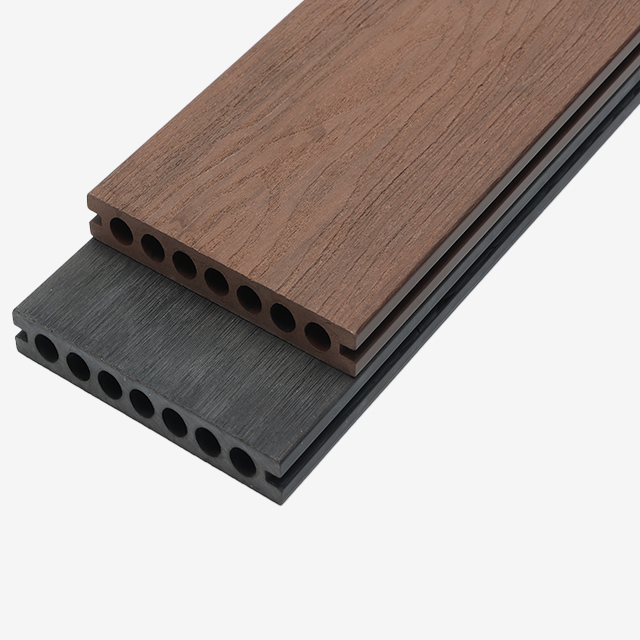
Ready to upgrade your outdoor space? Buyers often hit a bottom-of-funnel dilemma when leaving traditional lumber behind. You want to invest in composite materials to avoid high maintenance demands and severe deforestation issues. However, you might feel stuck between Wood-Plastic Composite (WPC) and Polyvinyl Chloride (PVC).
We must frame "eco-friendly" correctly. It is not just a marketing buzzword. It acts as a measurable metric involving Life-Cycle Assessment (LCA). True sustainability requires us to examine raw material sourcing, manufacturing toxicity, lifespan durability, and end-of-life disposal.
This guide sets a clear objective. We provide a strictly evidence-based, side-by-side environmental and performance evaluation of WPC versus PVC. You will learn the hidden realities behind both options. This data will ultimately support a confident and final procurement decision.
Sourcing: WPC decking utilizes up to 95% recycled materials (wood fiber and plastics), actively diverting waste from landfills; PVC is a 100% synthetic, virgin plastic product.
Toxicity & Emissions: PVC manufacturing involves chlorine and releases volatile organic compounds (VOCs) like vinyl chloride; WPC relies on physical extrusion with minimal chemical off-gassing.
Lifespan Sustainability: WPC offers higher structural density and UV resistance, whereas PVC is prone to brittleness in freezing climates and severe heat retention under direct sun.
Quality Risks: Low-grade WPC disguised as "eco-friendly" may use cheap calcium carbonate fillers instead of real wood fiber—verifying ISO and FSC certifications is critical.
We must define exactly what goes into both materials. This step establishes a true baseline for their environmental footprints. Sourcing determines the initial ecological cost before a board ever reaches your job site.
Industry-standard WPC decking follows a highly optimized formulation. It typically contains about 60% recycled wood fibers, such as reclaimed sawdust or wood chips. Another 35% consists of recycled plastic polymers like HDPE or PE. The final 5% includes vital coupling agents and UV stabilizers to bind the core.
This composition offers a massive environmental benefit. WPC requires zero virgin timber harvesting. It actively repurposes industrial plastic waste. This creates a closed-loop sourcing model. Manufacturers pull thousands of tons of plastic and wood scrap out of landfills every year to produce these boards. You get the organic strength of natural wood without cutting down a single living tree.
Polyvinyl Chloride (PVC) stands in stark contrast. We define PVC as a 100% synthetic resin. It contains absolutely no organic material. While it looks sleek, the sourcing reality paints a different picture.
PVC production relies heavily on petrochemical processing. It requires raw chlorine extraction to form the plastic polymers. This intensive chemical synthesis results in a significantly higher initial carbon footprint. Manufacturers rely on virgin fossil fuels to generate the resin base. This process entirely lacks the closed-loop waste diversion benefits seen in wood-plastic composites.

We must evaluate the hidden environmental costs of production and daily use. A truly sustainable product protects both the factory environment and your backyard microclimate.
Manufacturing Emissions: WPC utilizes a clean, heat-based extrusion process. Facilities mix the dry ingredients, melt the recycled plastics, and physically force the blend through shaping dies. Manufacturers can easily power this physical extrusion using renewable energy like solar power. Conversely, PVC requires complex chemical synthesis. Environmental groups historically scrutinize PVC manufacturing. The process releases vinyl chloride and hazardous dioxins into the atmosphere. These byproducts pose serious risks to local ecosystems near the manufacturing plants.
In-Service Toxicity: Both materials score much higher than traditional pressure-treated wood. Treated lumber often leaches toxic CCA preservatives directly into your soil. However, synthetic options still carry risks. PVC has a higher risk of microscopic plastic degradation under intense UV exposure. As the sun beats down, raw plastics can break down over decades. WPC avoids this issue. It uses a fully encapsulated polymer matrix. The plastic securely binds the wood fibers, minimizing environmental shedding.
Thermal Footprint: We also need to address the outdoor "heat island" effect. PVC retains intense heat in direct sunlight. This characteristic severely limits usability during peak summer hours. The boards radiate intense heat back into the local microclimate, raising ambient temperatures. WPC includes organic wood content. Wood acts as a natural insulator. It helps moderate surface temperatures much more effectively. You can walk comfortably on composite surfaces long after pure plastics become too hot to touch.
Best Practice: Always request Life-Cycle Assessment (LCA) documentation from your supplier. This paperwork verifies factory emissions and raw material origins.
Premature replacement is fundamentally anti-sustainable. If a product fails early, you double the carbon footprint to replace it. We must evaluate how these materials handle harsh climate realities.
Extreme Weather Performance: PVC offers incredible water resistance. However, it suffers from extreme thermal expansion and contraction. When temperatures swing violently, pure plastic boards shrink and expand. This constant movement leads to brittleness and severe cracking in freezing temperatures. WPC offers superior density. The wood fibers anchor the plastic, providing dimensional stability across broader temperature spectrums.
Structural Longevity: High-quality composites offer a verified lifespan of 25 to 30 years. Modern co-extrusion technology creates a protective cap around the board. This capping prevents moisture ingress. It achieves a remarkable 1.5% water absorption rate, compared to traditional wood's 20%. You extend the deck's life exponentially without applying toxic chemical sealants every spring.
End-of-Life: PVC is technically recyclable. Yet, local recycling facilities rarely accept rigid building plastics. WPC boards offer a different advantage. You can often down-cycle these boards into substructures or joists at the end of their primary lifecycle. They continue to serve structural purposes long after their cosmetic life ends.
Performance Metric | WPC Decking | PVC Decking |
|---|---|---|
Thermal Expansion | Low (Stabilized by wood fibers) | High (Prone to shifting) |
Freezing Climate Risk | Maintains dense structural integrity | High risk of brittleness/cracking |
Water Absorption | ~1.5% (Highly resistant) | ~0% (Completely waterproof) |
Heat Retention (Sun) | Moderate (Wood insulates) | Severe (Can burn bare feet) |
We must build authoritative expertise by exposing industry shortcuts. Some manufacturers compromise sustainability for profit. Knowing how to spot a fake ensures your investment truly supports the environment.
The "Filler" Red Flag: Many low-cost manufacturers practice greenwashing. They advertise recycled materials but replace the crucial wood fibers with cheap talcum powder or calcium carbonate. This drastically cuts their costs. Unfortunately, it ruins the product. These mineral fillers do not bind well. They create brittle, easily degradable boards prone to sudden structural failure.
Evaluation Criteria for Buyers:
The Cross-Section Test: Always request a physical sample. Examine the cut end. Look for a dense, tightly packed core. You should see an even distribution of fibers. Reject any board showing large, visible air pockets or crumbly edges.
The Scent Test: You can literally smell quality. Premium boards smell faintly of natural wood. Excessive chemical odors or a burnt plastic smell indicate a poor formulation.
Compliance & Certification: Demand verified documentation. You need FSC certification for sustainable wood sourcing. Ask for CE, ISO, and independent Intertek testing reports. Reliable vendors eagerly supply these documents.
Common Mistake: Never skip the physical sample review. Relying solely on online photos often leads buyers straight into cheap, mineral-filled substitute boards.
We must connect environmental benefits to commercial and practical project outcomes. The best materials streamline your workflow and protect your budget over the decades.
Installation Efficiency: You handle composite materials very similarly to traditional wood. Crews can rip, route, and cut the boards using standard carpentry tools. This familiarity speeds up the project. PVC acts differently. It often requires specialized tools for bending. Installers must leave much larger expansion gaps to account for shifting plastics. These extra steps increase labor hours and generate unnecessary material waste.
Cost vs. Lifecycle ROI: We position composite as the balanced middle-ground. It carries a lower initial cost than premium PVC. Expect to pay around $30 to $45 per square foot installed for high-quality composite. Meanwhile, you still capture nearly identical zero-maintenance benefits over a 10-year period. Your deck will yield stronger property resale value. You secure this financial return without carrying the environmental guilt associated with virgin plastics.
We want to provide a clear, unbiased shortlisting logic. Review these profiles to match the correct material to your specific site conditions.
Choose WPC Decking If:
The project demands a balance of authentic natural aesthetics.
You require verifiable use of recycled materials for green building credits.
Your installation crew prefers standard carpentry methods.
The location experiences fluctuating climates, including freezing winters.
Choose PVC Decking If:
The application site faces near-constant moisture, such as marina docks or indoor pool surrounds.
Weight limits are strictly constrained on an older substructure.
The project budget easily allows for premium synthetic pricing.
Both materials clearly outpace traditional wood regarding maintenance-related chemical reduction. You no longer need to dump gallons of toxic sealants into your backyard soil every season. However, composite holds a distinct, measurable environmental advantage. Its heavy reliance on recycled streams actively cleans up landfills. It completely avoids the toxic chlorine processing required to manufacture pure synthetic plastics.
Your next step is simple and actionable. Reach out to your selected vendors today. Request physical material samples to perform the cross-section and scent tests. Demand their LCA and FSC documentation upfront. Taking these steps ensures you finalize a vendor who truly respects both your budget and the environment.
A: Yes. Quality composite boards are entirely splinter-free and slip-resistant. They meet strict E0 standards for zero formaldehyde emissions. They completely avoid the toxic chemicals and heavy metals found in traditional pressure-treated lumber, making them perfectly safe for bare feet and paws.
A: Yes, but at a significantly lower rate than pure PVC. The embedded wood fibers physically stabilize the plastic matrix. Utilizing manufacturer-recommended hidden fasteners naturally accommodates this minor thermal expansion without causing surface warping or buckling.
A: No. The plastic polymer matrix prevents biodegradation. This exact trait prevents the boards from rotting, molding, or decaying outdoors. Its eco-friendliness comes instead from utilizing existing industrial waste, delivering unmatched longevity, and offering potential for secondary down-cycling.