Views: 0 Author: Site Editor Publish Time: 2026-04-27 Origin: Site


Replacing or building a new outdoor space represents a massive capital investment. It transforms your property but demands careful material selection. Choosing the wrong product leads to premature degradation, safety hazards, and inflated lifetime maintenance costs. While composite materials solve the rot and maintenance issues of traditional lumber, the market remains completely saturated. You will find varying grades of quality hiding behind nearly identical marketing claims. This makes it incredibly difficult to choose wisely without industry knowledge.
This comprehensive guide equips buyers with a strict evaluation framework. We cut through the marketing fluff to assess structural integrity, generation-specific technology. You will learn exactly how to match the right WPC Decking to your specific climate, budget, and design vision. Let us dive into the essential details to protect your investment.
Co-extruded (capped) WPC significantly outperforms first-generation (uncapped) composites in moisture and fade resistance.
Structural profiles matter: hollow boards offer structural efficiency and less thermal expansion weight, while solid boards are reserved for heavy commercial loads.
Texture dictates safety; deep-embossed protective layers provide necessary slip resistance (R10/R11) for wet environments.
Upfront material costs are higher than treated wood, but the 25+ year lifecycle ROI makes WPC financially superior due to zero sealing or staining costs.
Smart procurement requires an 80/20 mix of grooved boards (for hidden fasteners) and square-edge boards (for borders and stairs).
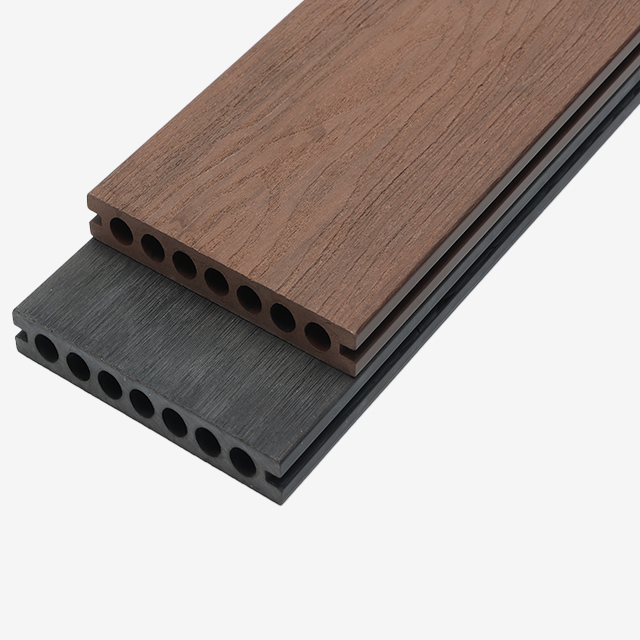
You must understand how composite manufacturing has evolved. The industry classifies boards into distinct technological generations. Older manufacturing methods simply mixed raw materials together. Modern engineering uses a highly advanced dual-layer approach. Knowing this difference prevents costly purchasing mistakes.
First-generation boards represent the earliest composite technology. Manufacturers create a uniform blend of wood fibers and thermoplastic polymers. They extrude this single mixture into a finished board shape.
This older method carries significant vulnerabilities. The manufacturing process leaves natural wood fibers exposed directly on the board surface. These exposed fibers act like tiny sponges. They lead to higher water absorption rates over time. This moisture intrusion causes potential staining, mold growth, and faster UV fading. We recommend first-generation boards only for strictly budget-constrained projects. They work best in low-traffic residential applications within moderate, dry climates.
Second-generation technology revolutionizes outdoor material performance. These boards feature a core of traditional composite material. However, manufacturers fuse this core with an advanced polymer "armor" during the extrusion process. This outer cap often utilizes high-grade resins to protect the vulnerable core.
This engineering provides massive performance advantages. The protective shell creates a completely impermeable barrier. It aggressively blocks moisture, chemical stains, and extreme UV degradation. This technology mitigates long-term risks perfectly. It prevents the structural swelling and warping traditionally caused by sawdust water absorption. If you want a deck that lasts decades, capped composites are the standard.
Many buyers hold misconceptions about board weight and strength. We must evaluate structural profiles based on engineering facts rather than assumptions.
Many contractors mistakenly assume heavy solid boards are universally superior. This is an outdated myth.
Solid boards feature high density and incredible weight. However, this sheer mass works against them in residential settings. Solid profiles are prone to aggressive thermal expansion and contraction. The dense material absorbs and holds heat much longer. We reserve solid boards almost exclusively for high-traffic commercial public spaces. They excel under extreme, constant physical loads.
Hollow or engineered boards provide a smarter alternative. They are significantly lighter and easier to handle during installation. More importantly, the hollow chambers dissipate trapped heat rapidly. They undergo less violent thermal expansion. Hollow boards are structurally superior for standard residential load-bearing without adding excess dead weight to your framing.
Smart procurement requires ordering two different edge profiles. You cannot build a seamless deck using only one type.
Grooved Edges: Manufacturers design these specifically for hidden fastener systems. They feature a channel cut into both sides. The fastener clips slide into this channel, leaving a flawless, nail-free walking surface. These clips also ensure mathematically uniform expansion gaps between boards. Grooved edges should make up roughly 80% of your total order.
Square Edges: These boards feature flat, solid sides. They require traditional face-screwing through the top surface. You need square edges for "picture framing" your deck borders. They are also essential for stair treads where the outside edge remains visible. Square edges should comprise the remaining 20% of your materials.
You cannot select materials based purely on a catalog photo. Your specific local climate dictates which board characteristics matter most.
Color choice impacts physical comfort heavily. Darker colors like espresso or deep slate gray absorb significant solar radiation. They retain this thermal energy for hours. Dark boards can become incredibly uncomfortable barefoot in high-UV southern climates. They can even burn sensitive skin on hot summer afternoons.
Lighter colors provide a practical engineering solution. Shades like sand, pale gray, or weathered teak reflect solar heat effectively. They offer far better heat dissipation. We strongly recommend light-colored boards for poolside applications, exposed rooftops, and unshaded backyards.
Surface texture provides critical safety features. It is never just about mimicking wood grain. You must evaluate the embossing technique carefully.
Avoid shallow, post-manufacturing embossing. Cheap boards use heated rollers to press a faint pattern onto the surface after extrusion. This shallow texture wears completely flat under moderate foot traffic. It becomes incredibly slick when wet.
Instead, look for deep, integrated textures. Premium brands mold these textures directly into the thick polymer cap while the plastic is molten. This creates a permanent, three-dimensional grip.
Pay attention to compliance and safety standards. For commercial installations or residential wet zones, you must evaluate the slip resistance rating. Aim for materials that meet R10 or R11 equivalent standards. These ratings guarantee the surface provides sufficient friction even when coated in water.
Traditional wood offers a temptingly low initial cost. However, it requires exhaustive maintenance. You must purchase expensive chemical sealants every two years. Over a single decade, the combined labor and material costs of maintaining wood easily surpass the price of premium composites.
On the opposite end, 100% PVC decking provides exceptional water resistance. It contains no organic material whatsoever. However, PVC carries the highest premium price tag in the industry. It can feel overly "plastic" underfoot. It also utilizes more virgin synthetic materials, lowering its overall eco-friendliness.
Modern composite materials hit the optimal value-to-performance ratio. They cost more than pine upfront but require zero structural maintenance. They completely eliminate rot, splintering, and insect damage. Over a 25-year lifespan, composites remain the financially superior choice.
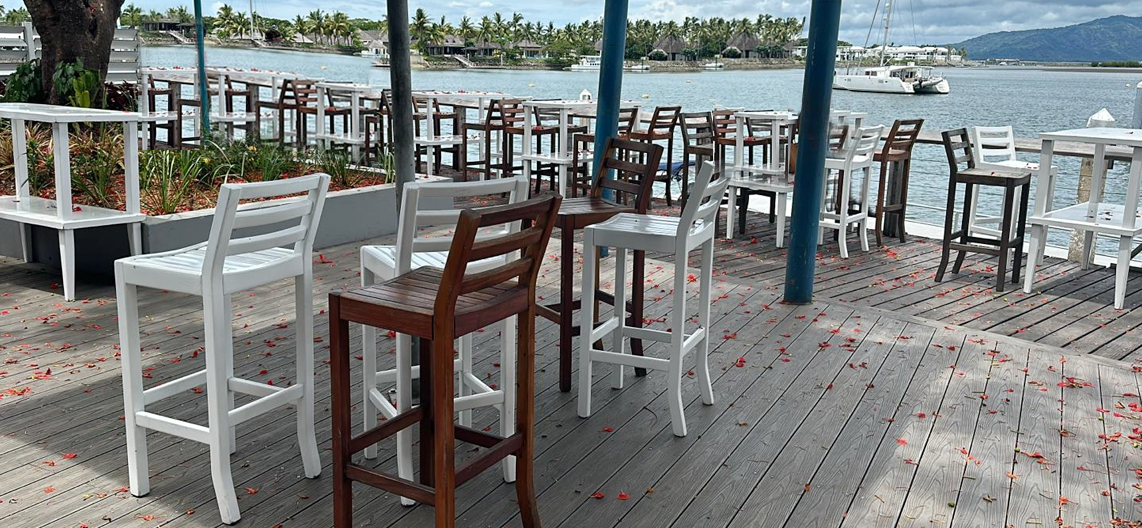
You are now ready to narrow down your final options. Follow this strict evaluation logic before placing any large material order.
Conduct Physical Sample Evaluations: Never buy materials based purely on digital photos. Screen monitors distort colors wildly. Order physical samples of your top three choices. Take a metal house key and drag it firmly across the surface to test scratch resistance. Leave the samples in direct midday sunlight to test heat retention. Pour water on them to observe pooling and slip resistance.
Verify Warranty Fine Print: Scrutinize the manufacturer's guarantee closely. A trustworthy warranty covers fade and stain resistance explicitly. It should not just cover catastrophic structural failure. Look for minimum 25-year residential guarantees backed by established companies.
Plan for Installation Constraints: Factor in specific expansion rules. Review the exact expansion and contraction gaps required by the manufacturer. These requirements change based on your local temperature swings. Planning for these gaps ensures your wpc decking floor remains perfectly flat through harsh winter freezes and summer heatwaves.
Choosing the perfect composite material requires a calculated balance. You must weigh your local climate needs against structural profiles and long-term budget goals. Stop focusing solely on the cheapest initial price. Prioritize second-generation co-extruded boards to secure maximum moisture and UV protection. Select hollow profiles for residential efficiency, and leverage lighter colors to combat summer heat.
Your next steps are clear and actionable. First, calculate your exact project square footage. Next, determine your ideal 80/20 ratio of grooved to square-edge boards. Finally, order physical samples of premium co-extruded materials today. Testing these samples in your own backyard provides the ultimate confidence needed to finalize your investment.
A: Yes, composite boards generally retain more heat than natural wood due to their density and plastic content. However, you can easily mitigate this issue. Choosing lighter colors like sand or pale gray significantly improves heat dissipation. Additionally, newer hollow board designs allow for better airflow, keeping the surface cooler under direct summer sunlight.
A: No, you should never install composite boards directly on soil or concrete. These materials require proper ventilation to prevent moisture trapping. You must build a structural joist system underneath. Manufacturers typically require at least a few inches of clearance between the ground and the substructure to ensure adequate airflow and validate the warranty.
A: You do not need specialized cutting tools. Standard woodworking equipment, like a miter saw or circular saw with a carbide-tipped blade, cuts composite material perfectly. However, the installation process does require specific hidden fastener clips. These clips slide into the grooved edges of the boards, ensuring uniform expansion gaps without driving screws through the surface.