Views: 0 Author: Site Editor Publish Time: 2026-09-08 Origin: Site


Commercial property managers and landscape architects cannot afford decking failures. Material replacement and liability claims quickly destroy project value. Replacing faulty boards halts daily business operations and frustrates patrons. Wood plastic composite represents a highly proven residential solution. However, evaluating its performance for public walkways, hotel pool decks, and restaurant patios requires a much stricter set of commercial criteria. Commercial spaces endure relentless daily use and massive crowds.
Standard residential boards often fail under these extreme public conditions. This guide provides an evidence-based evaluation of how composite materials handle constant footfall. We examine the specific operational and installation realities you must factor into your decision. You will learn how to specify the right profiles and engineering standards. This ensures your commercial outdoor spaces remain safe, durable, and fully operational for years.
Commercial loads differ vastly from standard residential traffic. Residential decks hold static patio furniture and moderate weekend foot traffic. Commercial spaces endure concentrated forces known as point loads. Think of heavy rolling service carts in restaurants. Consider commercial patio heaters weighing hundreds of pounds. High-heel traffic exerts massive downward pressure on incredibly small surface areas. We must evaluate structural integrity exclusively through this demanding commercial lens.
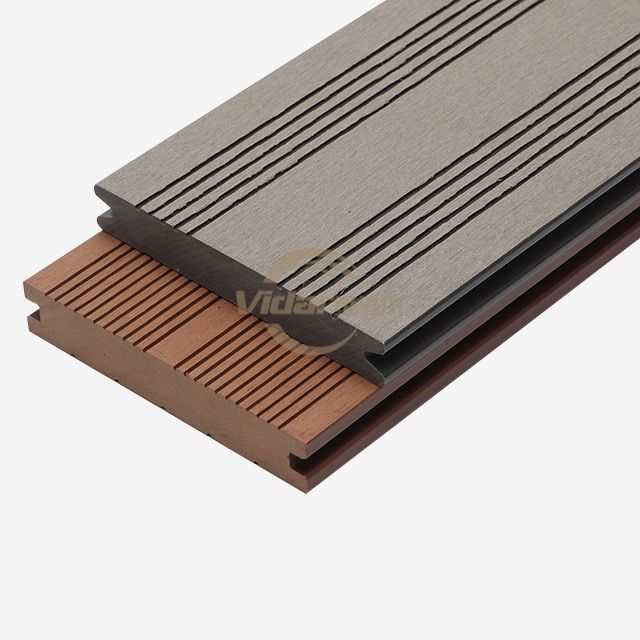
Hollow boards frequently fail under commercial stress. Heavy point loads cause their thin internal walls to crack over time. The board edges often break when heavy service carts roll across them repeatedly. High-traffic environments strictly demand solid boards for their superior density. Solid profiles provide the necessary impact resistance to survive daily abuse. We strongly recommend completely avoiding hollow profiles for any public space.
Continuous footfall causes intense surface micro-abrasion. Thousands of shoes grind sand and grit into the deck every single day. First-generation composites wear down quickly under this friction. Second-generation boards feature a highly durable co-extruded polymer shield. This advanced capping layer heavily resists scratching and scuffing. It protects the dense core material from daily wear, keeping the surface looking pristine.
Solid vs. Hollow Core Performance Chart
| Performance Metric | Solid Core Profile | Hollow Core Profile |
|---|---|---|
| Impact Resistance | Exceptionally high; absorbs heavy point loads safely. | Low; prone to cracking under heavy carts or dropped items. |
| Edge Durability | Strong edges resist chipping and breaking. | Fragile edges often snap under concentrated lateral weight. |
| Material Density | High density prevents flexing and structural deflection. | Lower density allows noticeable bounce under foot traffic. |
Liability remains a massive concern for managers of public spaces. Slip-and-fall accidents often result in severe legal consequences and damaged reputations. The Coefficient of Friction (COF) precisely measures surface grip underfoot. The ADA recommends specific slip resistance guidelines to protect pedestrians. Public spaces must meet these strict safety standards consistently. You must evaluate all decking materials strictly through this compliance lens.
You must select the exact right surface engineering to protect your guests. We strongly recommend utilizing Anti-Slip Solid WPC Decking for wet commercial environments. These specialized boards feature 3D deep-embossed wood grains. Some premium lines also use specialized brushed finishes. These distinct textures actively channel water away from the walking surface. They provide superior mechanical grip under wet shoes and bare feet.
High-risk zones require highly specific performance expectations. Boardwalks endure constant moisture from morning dew and rain. Marina walkways face aggressive splashing water and algae growth. Hospitality pool decks see continuous barefoot traffic all day. Anti-slip profiles perform exceptionally well across these demanding zones. Unlike painted wood, composite slip resistance lasts incredibly long. The mechanical grip does not degrade significantly as the top layer wears. You simply need to keep the surface properly cleaned to maintain traction.
B2B applications require maximum facility uptime to maintain profitability. Maintenance tasks actively disrupt commercial operations and annoy guests. Traditional wood decking requires intense annual upkeep to remain safe. Premium composite decking eliminates these labor-intensive cycles entirely.
You effectively eliminate annual power-washing and sealing routines. These traditional maintenance cycles require extensive facility downtime. Restaurants cannot close their busy patios for days while stain dries. Hotels cannot shut down active pool decks during peak summer seasons. Composite boards remove this operational headache completely.
You also completely eliminate aggressive chemical treatments. Wood decks require regular stain and toxic water sealers. These harsh chemicals pose serious environmental concerns in public parks. Commercial properties also avoid endless labor hours spent on splinter repair. Splinters present severe safety hazards in public spaces. Composite materials never splinter under any condition. We also see drastically reduced pest-control interventions. Termites and wood-boring insects simply ignore composite materials altogether.
Commercial decking is strictly only as strong as its underlying frame. The substructure requires rigorous engineering and flawless execution. Residential installations often utilize 16-inch joist spacing. This standard spacing fails miserably in commercial applications. Heavy crowds cause boards to deflect or bend over wide spans. Commercial installations heavily require tighter joist spacing for safety. We typically mandate 12-inch on-center spacing for public projects. This rigid framework prevents any deflection under heavy crowds.
You must carefully manage thermal expansion dynamics. Plastic and wood composites respond physically to temperature changes. They naturally expand during extreme summer heat and contract during freezing winter weather. You must deeply understand these structural physics. Exposed public spaces see massive daily temperature fluctuations. Installers must adhere to strict gapping requirements during assembly. Butt joints strictly require proper thermal expansion gaps. Failing to leave adequate gaps causes severe board buckling.
You must also recognize fastener failure risks. Heavy foot traffic creates repetitive lateral sheer forces. Massive crowds walking across the deck constantly push the boards sideways. Standard residential clips cannot handle this relentless mechanical stress. We warn heavily against using cheap plastic clips for B2B projects. You should specify commercial-grade fastening systems exclusively. Use hidden stainless-steel clips designed for high-traffic loads. These robust fasteners securely withstand continuous commercial forces.
Procurement requires a highly strict evaluation checklist. You must demand the right specifications to ensure long-term success. Follow these critical steps when evaluating manufacturers:
Decision-makers should immediately request physical material samples. Review certified third-party slip test reports to verify ADA compliance. Consult structural engineers regarding your specific joist framing plans. Complete these steps before finalizing any purchase orders.
Composite decking effortlessly survives demanding commercial traffic. However, the buyer must diligently specify the correct materials. You absolutely need solid, co-extruded, anti-slip profiles to succeed. You must also engineer the substructure correctly to handle point loads.
Make your final decision based on long-term performance metrics. If extreme upfront budget forms an absolute constraint, composite materials might not fit. However, if you highly value long-term asset durability, composite represents the superior specification. It drastically reduces operational maintenance and facility downtime.
Take direct action today to protect your next project. Review technical specification sheets thoroughly. Request commercial material samples for your specific site. Contact a commercial project specialist to evaluate your structural requirements directly.
A: You must carefully distribute the weight. While solid boards handle heavy static loads exceptionally well, rolling heavy machinery requires extra precaution. You should use thick plywood load-displacement boards. This prevents surface gouging and structural damage when moving scissor lifts or heavy grills.
A: Yes, dark composites naturally retain heat. This is an honest assessment of the material. Public pool areas see incredibly heavy barefoot traffic during summer. We highly advise specifying lighter colors. You should also choose UV-reflective co-extruded caps to keep the surface comfortably cooler.
A: Co-extruded caps effectively prevent deep absorption. Food grease and chemicals safely stay on the surface. Use a simple cleaning protocol. Mix standard dish soap and hot water. Scrub the area gently using a soft-bristle brush. Never use harsh industrial solvents, as they rapidly degrade the protective polymer shield.