Views: 0 Author: Site Editor Publish Time: 2026-09-10 Origin: Site


Coastal properties offer premium views and unparalleled lifestyle benefits. They also subject exterior building materials to brutal environmental conditions daily. Constant salt spray, hyper-humidity, and intense UV exposure quickly destroy ordinary outdoor surfaces. Traditional timber deteriorates rapidly in these harsh zones. You must perform exhaustive, ongoing maintenance just to stop aggressive wood rot and splintering. Some early-generation plastics fail just as quickly. They become chalky and brittle under the intense marine sun. Today, modern WPC Decking is frequently specified for rigorous coastal builds. However, long-term performance varies dramatically based on specific manufacturing technology. This comprehensive guide breaks down how modern composites hold up to aggressive saltwater climates. We explore what specific architectural criteria matter most for marine environments. Finally, you will learn exactly why specifying the right tier of composite prevents premature system failure.
Coastal environments destroy substandard building materials. You face a unique combination of aggressive elemental forces here. To build lasting outdoor spaces, we must first understand these destructive mechanics.
Ocean breezes carry atomized saltwater inland constantly. This microscopic spray settles onto exterior deck surfaces every single day. Liquid saltwater penetrates porous materials effortlessly. The water portion evaporates under the hot sun eventually. It leaves behind sharp, microscopic salt crystals inside the material fibers. These crystals absorb ambient humidity later. They expand as they hydrate. This constant expansion and contraction physically tears cellular structures apart. Wood splinters rapidly under this unseen microscopic pressure. You suddenly find cracks across your entire deck.
Coastal marine climates maintain aggressively high ambient moisture levels. This constant dampness creates severe secondary problems for property owners. Traditional timber decks absorb this airborne water continuously. Fungi thrive perfectly in these hyper-humid, warm conditions. Mold spores settle deep into damp wood grains. They accelerate fungal growth and aggressive structural rot. Unprotected organic materials simply cannot survive this relentless biological attack. The deck becomes spongy and unsafe quickly.
Coastal sun exposure is notoriously intense year-round. Harsh ultraviolet rays aggressively degrade chemical bonds in inferior plastics. We call this process photodegradation. It causes rapid color fading and surface chalking. Coastal areas also experience sharp daily temperature swings. Deck materials expand heavily under the hot midday sun. They contract sharply during cool ocean nights. This relentless thermal cycling causes severe dimensional instability. First-generation uncapped boards often warp, cup, or twist permanently.
How do we combat these destructive environmental forces? Surviving marine environments requires specific material properties. Modern architects look for a strict set of survival characteristics.
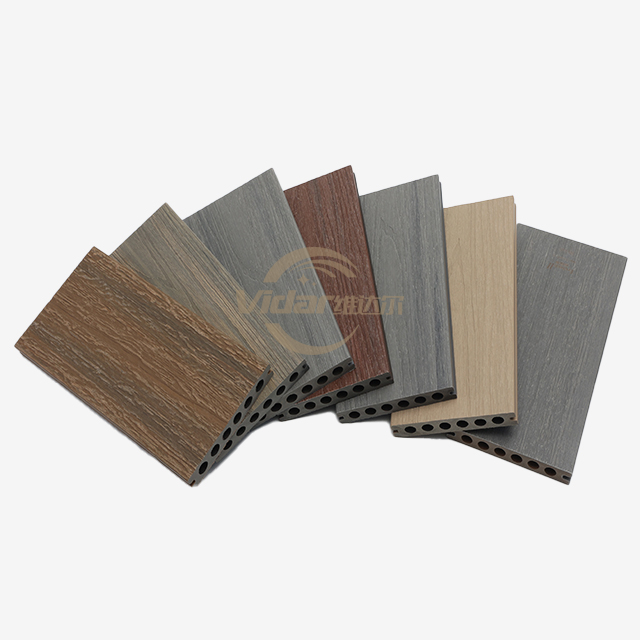
Modern manufacturing solves the coastal durability problem effectively. Engineers developed advanced methods to protect composite boards. We call this breakthrough technology co-extrusion. It creates a board uniquely suited for harsh marine environments.
A premium co-extruded board contains two highly specialized, distinct parts. The inner core provides rigid structural strength and dimensional stability. Manufacturers blend recycled organic wood fibers and high-density polyethylene (HDPE). This combination creates a dense, heavy core material. A protective polymer shield surrounds this core completely. We call this impermeable outer layer the cap. The advanced extrusion process fuses the cap and core together simultaneously under extreme heat. They become a single, inseparable unit. You cannot peel the cap away from the core.
This 360-degree capping acts as an impenetrable armor barrier. Salt-laden marine air cannot reach the vulnerable wood fibers inside. Corrosive airborne chlorides simply sit harmlessly on the plastic surface. They cannot penetrate the composite core at all. You can easily wash this superficial salt residue away. The synthetic polymer shield ignores the corrosive nature of salt crystals entirely. It provides the ultimate defense mechanism. This shield makes Waterproof Co-Extrusion WPC Decking superior for these oceanfront applications.
Older composite technologies failed near the ocean. First-generation uncapped composites absorbed rainwater slowly over time. Traditional pine timber drinks standing water like a dry sponge. Co-extruded boards behave entirely differently. They exhibit a near-zero swell rate even when submerged. The seamless shield prevents water ingress from rain, ocean spray, or dense humidity.
Marine decks face severe exposure beyond just ocean water. Many luxury coastal homes feature large outdoor swimming pools. Pool water contains harsh chemical chlorine or specialized abrasive pool salts. Splashing water lands on the deck constantly. A premium polymer cap resists these harsh chemicals easily. Heavily chlorinated pool water will not bleach the surface. It will not degrade the structural integrity either. The decking remains pristine despite heavy chemical exposure.
Selecting the right material requires evaluating functional performance closely. You must match board features to actual coastal outcomes. Visual appeal matters, but structural safety and daily usability matter much more.
Coastal decks and private docks stay wet constantly. Ocean spray, pool splashing, and sudden rainstorms create dangerous slip hazards. You need highly textured walking surfaces in these zones. Deep-embossed wood grain finishes provide necessary foot traction. They increase the static coefficient of friction (COF) significantly. This rough texture grips wet bare feet firmly. It holds rubber boat shoes securely. It keeps your outdoor living spaces completely safe during wet conditions. Industry safety standards require high COF ratings for commercial marine applications.
Seaside environments cause a severe, rapid bleaching effect on unprotected materials. Intense coastal UV radiation destroys organic color pigments quickly. High-quality polymer caps contain advanced UV inhibitors and light stabilizers. These chemical additives block damaging solar radiation actively. They lock the rich color deep inside the protective shield. Your deck retains its original vibrant hue for decades. The non-porous cap also resists stubborn stains. Spilled chemical sunscreen, greasy barbecue food, and acidic bird droppings wipe away effortlessly.
Direct coastal sun heats up solid deck surfaces intensely. Dark-colored composite boards absorb solar energy rapidly. They get uncomfortably hot under sensitive barefoot traffic. You must acknowledge this unavoidable physical reality during the design phase. We strongly guide buyers toward lighter color palettes for sun-drenched areas. Light coastal greys and soft sandy tans reflect solar heat effectively. They keep barefoot pool areas and docks comfortable during peak summer afternoon hours.
Property owners constantly demand low-maintenance exterior solutions. Let us translate this vague phrase into realistic terms for marine zones. Traditional wood demands annual heavy sanding, toxic staining, and expensive sealing. You spend your precious weekends doing hard labor on the deck. Modern capped composites eliminate this heavy burden entirely. Routine maintenance simply means using a standard garden hose. You rinse away the visible white salt film periodically. A soft brush and mild soap clear away occasional dirt. You spend your weekends actually enjoying your ocean view instead.
Even the best deck boards fail if installed incorrectly. Coastal zones punish poor construction methods severely. You must mitigate specific structural risks during the initial installation.
The composite deck board itself will never rust. However, the hidden metal screws certainly will. Standard steel construction fasteners disintegrate quickly in aggressive salt air. Galvanized zinc coatings eventually scratch, flake, and fail entirely. You must insist on 316 Marine-Grade Stainless Steel fasteners for coastal projects. Standard 304 stainless steel will still corrode under constant saltwater exposure. Upgrading your hidden fasteners prevents sudden, catastrophic system failures during harsh coastal storms.
Modern WPC Decking is only as strong as its underlying frame. Builders usually install boards over treated wooden joists. This hidden substructure remains highly vulnerable to unseen marine rot. You must address this critical hidden risk directly. Apply waterproof protective joist tape over the top of every timber beam. This simple tape prevents standing water from rotting the wood. Alternatively, specify rigid aluminum joists for maximum coastal longevity. Aluminum offers superior, lasting resistance to marine decay.
Proper ambient airflow under the deck is strictly necessary. Moisture naturally rises from wet sand, soil, or water below the structure. Trapped humid air attempts to escape upward through the deck boards. This physical action creates unnatural upward expansion pressure on the materials. You must design adequate ventilation clearances below the frame. Open airflow allows trapped moisture to dissipate horizontally outward. It prevents the boards from cupping or warping under constant upward vapor pressure.
All plastic-based materials expand heavily in hot weather. Intense coastal sun drives significant thermal movement daily. You must follow strict installation rules to prevent structural damage.
Proper gapping accommodates natural expansion in direct-sun coastal climates. It prevents the boards from buckling or snapping under immense thermal pressure.
Architects usually choose between three premium materials for marine builds. Each distinct option carries specific advantages and notable flaws.
Architects often specify exotic tropical hardwoods for luxury coastal homes. Ipe and Teak are naturally dense and highly resilient. They resist marine rot quite well initially. However, they demand expensive, labor-intensive oiling routines twice a year. Without constant oil applications, expensive Ipe turns dull silver very quickly. The organic wood still absorbs minor moisture over time. A premium co-extruded composite locks in that gorgeous wood-look aesthetic permanently. It requires minimal physical upkeep compared to demanding exotic timber.
Solid cellular PVC boards are entirely synthetic. They offer excellent, absolute water resistance for marine applications. However, pure PVC often feels and sounds hollow or purely plastic underfoot. PVC lacks the dense structural rigidity of heavier composites. It struggles to span wider joist gaps without sagging visibly. Furthermore, 100% PVC exhibits much higher thermal expansion rates. It expands and contracts significantly under the hot coastal sun. This extreme movement stresses the hidden fasteners constantly.
Property owners must balance aesthetics, structural strength, and long-term durability. Choose modern composites for the optimal middle ground. They offer significant structural weight to resist high coastal hurricane winds. They provide a deeply authentic, natural aesthetic. They deliver unmatched cost-effective durability over a long lifespan.
| Performance Metric | Exotic Hardwood | 100% PVC | Co-extruded WPC |
|---|---|---|---|
| Authentic Aesthetic | Excellent | Fair to Good | Very Good |
| Structural Rigidity | Excellent | Moderate (sags easily) | High (spans joists well) |
| Wind Uplift Resistance | Heavy and Stable | Lightweight and Vulnerable | Heavy and Stable |
| Maintenance Needs | High (Requires Oiling) | Low (Requires Washing) | Low (Requires Washing) |
No exterior building material serves as a magic bullet against the ocean. The aggressive marine environment breaks down nearly everything eventually. However, selecting the right manufacturing technology changes the replacement timeline dramatically. When properly selected, specifically Waterproof Co-Extrusion WPC Decking offers genuinely superior longevity. It resists relentless salt-air degradation far better than traditional alternatives. It maintains its structural integrity and visual appeal year after year with minimal effort.
Never guess how a specific color will perform in your unique microclimate. We strongly recommend ordering several physical sample boards immediately. Test these samples against local weather conditions. Leave them outside for a week to check salt residue visibility on different colors. Finally, consult directly with a qualified marine contractor. Focus your initial discussion on designing a truly marine-grade substructure to support your new deck properly.
A: Yes, provided it is co-extruded and properly gapped, though local building codes regarding over-water structures must be verified.
A: Most premium co-extruded brands cover coastal installations, but always verify the manufacturer's specific environmental clauses.
A: A simple rinse with fresh water and a mild soap solution is sufficient. Avoid high-pressure power washing which can damage the polymer cap.
A: Yes, but lighter colors are strongly recommended to reduce heat absorption, and boards with high slip-resistance textures should be selected.