Views: 0 Author: Site Editor Publish Time: 2026-09-14 Origin: Site


Extreme winter weather poses a severe threat to outdoor investments. You spend significant money building beautiful outdoor spaces, only to watch them degrade under relentless ice and snow. The destructive nature of repeated freezing and thawing ruins structural materials quickly. Traditional timber and porous materials absorb water continuously. When temperatures plummet, this trapped moisture expands. The expansion leads to cracking, warping, and ultimately structural failure.
You need a robust alternative. WPC Decking emerges as an engineered solution designed to mitigate moisture ingress. It withstands seasonal temperature extremes effectively. You do not have to sacrifice aesthetics or safety to survive brutal winters. Read on to discover how modern composite technology protects your deck through countless freeze-thaw cycles.
Winter elements destroy materials relentlessly. Understanding how extreme cold damages outdoor surfaces helps you make better purchasing decisions.
Water exhibits a unique physical property. It expands by approximately 9% when freezing. If a decking material absorbs moisture, this water settles into microscopic pores and crevices. When temperatures drop below freezing, the trapped water turns to ice. This internal expansion generates immense hydraulic pressure. The pressure forcefully pushes against the internal cellular structure of the material. Eventually, it destroys the material from the inside out. Repeated cycles of this freezing and thawing compound the damage daily.
Different materials fail in distinct ways under these pressures. Traditional wood acts like a sponge. It absorbs autumn rain and melting snow. When freezing occurs, the wood fibers tear apart. This leads directly to severe splintering, deep surface checks, and structural warping. Alternatively, many homeowners use rigid porous tiles or grouted paving stones. These materials do not warp. However, they lack flexibility entirely. The extreme sub-zero pressure forces rigid tiles and brittle grouts to snap and crack aggressively.
Freeze-thaw damage introduces serious end-user risks. A splintered wooden deck becomes a hazard for children and pets. As wood warps and heaves, the movement forces nail heads and screws to pop out. Raised fasteners create immediate tripping hazards hidden under light snow. Furthermore, micro-fractures in the material weaken its overall load-bearing capacity. A weakened deck struggles to safely support the massive weight of a heavy winter snowpack. You risk structural collapse if the foundational materials fail.
Engineered composite materials solve the moisture problem fundamentally. Manufacturers design them specifically to outlast organic alternatives in harsh climates.
WPC stands for Wood-Plastic Composite. Manufacturers blend recycled wood fibers with high-density polymers. During the extrusion process, the plastic polymers completely encapsulate the organic wood fibers. This physical barrier stops moisture penetration instantly. It drastically reduces the moisture absorption rate to near zero. Because water cannot penetrate the core of the board, internal ice expansion never occurs. The board retains its original strength regardless of how much snow piles on top.
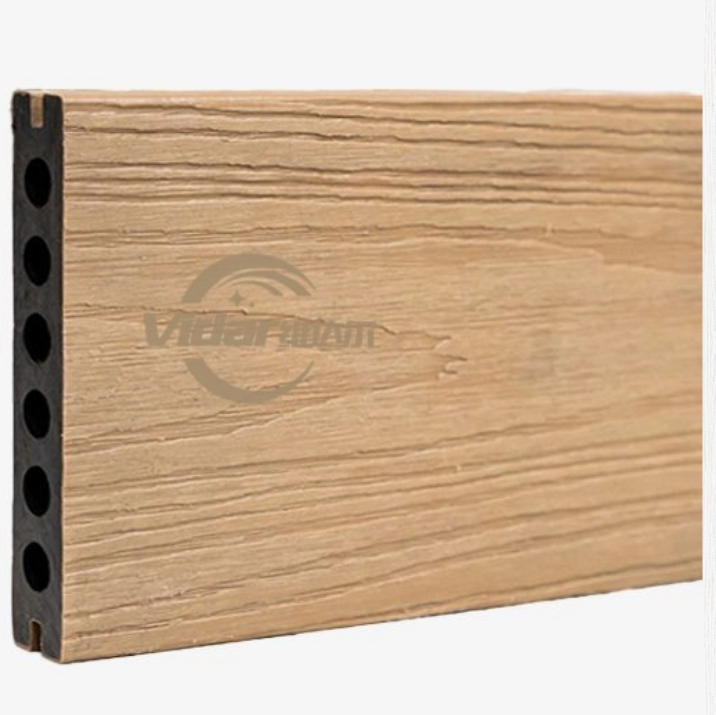
Modern composite engineering takes protection a step further. Anti-UV Capped WPC Decking provides a secondary, impermeable shield. Manufacturers co-extrude a tough polymer shell around the composite core. This shell serves a dual purpose in winter. First, the UV protection prevents fading from harsh winter sun glare reflecting off the white snow. Second, the non-porous cap acts as an absolute physical barrier. It blocks melting snow, freezing rain, and ice from ever reaching the structural core beneath.
Rigid materials snap under thermal stress. The plastic component in WPC provides a crucial advantage. It offers microscopic flexibility. When temperatures drop well below zero, the board does not turn brittle like cheap plastics or rigid ceramic tiles. The polymer matrix allows the board to endure dropping temperatures safely. It absorbs the thermal shock and retains its impact resistance through the coldest months of the year.
Theoretical science translates to excellent practical performance. Homeowners in freezing climates rely heavily on these engineered characteristics daily.
Heavy, static snow loads test the limits of any deck. Wet snow weighs significantly more than dry powder. WPC decking handles this static pressure exceptionally well due to its dense core. However, the board only performs as well as its foundation. The underlying joist structure remains equally important. You must build a robust substructure capable of supporting extreme winter weight. The composite boards will not snap under heavy snow, provided the joists support them properly.
Walking on a frosty deck often feels dangerous. Traditional smooth timber and older PVC decking become extremely slick when frost settles. WPC boards feature deep wood-grain embossing and brushed surface textures. These engineered textures provide superior surface traction. They break up the surface tension of light freezing rain and morning frost. While no material remains perfectly slip-proof under solid ice, composite textures offer significantly better grip than smooth alternatives.
Real-world evidence proves the longevity of composite materials. High-quality boards maintain their structural integrity over ten or more years of severe freeze-thaw cycles. You never need to apply seasonal sealing. You never need to paint or waterproof the surface before winter hits. The boards simply endure the freezing conditions year after year while maintaining their original profile and color.
Proper installation guarantees winter survival. Failing to follow strict guidelines ruins even the best materials.
We must address reality transparently. WPC Decking does expand and contract with temperature changes. As temperatures drop, the boards contract slightly. As the spring sun warms them, they expand. This thermal movement is a natural physical response. The boards do not crack during this process, but they do change length. You must plan for this movement during the design phase.
You must follow strict gapping rules to accommodate thermal movement.
Sub-frame ventilation and drainage remain critical. If water traps under the deck, it creates localized freezing zones. When this trapped water freezes, it heaves the substructure upward. This heaving twists the joists and ruins the deck surface. Ensure the ground slopes away from the house. Leave adequate space beneath the joists for cross-ventilation. Proper airflow keeps the substructure dry and stable.
Installing boards during the winter months requires caution. Most manufacturers advise specific temperature thresholds. Do not install boards in extreme sub-zero conditions. The material becomes temporarily stiffer, making it harder to cut and maneuver. Furthermore, you must allow the materials to acclimatize. Leave the boards on-site for 48 hours before installation. This ensures they reach ambient temperature, allowing you to calculate expansion gaps accurately.
Winter upkeep requires minimal effort. However, you must use the correct tools and chemicals to avoid superficial damage.
Thick ice demands chemical intervention. You can use specific ice melts safely. Calcium chloride represents the best option for composite caps. It melts ice quickly at lower temperatures. Standard rock salt also works and will not damage the structural integrity of the board. Avoid harsh industrial chemicals or colored ice melts, as they might leave permanent stains. Note that all salts leave a chalky white residue behind. You must perform a thorough spring wash with warm, soapy water to remove this residue.
Physical snow removal requires strict guidelines. You must ban metal shovels from the deck entirely. A metal blade will scratch, gouge, and permanently scar the capped layer. You must strictly advocate for plastic-edged shovels. Push the snow parallel to the grain of the boards to minimize friction. Never use sharp ice picks or metal chippers to break up solid ice. Let the calcium chloride do the heavy lifting.
A few simple actions before the first freeze save you trouble later.
Choosing the right material requires understanding how features map to real-world outcomes in freezing climates.
Different materials offer different features. Understanding these differences clarifies why composites excel in winter.
| Material Type | Moisture Absorption | Freeze-Thaw Reaction | Winter Maintenance Required |
|---|---|---|---|
| Traditional Timber | High (Porous) | Splinters, warps, checks, and cracks. | Annual sealing and heavy waterproofing. |
| Porcelain/Ceramic Tiles | Low (Surface) | Grout cracks; rigid tiles may snap under pressure. | Grout sealing; careful ice removal. |
| Capped Composite | Near Zero | Flexes safely; resists internal ice expansion. | Plastic shovel snow removal only. |
Evaluate the initial investment of high-quality boards against the compounding costs of replacements. Traditional wood seems cheaper initially. However, brutal winters warp timber and crack tiles rapidly. You spend money every year replacing ruined boards, buying sealants, and paying for maintenance labor. High-quality composite boards require a higher upfront investment. Yet, their decade-long durability eliminates these recurring seasonal costs. The boards simply survive the winter without demanding your time or extra money.
Take action before winter arrives. Verify the moisture absorption rates of the brands you consider. Read the warranty terms carefully regarding freeze-thaw conditions. Order material samples directly to your home. Place them in your freezer overnight and observe their performance. Once you feel confident, contact an approved local installer who understands cold-climate gapping requirements thoroughly.
Surviving freeze-thaw cycles comes down to mitigating moisture absorption and allowing for thermal movement. Both of these concepts represent the core engineering principles behind modern composite manufacturing. The blending of polymers and wood fibers eliminates the very water infiltration that destroys traditional wood.
High-quality, properly installed WPC stands as the most reliable, low-risk decking solution for harsh cold-weather climates. It offers the flexibility to handle temperature swings and the toughness to hold heavy snow loads safely.
Stop worrying about your outdoor living space cracking this winter. Order material samples today to test the tough capped surface yourself. Alternatively, reach out to an experienced local installer to discuss your cold-climate project and secure your outdoor investment for decades to come.
A: No, provided it is high-quality WPC and not subjected to blunt-force impacts. Its polymer base prevents it from becoming excessively brittle, and its moisture resistance stops internal ice expansion.
A: Yes, rock salt or calcium chloride is generally safe for the material and won't compromise its structure. However, it will leave a chalky residue that must be washed off with soap and water in the spring.
A: Reputable WPC manufacturers cover extreme weather performance. However, warranties are often voided if damage is caused by improper installation (e.g., failing to leave required expansion gaps), highlighting the importance of following installation guidelines.
A: Both resist moisture exceptionally well. WPC tends to expand and contract slightly less than 100% PVC, making it somewhat easier to manage for thermal movement, though both are premium winter-ready choices.