Views: 0 Author: Site Editor Publish Time: 2026-08-29 Origin: Site


Pool-area safety is not merely an aesthetic or design preference. You must treat it as a critical liability and risk management priority. Residential homeowners need to protect their families from dangerous falls. Commercial property managers face the constant pressure to prevent costly liability lawsuits. Slips and fall accidents account for significant, preventable injuries around aquatic spaces every single year. The safety of a pool environment dictates the overall enjoyment of the space entirely.
Traditional pool decking materials frequently fail under constant moisture exposure. Natural timber, poured concrete, and smooth tiles all present distinct, inherent hazards. Timber rots rapidly and quickly grows slick algae layers. Concrete becomes dangerously slippery unless heavily brushed or textured. Smooth tiles demand continuous re-application of abrasive surface coatings. This constant maintenance cycle frustrates property owners endlessly. It also leaves swimmers highly vulnerable between expensive chemical treatments.
Enter modern engineered alternatives designed specifically to mitigate these exact hazards. WPC Decking represents an engineered material tailored to drastically reduce slip risks. Manufacturers achieve this superior safety profile through highly controlled production processes. They integrate structural surface textures and superior moisture resistance deep into the core. You will learn how these composite boards actively repel standing water. We will explore the precise engineering mechanics behind these safety features. You will also discover how proper structural installation maximizes barefoot grip.
Material composition directly drives the impressive safety profile of modern composite boards. Engineers carefully blend recycled wood fibers and high-density polymers. They combine these raw elements during a high-temperature extrusion process. The wood fibers provide natural friction and a highly tactile grip. They successfully mimic the beneficial textures of traditional lumber. Meanwhile, the polymer component delivers crucial, long-lasting moisture resistance. High-density polyethylene (HDPE) commonly serves as the durable binding plastic. During extrusion, intense pressure forces the polymers into the microscopic pores of the wood flour. They merge under extreme heat to form a dense, completely uniform core.
Hydrophobic surface traits further enhance performance around busy swimming pools. The tight polymer matrix encases the wood fibers at a microscopic level. This unique structure completely prevents surface water from soaking into the core. Instead of creating a slick, saturated film, water behaves differently. It beads up rapidly upon initial contact. It then disperses quickly across the non-porous face. This rapid dispersion actively prevents the formation of dangerous hydroplaning layers under bare feet.
For serious buyers, standardized testing matters far more than vague marketing claims. We strongly recommend reviewing recognized industry-standard slip evaluation metrics. You must look for verifiable data from independent testing laboratories. Pay close attention to these three core safety evaluations:
You should always request these specific test results from manufacturers directly. Avoid relying purely on glossy promotional brochures. Independent laboratory data conclusively proves the actual performance limits. Proper evaluation ensures full compliance with local commercial safety regulations.
Buyers inevitably face a critical choice regarding their final surface finish. You must determine which specific texture actually performs safer for wet, barefoot traffic. Manufacturers typically offer two primary surface patterns for outdoor applications. Let us break down the physical mechanisms behind these two popular options.
Grooved or ribbed profiles offer distinct mechanical advantages for specific structural layouts. The design features parallel channels running lengthwise along the board. This mechanism physically channels water away from the primary walking surface. You can compare it to how a car tire tread displaces heavy rain on a wet highway. Highly effective for linear slip resistance, they work exceptionally well for directional traffic zones. We consider them highly ideal for commercial pool edges. People usually walk in predictable, straight paths directly along the water perimeter.
3D embossed wood grain presents an entirely different safety profile. The manufacturing mechanism presses an omnidirectional micro-texture firmly across the entire face. This randomized, highly realistic grain provides consistent grip regardless of your foot placement angle. The multidirectional traction excels in dynamic, unpredictable outdoor environments. Therefore, we highly recommend it for multidirectional residential pool surrounds. Children frequently run, pivot, and jump unpredictably in these backyard spaces. The randomized texture catches slipping feet safely from multiple different angles.
Consider the matrix below when planning your outdoor oasis layout. Let it guide your final procurement decisions.
Surface Profile Decision Matrix
| Feature | Grooved / Ribbed Profile | 3D Embossed Wood Grain |
|---|---|---|
| Primary Mechanism | Linear water displacement channels | Omnidirectional micro-texture |
| Traction Direction | Strongest parallel to the grooves | Equal resistance in all directions |
| Best Use Case | Commercial boardwalks, lap pool edges | Residential patios, freeform pools |
| Aesthetic Appeal | Modern, architectural, clean linear styling | Natural, traditional timber appearance |
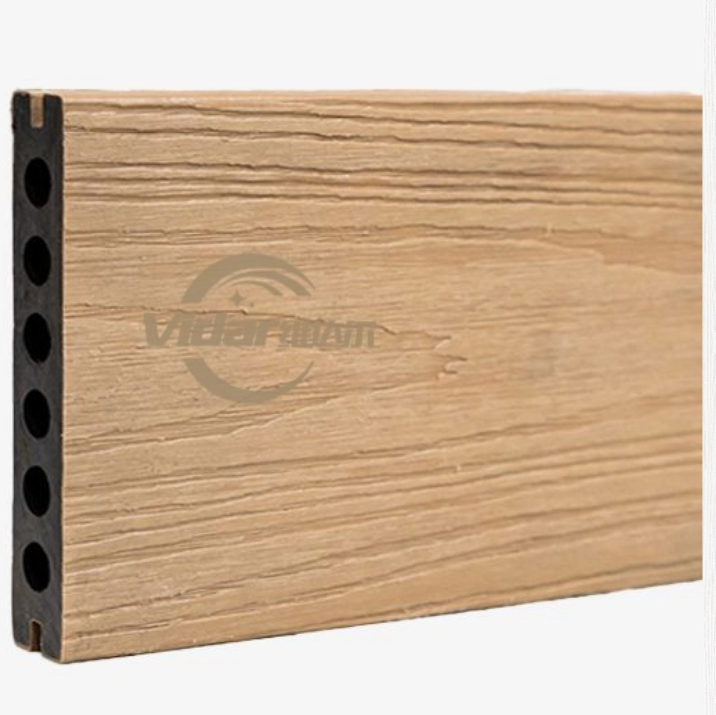
The degradation risk constantly threatens all outdoor construction materials. Traditional plastics and early-generation composites inevitably break down under intense UV rays. This relentless solar damage leads to severe surface smoothing. You will also notice deep cracking, flaking, or aggressive chalking over the years. These chemical and structural changes severely reduce barefoot traction. A once-safe patio quickly becomes a slippery, dangerous hazard after just a few harsh summers.
The capped advantage brilliantly solves this specific environmental vulnerability. Modern engineering introduces Anti-UV Capped WPC Decking to the commercial market. This advanced product utilizes a highly protective polymer shield. Factories co-extrude this specialized shield completely over the inner composite core. The protective casing completely envelops the board on all exposed sides. It acts precisely like a robust suit of armor against the harshest elements.
This cap layer permanently guarantees the structural longevity of the surface texture. It chemically locks in the embossed grain and grooved profiles during the cooling phase. The specialized barrier strictly prevents the sun from degrading the delicate micro-abrasions. You absolutely need these tiny surface details to maintain safe, long-term grip. Without the protective cap, the sun essentially melts and flattens the critical friction points over time.
Furthermore, the material boasts exceptional, heavy-duty chemical resistance. The capped layer powerfully resists degradation from harsh pool chemicals. Splashing liquid chlorine, aggressive saltwater system runoff, and potent algaecides cause zero harm. These same harsh liquids would otherwise strip the protective texture right off natural wood boards. Wood fibers easily dissolve and turn incredibly slippery when constantly exposed to bleach or salt. The polymer shield ensures your investment remains structurally sound and perfectly grippy for decades.
Many hidden structural factors contribute significantly to a completely slip-free pool environment. Surface texture represents only one single piece of the overall safety puzzle. Eliminating biological hazards ranks as a massive priority for facility managers everywhere. Let us thoroughly address the notorious "green slime" factor common near any body of water. Unlike natural timber, composite boards feature a definitively non-porous nature. This exceptionally dense composition completely starves mold, mildew, and algae. These harmful organisms desperately need soaked moisture to reproduce and spread. By proactively preventing this organic growth, you eliminate the single most common cause of sudden deck slips.
Concealed fastening systems add another vital, unseen layer of physical safety. Modern installations rely heavily on hidden T-clips or specialized hidden fasteners. Installers slide these stainless steel or plastic components discreetly into side grooves. They create a beautifully flush, completely splinter-free walking surface. Raised or popped nails in traditional wood decks present significant, dangerous trip-and-fall hazards. Screws backing out over time ruthlessly snag bare feet and stub toes. Hidden clips completely remove this severe danger from the primary walking area.
Consider the core safety benefits of utilizing concealed fasteners:
Thermal stability also plays an indirect but crucial role in fall prevention. Quality boards maintain tight structural integrity without warping under immense heat stress. Extreme temperature swings often cause cheap, uncapped plastics to bow upward aggressively. This severe warping creates dangerously uneven board edges. Uneven seams immediately cause severe tripping hazards for running children or distracted adults. A dimensionally stable composite strictly keeps the entire floor perfectly flat and uniformly secure across all seasons.
An implementation reality check remains strictly necessary for all ambitious builders. A highly slip-resistant board becomes entirely useless if installed incorrectly. Standing water pooling stands out as the absolute greatest enemy of barefoot traction. You must rigorously manage water runoff proactively during the early framing stage.
Proper sloping requires meticulous, unwavering attention during subframe construction. We emphasize the absolute necessity of building a slight, continuous subframe slope. A typical gradient of 1-2% directed away from the pool edge works best. This subtle incline smoothly facilitates natural water runoff. Gravity gently pulls the splashed water away before it can form slick puddles. You never want dirty deck water draining back into the clean pool water.
Drainage gaps heavily dictate exactly how fast the surface recovers after a massive splash. We emphasize strict adherence to manufacturer-recommended spacing guidelines. Installers usually leave 3-5mm of empty, unobstructed space between individual boards. These precise gaps ensure surface water drains instantly down into the dark subframe beneath. Tight, closed gaps foolishly force water to sit trapped on top of the deck. This stubborn pooling creates immediate hydroplaning hazards for unsuspecting swimmers.
Subframe ventilation silently protects the structural integrity from far below. Adequate airflow beneath the deck actively prevents upward moisture buildup. Constant cross-ventilation keeps the underside of the boards significantly drier over time. It prevents trapped ground moisture from slowly rotting the timber joists. A perfectly dry subframe heavily ensures the top surface remains stable, reliably flat, and ultimately safer for everyone. Always leave adequate ground clearance to heavily facilitate this crucial, moisture-wicking breeze.
Pool safety undeniably requires a deliberate, highly engineered approach. You cannot treat it merely as a casual aesthetic choice. We have clearly seen how modern composite manufacturing provides predictable, verifiable slip resistance. Advanced polymers, purposeful surface textures, and specialized capping layers work harmoniously together. They completely eliminate the terrifying biological and structural hazards plaguing traditional timber installations.
We strongly encourage all buyers to evaluate their current pool deck risks thoroughly. Take actionable next steps before starting your next major renovation project. First, request physical material samples directly from reputable manufacturers. Run a wet hand firmly across the grain to realistically simulate barefoot traction. Second, review your framing design to guarantee proper subframe sloping and sub-deck ventilation. Finally, always ask your suppliers for formal slip-rating documentation before officially shortlisting any product. Protect your family, guests, and your property by making entirely evidence-based material choices.
A: Heavy oil spills can reduce traction on any surface. However, quality capped WPC resists oil absorption, allowing for easy cleaning with warm, soapy water to restore full grip.
A: No. Boards with smooth finishes or low-quality uncapped composites may not meet wet-area safety standards. Always specify high-texture or grooved boards designed for wet environments.
A: While WPC can retain heat in direct sunlight (especially dark colors), modern engineered boards dissipate heat better than solid plastics. Lighter color selections and textured surfaces reduce the surface area contacting the foot, minimizing discomfort.
A: Use a soft-bristle brush and mild deck cleaner. Avoid high-PSI pressure washing at close range, as extreme pressure can damage the engineered micro-texture of the capping layer.