Views: 0 Author: Site Editor Publish Time: 2026-04-23 Origin: Site


Modern architecture and landscaping have rapidly shifted away from traditional timber. Escalating maintenance costs and stricter environmental compliance constantly drive this change. Developers and homeowners alike now demand highly reliable, engineered outdoor solutions. We must recognize WPC (Wood-Plastic Composite) decking as more than a simple visual alternative. It is a highly advanced engineered material. Manufacturers specifically designed it to solve critical lifecycle and durability challenges. You will frequently see it deployed in serene private homes and demanding, heavy-traffic commercial zones. This article serves as your definitive evaluation guide. We will thoroughly explore exactly where and why professionals deploy these innovative composite materials. You will discover key performance metrics, calculate financial ROI, and assess overall project suitability to ensure your next outdoor build is a lasting success.
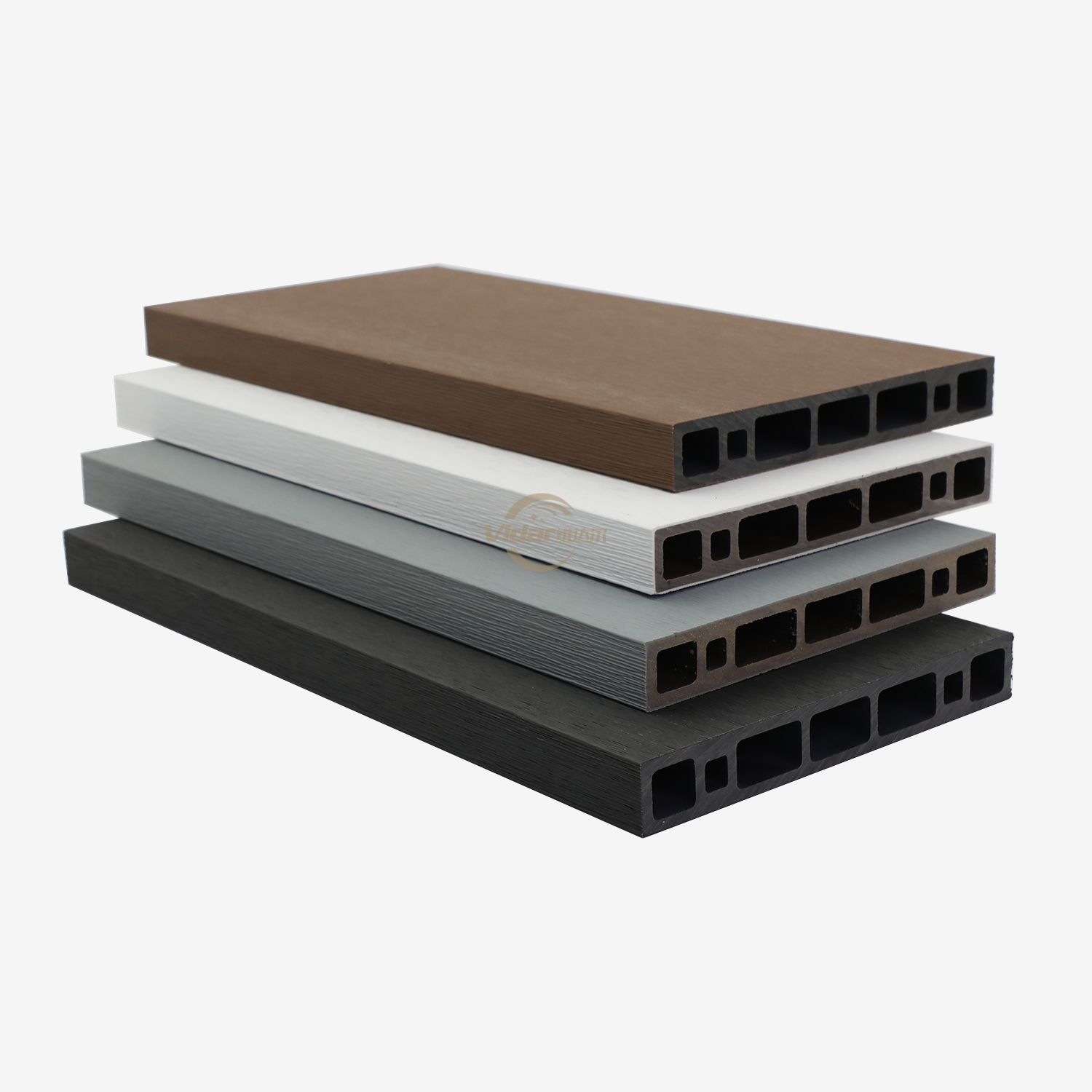
Material Integrity: WPC relies on a precise composite blend (typically 60% wood fiber, 30% HDPE, 10% additives) to achieve high tensile strength and weather resistance.
Residential ROI: Eliminates cyclic maintenance (staining/sanding) while offering high-traction, splinter-free safety for patios and pool areas.
Commercial Scalability: Meets stringent commercial audit requirements through added fire retardants, high-impact strength, and low VOC emissions.
Lifecycle Value: Despite a higher initial procurement cost, the Total Cost of Ownership (TCO) drops significantly over a 10-to-20-year horizon compared to treated lumber.
ESG Compliance: Manufactured from recycled materials, utilizing WPC can directly contribute to green building initiatives like LEED and FSC certifications.
Procurement teams and homeowners often misunderstand the difference between standard plastics and engineered composites. Many people confuse standard PVC products with true composite blends. This confusion directly leads to mismatched application expectations. Pure plastics can feel hollow and lack structural rigidity. Meanwhile, standard untreated wood rots and splinters. WPC bridges this gap by combining the best traits of both materials into a singular, high-performance solution.
To understand its strength, we must examine the base material composition. Quality WPC Decking relies on a strict, scientifically balanced formula. Manufacturers carefully measure and mix three distinct components to guarantee structural integrity.
Material Component | Percentage | Engineering Function |
|---|---|---|
Recycled Wood / Bamboo Fibers | 60% | Provides necessary structural rigidity, authentic tactile feel, and high tensile strength. |
High-Density Polyethylene (HDPE) | 30% | Delivers extreme moisture resistance, prevents rot, and acts as a durable binding agent. |
Chemical Additives | 10% | Includes UV stabilizers to stop fading, anti-static agents, and essential fire retardants. |
Modern manufacturing utilizes advanced co-extrusion technology. This process fundamentally separates first-generation boards from today's premium offerings. Co-extruded WPC boards feature a robust, protective polymer shield. The factory fuses this cap directly to the core during the extrusion process. It surrounds the board 360 degrees. This shield completely prevents moisture penetration, resists aggressive stains, and stops color fading. Older un-capped composites often absorbed water over time. Today, the polymer cap ensures the deck remains pristine regardless of seasonal weather extremes.
Common Mistake: Buyers sometimes select early-generation, uncapped WPC boards to save money. These uncapped variants lack the polymer shield. They will absorb minor moisture and fade under harsh sunlight. Always specify "capped" or "co-extruded" WPC for long-term outdoor exposure.
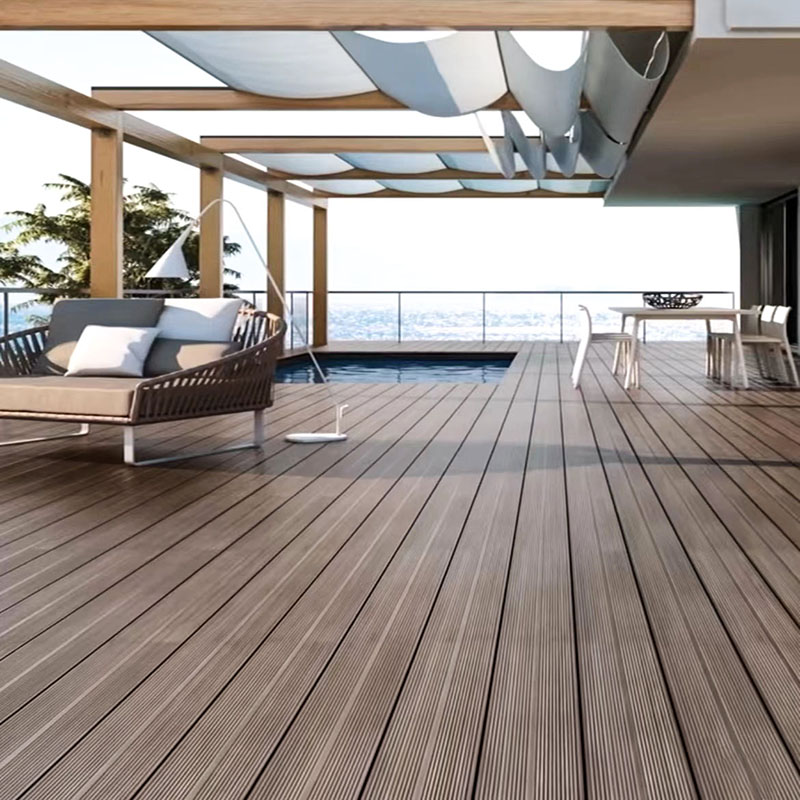
Residential outdoor design is shifting focus rapidly. Homeowners now prioritize safety, absolute maintenance reduction, and long-term property value over simple initial aesthetics. Installing a wpc decking floor perfectly aligns with these modern household priorities.
Transforming a backyard often requires moving away from high-maintenance wood. Traditional timber demands an exhausting cycle of care. You must clean, sand, stain, and seal it every few years. WPC offers a revolutionary "set-and-forget" experience. Homeowners completely eliminate sanding, toxic painting, and repetitive staining. You spend your weekends enjoying your patio rather than actively repairing it. A simple occasional wash with soap and water keeps the surface looking brand new.
Poolside environments pose severe challenges to traditional flooring. They expose materials to constant standing water, harsh pool chemicals, and fluctuating humidity. WPC directly addresses the moisture problem. It boasts complete resistance to warping, destructive rot, and mold growth. Standard wood often develops moss, creating a dangerous slip hazard. Composites prevent this entirely.
Furthermore, we must emphasize tactile safety around water features. WPC delivers splinter-free surfaces. They are exceptionally barefoot-friendly. Manufacturers design these boards with advanced anti-slip textures. They simulate real wood grain while providing superior traction, even when completely wet.
Creative landscape architecture requires materials that offer immense design flexibility. WPC excels in custom, multi-tiered applications. Installers can easily bend and cut the boards to form unique shapes.
Built-in Planters: You can construct seamless garden boxes. The material will never rot from wet potting soil.
Integrated Seating: Create permanent, splinter-free benches around fire pits or dining areas.
Hidden Lighting: Installers easily route low-voltage LED cables through the hollow cores or underneath the boards without compromising the structural core.
Commercial projects evaluate materials through a much stricter lens. Procurement teams must address heavy foot traffic, liability reduction, and rigid building codes. WPC reliably meets these demanding commercial evaluation dimensions.
The core success criteria for hospitality spaces involve sustaining a premium aesthetic under continuous guest use. Hotels cannot afford to shut down their pool decks for weekly maintenance. WPC perfectly withstands heavy UV degradation from daily sun exposure. It requires absolute minimal downtime for standard cleaning. For spa and outdoor dining areas, the material offers a "cool-to-touch" thermal performance in lighter color profiles. The guaranteed splinter-free safety directly reduces guest injury liability.
Corporate designers focus on modernizing employee break areas and connective walkways. They must achieve this while maintaining strict budget predictability. WPC provides massive high-impact strength. Employees frequently drag heavy metal outdoor chairs across break areas. WPC resists this scratching far better than standard timber or soft plastics. Additionally, these boards feature exceptionally low VOC (Volatile Organic Compound) emissions. This maintains healthy semi-indoor/outdoor air quality around office entryways.
Public infrastructure projects prioritize extreme weather resilience, ADA compliance, and universal public safety. You will frequently see composites deployed in city noise barriers, pedestrian footbridges, and public marina docks. The high salt-water and moisture resistance makes it the dominant choice for marine applications. It provides a stable, high-traction walking surface that complies with strict municipal accessibility standards.
Best Practice: When deploying WPC in heavy commercial zones, project managers should specify a tighter joist spacing (typically 12 inches on center instead of 16 inches). This maximizes load-bearing capacity and prevents surface deflection under heavy crowds.
Smart financial planning looks beyond the initial price tag. You must evaluate the Total Cost of Ownership (TCO) over the material's entire lifespan. Comparing the upfront capital expenditure (CapEx) of WPC versus traditional timber often reveals a higher initial cost for composites. However, the operational expenditures (OpEx) tell a completely different story.
WPC completely eliminates ongoing operational costs. You no longer pay for annual labor, expensive weather sealants, or regular replacement boards. This dramatic reduction in maintenance makes WPC financially superior over a multi-decade lifespan.
Expense Category | Traditional Timber Decking | Engineered WPC Decking |
|---|---|---|
Initial CapEx | Lower material cost, standard labor. | Higher initial material cost. |
Annual OpEx | High (Sanding, staining, sealing, replacing warped boards). | Near Zero (Occasional soap and water cleaning). |
Lifespan Expectancy | 10 - 15 years (depending on climate). | 25 - 30+ years. |
20-Year Financial TCO | High overall cost due to constant chemical and labor inputs. | Low overall cost. The investment pays for itself within 7-10 years. |
Beyond finances, Environmental, Social, and Governance (ESG) criteria drive modern construction. WPC stands out as a highly strategic choice for corporate ESG goals. The manufacturing process heavily champions the "circular economy." Factories actively utilize diverted post-consumer plastics (like grocery bags and bottles). They combine this with diverted sawmill waste (wood dust and chips). This process literally saves thousands of trees from being harvested.
Specifying WPC can directly assist commercial developers in securing valuable LEED points. It helps projects adhere strictly to modern green city initiatives. By avoiding toxic stains and utilizing recycled materials, developers create a substantially greener environmental footprint.
Not all composites perform equally. You must carefully vet manufacturers before purchasing. To evaluate a brand's true capability, investigate their WPC Decking production history and factory credentials. We recommend utilizing the following procurement checklist to properly evaluate potential suppliers.
Identify the Extrusion Technology: Confirm they utilize modern co-extrusion (capped) processes rather than outdated uncapped molding.
Verify Laboratory Testing & Certifications: Instruct your buying team to look for independent lab data. Demand to see Intertek testing reports for UV aging. A premium supplier will provide data showing 2000-hour UV exposure tests that result in minimal grayscale fading.
Check Commercial Safety Ratings: Demand concrete proof of building code compliance. Specifically, ask for Fire Resistance testing. Commercial-grade WPC must contain specific fire retardants to meet Class A or Class B ratings. Also, verify their slip-resistance coefficients for wet environments.
Analyze Warranty Structures: Carefully differentiate between standard residential warranties and commercial-grade guarantees. Advise your buyers to read the fine print. Ensure the warranty explicitly covers color fading, aggressive staining, and structural integrity under heavy loads.
By strictly following this criteria, you protect your investment. You ensure the chosen material will actually perform under the intense stresses of your specific residential or commercial environment.
Durability Over Aesthetics: WPC decking provides much more than a visual upgrade. It represents a calculated, engineered investment in long-term outdoor durability.
Drastic Maintenance Reduction: The material permanently eliminates the heavy overhead of sanding, staining, and chemical sealing.
Financial Predictability: TCO analysis proves that paying a higher initial CapEx yields a vastly lower 20-year overall cost.
ESG Leadership: Utilizing recycled plastics and diverted wood waste firmly supports green building initiatives and LEED certifications.
We encourage project managers and homeowners to take decisive next steps. Request physical material samples from top-tier manufacturers. Review their third-party independent testing data carefully. Finally, run a localized TCO calculation based on your specific climate before finalizing your outdoor flooring specifications. Making an informed choice today guarantees decades of hassle-free performance.
A: Yes, standard composite materials can retain more heat than natural wood because of their dense plastic content. However, you can easily mitigate this. We highly recommend selecting lighter color profiles and specifying hollow-core board designs for areas with intense, direct sun exposure. These design choices significantly improve thermal dissipation.
A: Commercial-grade WPC features specialized chemical fire retardants blended directly into the core. This allows the boards to meet strict Class A or Class B fire ratings. This makes them fully compliant with stringent commercial building codes. This is vastly different from residential untreated wood, which is highly combustible.
A: No. Manufacturers engineer WPC specifically for surface decking and wall cladding. It lacks the internal tensile strength for primary structural framing. You must build your underlying substructure and load-bearing joists using pressure-treated timber, aluminum, or structural steel to ensure absolute safety and code compliance.
A: It performs exceptionally well. WPC features high-density co-extruded capping that completely resists moisture ingress. Because water cannot penetrate the core, the boards will not expand and contract violently during freeze-thaw cycles. This successfully prevents the deep cracking, warping, and splintering that commonly destroys standard wood in freezing climates.